


The Best Flavors for an Infused Coffee Launch
Compare black coffee, vanilla mocha, salted caramel, and custom flavor directions to find the right fit for your customer and product concept.
Choose a coffee profile that matches your brand, packaging, cannabinoid or functional ingredient plan, and sales channel. Start around 1,200 cans per SKU or build a larger, recurring production program based on your market.
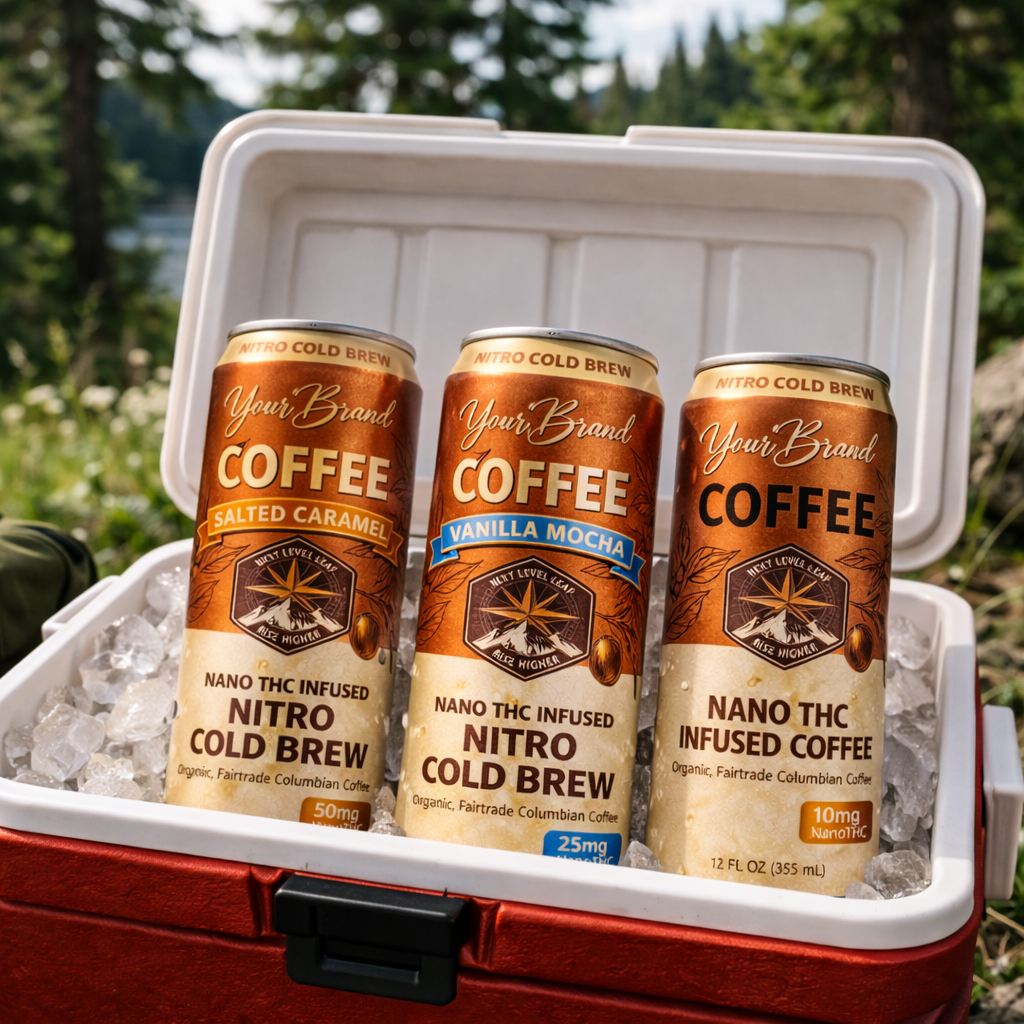
Established infused coffee directions include black coffee, vanilla mocha, and salted caramel. These options provide a clear starting point for brands that want a recognizable coffee profile before adding a cannabinoid, functional ingredient, or custom packaging plan.
A custom flavor may also make sense when the brand has a specific product vision. The right choice depends on the customer, coffee format, formulation needs, target volume, and the production path.
In this guide
Black Coffee
A coffee-forward option for brands that want a direct, simple flavor profile and a clean product concept.
Vanilla Mocha
A familiar coffeehouse-inspired direction that combines vanilla and mocha in one established flavor profile.
Salted Caramel
A recognizable flavored coffee option for brands that want a distinct, easy-to-explain taste direction.
What makes a strong flavor choice for infused coffee
The best flavor is the one that fits your customer, coffee format, ingredient plan, package design, sales channel, and production budget. Choose the coffee profile as part of the complete product rather than treating flavor as a separate decision.
It should feel natural inside the coffee category
Customers should be able to recognize the product as coffee before they evaluate the cannabinoid content or functional ingredients. Black coffee, vanilla mocha, and salted caramel each communicate a clear coffee direction.
It should support the visual and brand story
Flavor affects how the can is named, how the package looks, and how the product is described at the shelf. Choose a flavor that fits the brand and makes the finished beverage easy to understand.
It should make the first launch easier, not harder
A focused flavor plan can simplify formulation, packaging, inventory, and the initial product explanation. Established brands may have the demand and distribution to launch a broader lineup from the beginning.
Start with the flavor your customer can recognize, your brand can explain, and your production plan can support.
Best flavor directions to evaluate first
These established coffee directions provide practical starting points. The right choice depends on the intended customer, product format, ingredient plan, and whether the brand wants one product or a larger lineup.
Black coffee
Black coffee keeps the coffee itself at the center of the product. It can fit brands that want a coffee-forward concept and a direct flavor story. Because the profile is less layered, cannabinoid inputs and other ingredients may need closer flavor evaluation.
Vanilla mocha
Vanilla mocha offers a recognizable flavored coffee direction. It can help a brand communicate a familiar coffeehouse-inspired concept while keeping the coffee format clear.
Salted caramel
Salted caramel gives the product a distinct flavored coffee identity without requiring customers to learn an unfamiliar category. The final flavor should be evaluated alongside the coffee base, serving amount, packaging, and intended customer.
Custom coffee flavor directions
A brand may explore a different flavor when the product concept requires a distinct profile. Custom work depends on ingredient sourcing, formulation, flavor compatibility, testing, packaging, order volume, and whether the finished concept is practical to manufacture.
How to think about flavor in a first launch
Choose the number of flavors based on the customer, sales channel, inventory plan, and production volume. A focused first product can be practical for a new brand, while an established operator may be ready to launch a coordinated multi-flavor program.
Start with one lead flavor
One lead flavor can reduce the number of labels, ingredients, production runs, and inventory decisions involved in the first order. Choose the flavor that best fits the intended customer and product concept.
Think about category fit before novelty
Unusual flavors are not automatically better. If the flavor requires a long explanation or conflicts with the coffee profile, it may introduce avoidable formulation and positioning challenges.
Let the brand carry some of the differentiation
Packaging, naming, coffee format, cannabinoid direction, and customer experience can help distinguish a brand without requiring an unnecessarily complicated flavor.
Established flavors can simplify product development
Black coffee, vanilla mocha, and salted caramel offer established starting points for brands that want to move from concept into a defined manufacturing plan. Choosing an existing profile may reduce the amount of flavor development required compared with building a new formula from scratch.
Custom cannabinoids or functional ingredients are separate formulation decisions. Their availability and fit depend on the complete product, ingredient sourcing, serving amounts, testing, labeling, and target markets.
Common flavor mistakes founders make
Choosing novelty over coherence
A flavor may seem exciting in isolation but still weaken the launch if it pulls the product away from a clear coffee identity.
Launching too many flavors at once
Every flavor can create a separate product, label, production run, and inventory commitment. Multiple strengths can add even more complexity. Build the lineup around actual demand, distribution, and the number of products your launch can support.
An established brand with multiple retail locations or a defined wholesale program may be ready to launch black coffee, vanilla mocha, and salted caramel together. A new brand may prefer one clearly defined product before adding more flavors or strengths.
Do not assume that one flavor costs less than another or that a specific retail price will produce a desired margin. Flavor cost and product pricing should be based on the finished formula, production quantity, packaging, testing, freight, and the brand's commercial plan.
Ignoring how flavor affects positioning
Flavor shapes the product story. Brands should think about how each flavor affects perceived value, visual language, and commercial clarity.
Trying to solve weak branding with flavor complexity
Sometimes the problem is not that the flavor is too simple. The problem is that the brand concept itself needs to be sharper.
Choose an established flavor or custom development
The right manufacturing path depends on whether the product can use an existing coffee profile or needs a distinct formula. Established flavors can provide a more direct starting point, while custom flavor development requires additional work to evaluate ingredients, coffee compatibility, packaging, and production requirements.
Established coffee flavor
Start with black coffee, vanilla mocha, or salted caramel when the existing profile fits your customer, brand, and product plan.
Custom flavor development
Explore a distinct profile when the brand needs specific ingredients, a different taste direction, or a more customized coffee formula.
Commercial scale
Plan around approximately 1,200 cans per SKU or discuss larger and recurring production programs for established demand.
Approximately 1,200 cans per SKU is the standard commercial starting point. Larger and recurring orders are available for established brands and growing programs. A selective 360-can prototype may be considered for qualified projects when an initial product-learning run is appropriate.
Compare white-label and custom coffee development, review coffee production quantities, or explore manufacturing capabilities.
What to do next after choosing a flavor direction
Once the flavor direction feels clearer, the next questions usually become:
- Should the coffee be black, vanilla mocha, salted caramel, or a custom flavor?
- Should the format be nitro cold brew or another coffee direction?
- Will the formula include THC, CBD, or selected functional ingredients?
- How many separate flavors and strengths does the launch actually need?
- Are you planning approximately 1,200 cans per SKU, a larger order, or a recurring program?
- What packaging, testing, delivery, and target-market requirements apply?
These decisions turn a flavor idea into a practical manufacturing plan. Review coffee brand examples, compare cannabinoid options, or request a project-specific quote.
Frequently asked questions
Related reading
Ready to plan your infused coffee production?
Share your preferred coffee flavor, product format, ingredient direction, packaging, target volume, and whether you are planning a first commercial run or a larger recurring production program.