

Expand an existing product line
Use existing product, retail, or customer knowledge to add seltzer, tea, soda, lemonade, coffee, mocktail, or functional beverage formats.
Existing advantage: beverage experience and an established sales channel.
First-time founders, established beverage brands, retailers, distributors, coffee companies, breweries, and hospitality businesses can create products built around their existing customers.
Start with the advantage you already have, such as an audience, shelf space, a distribution channel, a recognizable brand, or an established customer experience.
You do not need to be a cannabis company to create a THC beverage brand. Founders can launch a first commercial product, retailers can build a private-label line, and established brands or distributors can plan larger orders and recurring production. Approximately 1,200 cans per SKU, or 50 cases of 24, is the normal commercial starting point.
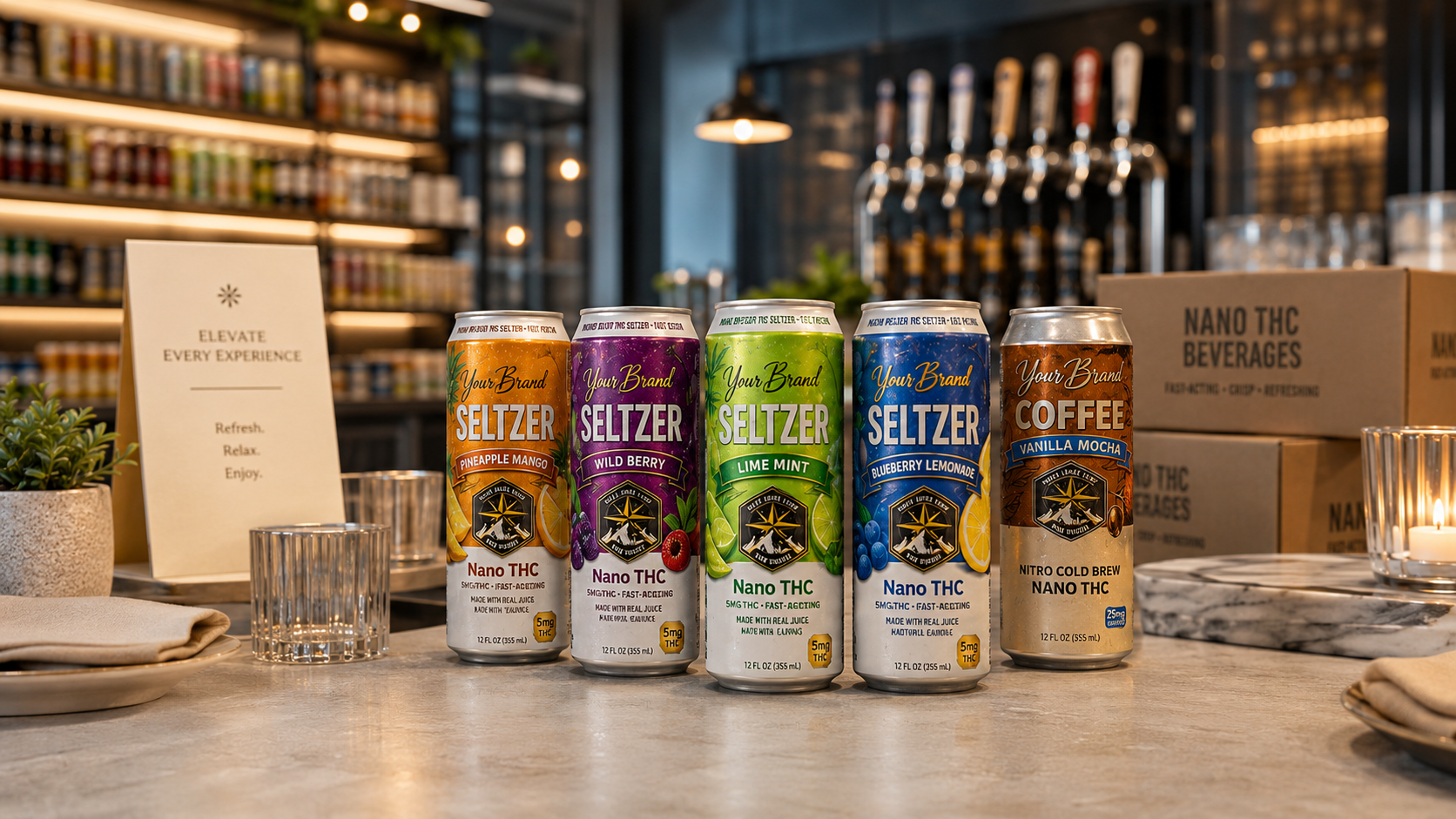
A beverage opportunity is strongest when the product fits customers you already understand, a channel you can actually reach, and an order size your business can support.
A practical first production quantity for many beverage projects.
A clear way to plan initial inventory, samples, and sales.
Production programs can grow with retail or distributor demand.
Your first question is not whether another company is entering the category. It is whether your customers would understand the product, where you would sell it, and how much inventory your existing sales channels could realistically support.
Explore the broader THC beverage market, then compare launch costs, production quantities, and the beverage manufacturing process.
The best question is not simply whether your business can launch. It is which advantage you can turn into a product, channel, and customer occasion.
Use existing product, retail, or customer knowledge to add seltzer, tea, soda, lemonade, coffee, mocktail, or functional beverage formats.
Extend an established cannabinoid audience into measured-dose, shelf-ready beverages that create new consumption occasions.
Create a cooler-ready house brand designed around the store's customer, preferred price tier, flavor demand, and merchandising strategy.
Develop a house brand or exclusive beverage program for retailers and accounts already interested in new adult beverage options.
Explore packaged mocktails, seltzers, spritzers, teas, or lemonades for menus, resorts, clubs, events, and adult hospitality programs.
Add a familiar can format for adults looking for another social option while using existing beverage-brand and taproom experience.
Use cold brew, tea, fruit, hydration, or functional positioning to create a beverage customers can quickly understand.
Launch one focused beverage or develop a broader product line that fits an established brand, existing accounts, and expected demand.
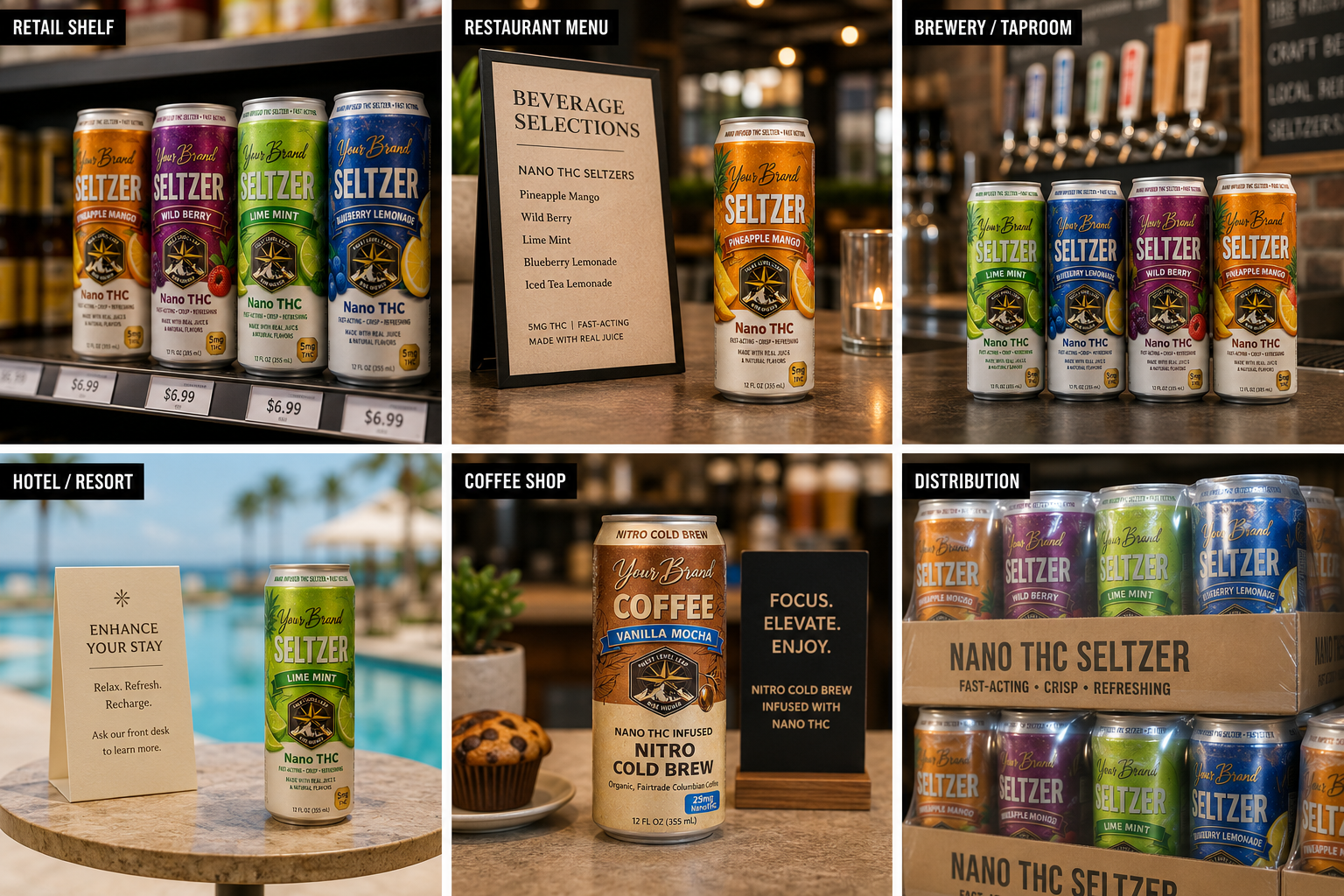
Each operator enters with a different asset. The launch plan should use that asset instead of forcing every business into the same beverage concept.
| Operator | Advantage to use | Strong first move | Questions to answer |
|---|---|---|---|
| Existing brand | Audience, identity, sales history | Add one product that fits the current brand promise | Which flavor, format, and dose will current customers understand? |
| Retailer | Shelf space, merchandising data | Launch a focused private-label SKU for a proven customer segment | Where will it sit, who buys it, and what price tier fits? |
| Distributor | Account reach, market feedback | Build a house brand or exclusive line around account demand | Which accounts, states, volumes, and reorder cadence matter? |
| Hospitality operator | Venue, menu, occasion | Choose a packaged drink that fits service and guest experience | How will it be stored, served, explained, and controlled? |
| Founder or creator | Concept, community, story | Start with one clear hero product and a defined channel | Who is the first customer and how will the first run sell? |
| Enterprise team | Capital, distribution, scale | Scope formula, packaging, forecasting, cadence, and capacity together | What annual volume, launch calendar, and supply plan are required? |
Next Level Leaf supports first commercial runs, larger retail and distributor orders, multiple SKUs, and recurring beverage production. The right plan depends on your customers, order volume, packaging, and expected reorders.
Plan enough inventory for initial accounts, product sampling, customer feedback, and your next reorder.
Approximately 1,200 cans per SKUIncrease production or add flavors as retail placements and customer demand grow.
Larger orders and additional SKUsCoordinate order volume, packaging, delivery, inventory, and reorders around the accounts you serve.
Higher-volume recurring productionA smaller product-evaluation run may be available when it fits the project and production requirements.
360 cans for qualified projectsNext Level Leaf supports established brands preparing larger beverage orders, multiple SKUs, expanding retail programs, and recurring production. Share your product, expected volume, packaging, delivery needs, and reorder schedule so the production plan reflects your actual business.
You do not need every product detail finalized. Start with a clear idea of who would buy the beverage, how you would sell it, and what order size your business can support.
White-label beverages can start with an established product profile. Private-label programs help retailers, distributors, and existing brands create products that reflect their customers and brand. Custom development may be appropriate when a distinct flavor, ingredient combination, or product concept is essential.
Compare options in the co-packing versus white-label guide, explore custom THC beverage formulation, or use the THC Beverage Launch Checklist to organize your next steps.
Your beverage format, cannabinoid amount, packaging, labeling, and sales channel should fit the markets you plan to serve. Review the state beverage resources for your intended market, then align the product and packaging with your actual customers and sales plan.
Move from business fit to a practical decision about cost, quantity, product path, and market readiness.
First-time founders, established beverage companies, hemp brands, retailers, distributors, coffee companies, breweries, restaurants, and hospitality businesses can explore a THC beverage program that fits their customers and sales channels.
No. A white-label or private-label beverage can provide an established starting point while you focus on your brand, customers, packaging, and sales plan. Custom development may be appropriate when the product requires a distinct formula.
Yes. A retailer can explore a private-label or store-brand beverage designed around its customers, preferred flavors, shelf presentation, pricing goals, and expected sales volume.
Yes. Larger beverage orders, multiple SKUs, distributor programs, retail rollouts, and recurring production can be planned around account demand, packaging, delivery needs, and expected reorders.
Restaurants, hotels, event businesses, and other hospitality operators can explore packaged beverage concepts that fit their customers and intended sales channels. Applicable state, local, venue, and service requirements should be reviewed for the specific market.
Approximately 1,200 cans per SKU, or 50 cases of 24, is the normal commercial starting point. A selective 360-can prototype may be available for qualified projects when initial product evaluation is appropriate.
White-label and private-label products can build from established beverage profiles, while custom development may be a better fit when a distinct flavor, ingredient combination, or product concept is essential to the brand.
Share your business type, beverage format, preferred flavor, cannabinoid amount, packaging, intended customers, expected order volume, delivery needs, target timing, and whether you anticipate future reorders.
Tell us about your business, the customers you serve, the beverage you want to create, and the order size you are considering. We can help plan a first commercial run, a larger retail or distributor order, or recurring production.