

Choose the product promise
Start with the customer moment: focus, energy, calm, mushroom, adaptogenic, nootropic, infused, or a premium coffee ritual.
A successful functional coffee launch starts with a clear product direction, not a crowded ingredient list. The best first product is easy to explain, realistic to manufacture, and strong enough to test with real buyers.
Use this guide to plan a ready-to-drink functional coffee brand around audience fit, product promise, format, ingredients, MOQ, cost, packaging, testing, and quote readiness.
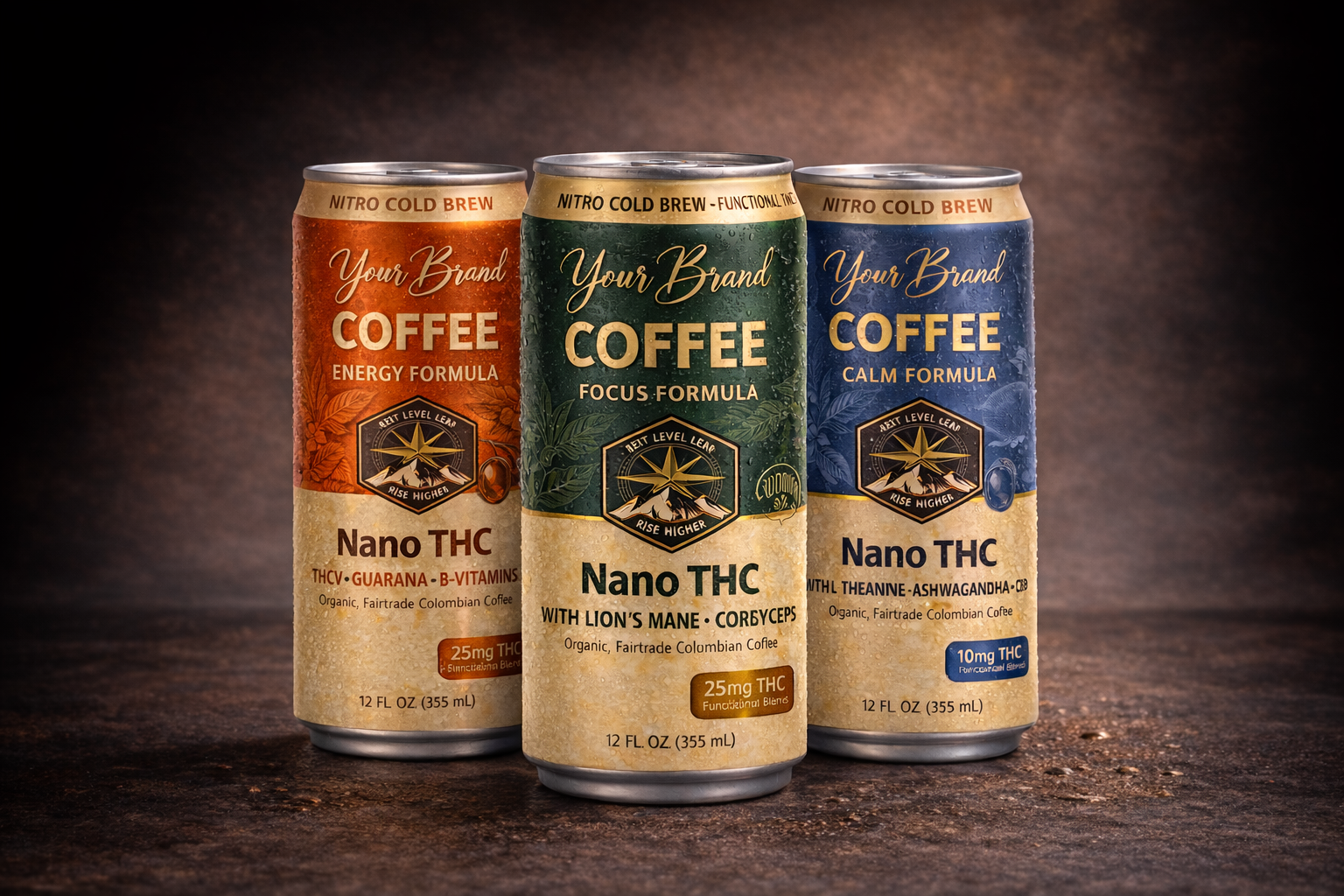
To launch a functional coffee brand, start with one clear product promise, choose the right coffee format, decide whether the first run should be white-label or custom, keep the ingredient story focused, plan MOQ and cost realistically, prepare packaging and label details, then request a quote before moving into samples or production. The goal is not to add every functional ingredient possible. The goal is to build a coffee product that customers understand and buyers can evaluate.
Launch sequence
A clean launch process helps founders avoid vague product concepts, unclear ingredient stories, and quote requests that are too broad to price accurately.
Start with the customer moment: focus, energy, calm, mushroom, adaptogenic, nootropic, infused, or a premium coffee ritual.
Decide whether the brand should launch as RTD coffee, cold brew, nitro coffee, flavored coffee, or another coffee-first beverage format.
Compare white-label, customized, and custom formulation paths based on timeline, differentiation, cost, and production fit.
Clarify flavor, ingredients, MOQ, can size, packaging, target markets, launch channel, testing needs, and timeline.
The first decision is not the ingredient list. It is the reason the product should exist. Functional coffee works best when the customer can understand the idea quickly: coffee for focus, coffee for smoother energy, coffee for a calm daily routine, mushroom coffee, adaptogenic coffee, nootropic coffee, or coffee with cannabinoids where that path fits the market.
A vague concept like “healthy coffee with functional ingredients” is harder to build and harder to sell. A clearer concept gives the brand a stronger packaging message, a better sampling story, and a more useful manufacturing conversation.
Launch-stage brands should usually start with one lead promise and one lead SKU before expanding into additional flavors or functional directions.
Each direction changes the launch plan. The audience, ingredient system, flavor strategy, label language, cost, and MOQ can all shift depending on the product lane.
| Direction | Best fit | Planning notes |
|---|---|---|
| Mushroom coffee | Brands that want a recognizable functional ingredient story inside a coffee ritual. | Works best when the mushroom direction and customer occasion are easy to understand. |
| Adaptogenic coffee | Brands that want a balance, routine, lifestyle, or premium wellness-oriented coffee story. | Needs careful claims discipline and a simple ingredient architecture. |
| Nootropic coffee | Brands focused on productivity, clarity, workday use, studying, creators, or focus-forward positioning. | The product should still taste and feel like coffee, not like a supplement in a can. |
| Focus coffee | Workday, professional, creator, student, or productivity-focused audiences. | Pairs naturally with nootropic and mushroom coffee positioning. |
| Energy coffee | Morning momentum, active lifestyles, performance-forward audiences, or drive-oriented branding. | Needs differentiation beyond ordinary caffeine. |
| Calm coffee | Brands that want a smoother, softer, balance-oriented coffee concept. | Works best when the product story feels refined, not contradictory. |
The format determines more than how the product looks. It affects flavor, ingredient compatibility, packaging, price point, shelf presentation, freight, and production planning.
A practical format for brands that want convenience, retail visibility, and a coffee product that is easy to sample and distribute.
Useful when the product should feel smoother, coffee-forward, and familiar to consumers already buying premium RTD coffee.
Can create a more premium mouthfeel and visual experience, but it should still fit the flavor, can format, cost, and production path.
A white-label path can help a brand move faster when the product direction is close to an existing production pathway. A customized path may adjust flavor, branding, dose direction, or ingredient choices. A custom formulation may be better when the concept needs a more specific customer experience or ingredient architecture.
The right path depends on how different the product needs to be, how quickly the brand wants to launch, how much R&D is required, and whether the first run is meant to test demand or support a broader retail push.
Best when speed, simplicity, and a clearer production path matter more than full customization.
Best when the brand wants practical adjustments without starting from a blank formula.
Best when the formula, functional stack, flavor, mouthfeel, or brand promise needs to be more specific.
The strongest functional coffee brands are not built by adding every popular ingredient to one product. A crowded ingredient stack can make the drink harder to formulate, harder to flavor, harder to explain, and harder to price.
A clearer approach is to choose one lead product promise, then use ingredients that reinforce that promise. If the product is focus-oriented, the stack should support a focus-forward story. If the product is calm-oriented, the experience and positioning should feel softer and more balanced. If the product includes cannabinoids, the quote conversation needs to account for dose, state-specific planning, testing, labeling, and finished-product documentation.
MOQ affects the entire launch. It determines how much finished inventory the brand will hold, how much product can be used for sampling, how many retail accounts can be tested, and how much cash is needed for the first run.
For most early functional coffee brands, one strong SKU is usually easier to manage than three or four under-tested directions. A focused launch can produce cleaner feedback and a better second run.
For more detail, review the Functional Coffee MOQ guide and the Cost to Start a Functional Coffee Brand guide.
Packaging is part of the product strategy. The label needs to quickly communicate what the beverage is, why it exists, what functional direction it represents, and how the customer should understand the coffee experience.
Testing and documentation also matter. Functional coffee brands should plan for ingredient documentation, finished-product expectations, lot records, and any testing or COA needs tied to the product format, ingredients, cannabinoids, retailers, or target markets.
You do not need a finished formulation before reaching out. But a quote becomes much more useful when the core product direction is clear. The goal is to give the manufacturing team enough information to evaluate production fit, MOQ, cost, packaging, timing, and next steps.
Avoidable mistakes
Most functional coffee launch problems start when the concept is too vague, too crowded, or too disconnected from production reality.
Multiple flavors can look impressive, but each one adds cost, packaging, production, testing, and inventory complexity.
A long ingredient list does not automatically create a better product. It can make the drink harder to explain and harder to manufacture.
Functional coffee should stay product-first. Avoid medical positioning, guaranteed outcomes, and label language that creates avoidable risk.
Use these pages to move from category understanding to product direction and production planning.
Return to the main category page and compare all functional coffee directions.
Start with the category definition before choosing a first product direction.
Understand the cost drivers behind first-run planning.
Plan first-run volume, inventory, samples, and launch testing.
Explore one of the clearest high-intent functional coffee product directions.
See how functional coffee fits into a broader white-label beverage manufacturing plan.
Share the product direction, coffee format, flavor idea, functional ingredients, first-run goals, packaging needs, and target markets you are considering. We can help review the best path around white-label, custom, MOQ, cost, testing, and production timing.