

What Is Functional Coffee?
Functional coffee is coffee built around a more specific product experience than coffee alone. It may be positioned around focus, energy, balance, calm, mushrooms, adaptogens, nootropics, cannabinoids, or another function-forward direction.
For founders and beverage brands, the opportunity is not just adding trendy ingredients. The opportunity is building a coffee product with a clearer use occasion, stronger differentiation, and a more practical path into a premium daily-use category.
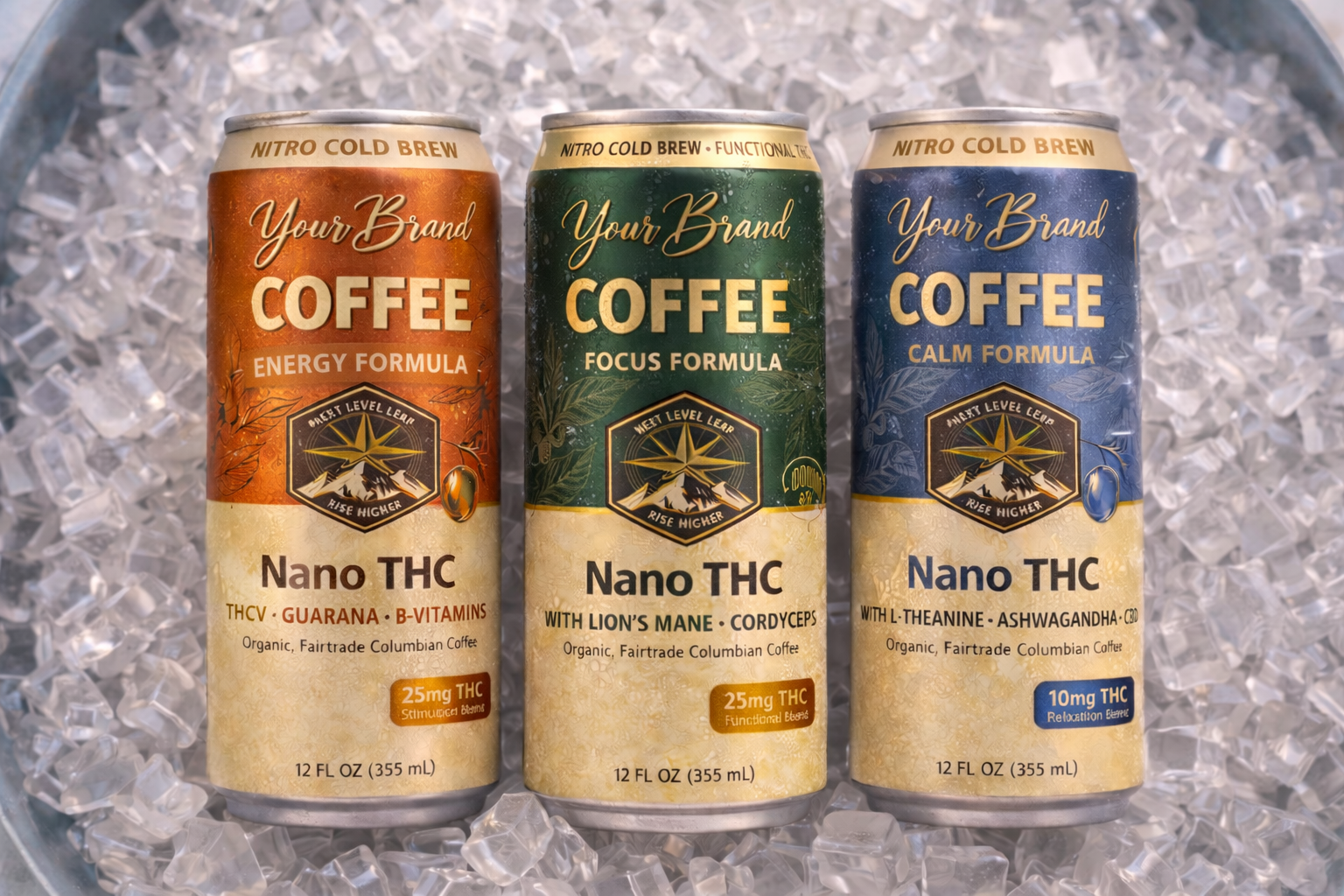
Functional coffee is coffee formulated and positioned around a specific use case or product experience. Regular coffee is usually sold around flavor, roast, caffeine, or ritual. Functional coffee adds a clearer reason to choose the product, such as focus, smoother energy, calm, balance, mushrooms, adaptogens, nootropics, cannabinoids, or another differentiated coffee-plus-function concept.
In this guide
Coffee-first
The product still needs to feel like a real coffee product. The functional layer should enhance the concept, not make the coffee identity disappear.
Use-case driven
The strongest concepts are easy to understand because they are built around a clear routine, audience, or occasion.
Brand-building
Functional coffee can create a stronger reason to exist than a generic beverage when the positioning and ingredient story are aligned.
Functional coffee definition
Functional coffee is a coffee product that includes additional ingredients or positioning to support a more specific product experience. That experience may be framed around focus, energy, calm, balance, morning routine, productivity, wellness lifestyle, or another clearly defined customer occasion.
The important point is that functional coffee is not simply coffee with a long ingredient list. A stronger functional coffee concept has a clear purpose, a believable ingredient system, and a format that makes sense for the customer.
Functional coffee works best when the product is easy to explain: coffee plus one clear reason the customer should choose it.
How functional coffee differs from regular coffee
Regular coffee already has major strengths: familiarity, daily habit, taste, caffeine, and ritual. Functional coffee builds on those strengths by adding a more specific product story.
| Category | Regular coffee | Functional coffee |
|---|---|---|
| Primary reason to buy | Taste, caffeine, habit, roast, convenience, or coffee culture. | A specific coffee experience, such as focus, energy, calm, balance, or functional routine. |
| Brand story | Usually built around coffee quality, origin, flavor, or lifestyle. | Built around coffee plus a clearer use case or functional positioning angle. |
| Ingredient role | Coffee is the full product story. | Coffee remains central, but selected ingredients help reinforce the product promise. |
| Commercial opportunity | Broad and familiar, but often crowded. | More differentiated when the brand needs a sharper niche or a clearer reason to exist. |
Common functional coffee ingredient directions
Functional coffee can be built in several directions. The right path depends on the brand, the audience, the intended product experience, and the manufacturing requirements.
Mushroom coffee
Mushroom coffee is often positioned around focus, daily routine, and modern wellness identity. It can be a strong white-label direction when the concept is clear and the ingredient story is easy to understand. Explore mushroom coffee white label.
Adaptogenic coffee
Adaptogenic coffee is usually built around a more balanced, function-forward brand story. It works best when the product has one clear promise rather than trying to say everything at once. Read the adaptogenic coffee strategy guide.
Nootropic coffee
Nootropic coffee is commonly positioned around focus, clarity, or productivity. The key is to keep the product coffee-first while making the functional angle specific and believable. Compare nootropic coffee vs regular coffee.
Cannabinoid coffee
Some functional coffee concepts may include THC, CBD, CBG, THCV, or other cannabinoids, depending on the target market and regulatory path. These projects need careful formulation, testing, labeling, and compliance planning.
Other possible directions
Functional coffee can also be positioned around energy, calm, protein, vitamins, electrolytes, botanicals, or other functional cues. The best choice is the one that supports a clear customer use case and a practical launch plan.
Functional coffee directions and planning guides
After the category definition is clear, the next step is choosing the lane and planning page that matches the brand’s first release. These internal pages should all point to one another because they help Google and readers understand the Functional Coffee group as a connected resource set.
Focus coffee
Use this direction when the product story is built around workday clarity, productivity, or a focus-oriented coffee routine. Explore focus coffee.
Energy coffee
Use this direction when the product should lean into drive, stimulation, active mornings, or a more performance-oriented coffee occasion. Explore energy coffee.
Calm coffee
Use this direction when the concept needs a softer lifestyle angle around balance, smoother energy, or a more refined daily ritual. Explore calm coffee.
Cost to start
Use this guide when the buyer needs to understand the cost drivers behind ingredients, packaging, first-run volume, testing, and launch planning. Review functional coffee startup costs.
MOQ planning
Use this guide when the buyer is comparing first-run size, SKU count, inventory risk, samples, retail tests, and cost per can. Read the functional coffee MOQ guide.
Launch planning
Use this guide when the buyer is ready to move from category idea to a practical first release with formulation, packaging, quote, and manufacturing decisions. Learn how to launch a functional coffee brand.
Why founders are building functional coffee brands
Functional coffee is attractive because it combines a familiar daily ritual with a stronger product story. Instead of asking a customer to adopt a completely unfamiliar beverage, the brand can build from something the customer already understands.
- Coffee already has strong daily-use behavior.
- Ready-to-drink coffee supports premium packaging and repeat purchase.
- Functional ingredients can make the product easier to differentiate.
- A clear use case can make the brand easier to explain to buyers, retailers, and customers.
- The category can support white-label products, custom formulations, and future line extensions.
This is also why the category can be a useful bridge between traditional beverage strategy and more advanced infused and functional beverage manufacturing.
Launch and manufacturing decisions
Once a founder understands the category, the next step is choosing a practical product path. The best functional coffee concept is not always the one with the most ingredients. It is the one that can be produced, explained, tested, sold, and repeated.
Format
Decide whether the product should be still coffee, cold brew, nitro cold brew, canned RTD coffee, or another format. Format affects taste, packaging, cost, and production path.
Function
Choose the central product promise before adding ingredients. Focus, energy, calm, balance, mushroom, adaptogenic, nootropic, and cannabinoid directions each lead to different product decisions.
Ingredient system
Keep the ingredient architecture focused. A smaller, clearer system is often easier to explain than a crowded blend that creates confusion.
Launch path
Decide whether the fastest path is a white-label direction, a customized base, or a more involved custom formulation and R&D process.
Claims and compliance discipline
Functional coffee should not be written or marketed like a medical product. Product language should avoid disease claims, treatment claims, or promises that a beverage will create guaranteed health outcomes. The safer approach is to position the product around routine, occasion, experience, and brand identity while reviewing labels and claims carefully before launch.
This matters even more when the product includes cannabinoids, adaptogens, mushrooms, botanicals, or other functional ingredients that may create additional labeling and market-specific considerations.
What to prepare before requesting a functional coffee quote
A quote is much easier to prepare when the product direction is clear. Founders do not need every detail finalized, but they should be ready to describe the concept in practical terms.
- Target customer or audience
- Desired product format: RTD coffee, cold brew, nitro, still coffee, or another format
- Functional direction: mushroom, adaptogenic, nootropic, cannabinoid, energy, calm, or other
- Target cannabinoid or non-cannabinoid ingredient direction, if known
- Flavor direction and sweetness preference
- Packaging format and label status
- Launch timeline and first-run quantity goals
- Whether the project is white-label, customized, or fully custom
Frequently asked questions
Related reading
Thinking about building a functional coffee brand?
If you are evaluating positioning, formulation direction, or how to bring a coffee-plus-function concept to market, the next step is to share what you want to build.