


Nootropic Coffee vs Regular Coffee
Regular coffee already has a strong daily ritual. Nootropic coffee builds on that ritual by adding a clearer functional direction, often focused on productivity, focus, mental clarity, or smoother daily energy.
For founders, the difference is not just an ingredient list. It is a product strategy decision. The right choice affects positioning, flavor, functional stack, packaging, MOQ, pricing, and how easily the customer understands why the drink exists.
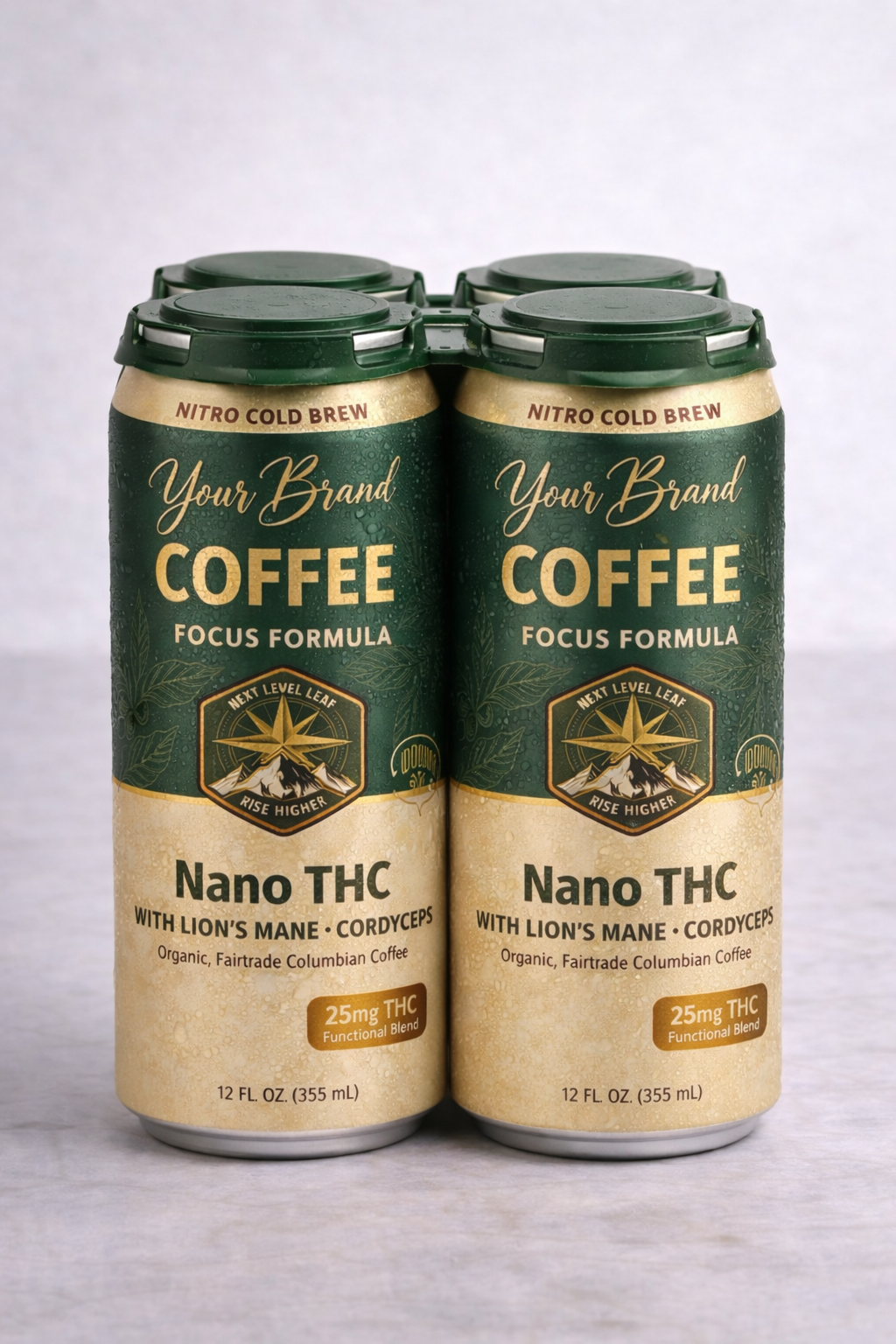
Nootropic coffee differs from regular coffee because it is built around a more specific functional coffee promise. Regular coffee usually leads with taste, caffeine, roast identity, and daily ritual. Nootropic coffee keeps the coffee ritual but adds a clearer product direction around focus, clarity, productivity, or smoother daily energy.
For a beverage brand, that can create stronger differentiation, but it also adds decisions around ingredient architecture, claims discipline, flavor masking, packaging, cost, MOQ, and launch path.
In this guide
Regular Coffee
Regular coffee is usually category-first. The product wins through taste, roast quality, cold brew style, nitro texture, brand identity, convenience, and daily habit.
- Broad and easy to understand
- Strong daily-use behavior
- Lower functional-ingredient complexity
- Often easier to position around flavor and quality
Nootropic Coffee
Nootropic coffee is coffee plus a clearer function-forward direction. It usually works best when the brand wants to own a more specific focus, clarity, or productivity occasion.
- More differentiated product story
- Clearer audience targeting
- More formulation and claims considerations
- Stronger fit for focus-oriented functional brands
What is the real difference between nootropic coffee and regular coffee?
The difference is not simply whether the coffee has extra ingredients. The deeper difference is what the product is asking the customer to believe.
Regular coffee is familiar first
Regular coffee already has a clear place in the customer’s day. It can be premium, convenient, flavorful, organic, nitro, cold brew, or ready-to-drink without needing a functional ingredient story. A brand can win by making the coffee taste great, look premium, and fit an existing morning or afternoon routine.
Nootropic coffee is purpose-led
Nootropic coffee still needs to taste and feel like coffee, but it adds a more specific reason to choose it. The product may be positioned around work, focus, creative output, productivity, studying, gaming, entrepreneurship, or a smoother version of the daily coffee ritual.
The brand promise gets narrower
That narrower promise can be an advantage. A product that tries to serve everyone often becomes generic. A product built around a clear use occasion can be easier to explain, easier to package, and easier for the right customer to remember.
Regular coffee sells the coffee ritual. Nootropic coffee sells a more specific version of that ritual: coffee with a clear functional direction.
When nootropic coffee makes commercial sense
Nootropic coffee makes the most sense when the brand needs more than a basic coffee story. It is especially useful when the audience already cares about performance, focus, work output, productivity, or functional ingredients.
It fits a clear customer occasion
A nootropic coffee concept can make sense for customers who want a morning work drink, afternoon focus drink, creator-friendly coffee, study product, conference beverage, office fridge product, or retail-friendly functional coffee line.
It gives the product a stronger shelf reason
In a crowded coffee set, the functional direction can help the product stand out. The customer should quickly understand why this coffee exists and why it is different from a standard canned coffee.
It can support a broader functional coffee line
Nootropic coffee can also connect naturally to white-label mushroom coffee, adaptogenic coffee strategy, and broader functional beverage concepts.
When regular coffee may still be the better choice
Nootropic coffee is not automatically the better path. Regular coffee may be stronger when the brand wants simplicity, broad approachability, a flavor-first story, or a more classic coffee identity.
When taste and simplicity are the real advantage
If the core opportunity is a great black coffee, salted caramel nitro, vanilla mocha, or premium cold brew experience, the brand may not need a functional stack to make the product compelling.
When functional claims would add friction
Functional ingredients can make a product more interesting, but they can also make it harder to explain. If the customer cannot understand the product quickly, a simpler coffee-first concept may be cleaner.
When cost control matters most
More ingredients usually mean more sourcing, formulation, testing, flavor, and margin considerations. If the first priority is speed, simplicity, or a leaner launch, regular coffee or a simpler functional coffee path may be more practical.
Ingredient architecture and product story
The strongest nootropic coffee concepts are not built by adding every trendy ingredient into one can. They are built by choosing a clear product direction and then using ingredients that support that direction.
Common nootropic coffee directions
- Focus coffee: a work, study, productivity, or concentration-oriented concept that makes the functional promise easy to understand.
- Mushroom coffee: often built around Lion’s Mane, Cordyceps, or broader mushroom blends when the product story fits.
- Energy coffee: a more active coffee direction built around drive, output, morning momentum, or performance-oriented positioning.
- Calm coffee: a softer coffee-plus-function lane for brands that want balance, smoother energy, or a more lifestyle-oriented routine.
- Adaptogenic coffee: coffee paired with botanicals or functional ingredients that support a broader routine-based brand story.
Ingredients should clarify the product, not clutter it
A functional stack should make the product easier to understand. If the ingredient list is long but the brand promise is vague, the product may feel less credible. For most launch-stage brands, one clear product direction is better than trying to make the coffee do everything.
Practical founder takeaway: Start with the use occasion before choosing the stack.
A simple question helps: should this coffee feel like a workday focus drink, a premium cold brew, a mushroom coffee, a smoother energy product, or part of a larger functional beverage line?
Format, MOQ, and pricing decisions
Once the positioning is clear, the page moves from idea to production planning. This is where many founders underestimate the number of decisions that affect cost and timeline.
Ready-to-drink format
A ready-to-drink nootropic coffee may be built as cold brew, nitro cold brew, flavored coffee, or a broader functional coffee format. Each direction affects ingredient compatibility, flavor, packaging, and production planning.
Functional ingredients and flavor
Nootropic and functional ingredients can change flavor, mouthfeel, bitterness, sweetness, and sediment risk. A stronger ingredient story still has to become a drink people want to buy again.
MOQ and first-run planning
MOQ matters because every added decision creates production and inventory implications. A focused first run is usually easier to execute than launching too many nootropic coffee variations before the market has been tested.
Pricing considerations
Pricing is shaped by the coffee base, functional ingredient stack, dose targets, packaging, labeling, testing, documentation, order quantity, and whether the project uses a simpler white-label path or a more custom development path. You can also review the broader THC beverage and functional beverage pricing guide for how we think about cost drivers.
Claims discipline for nootropic coffee brands
Nootropic coffee should be positioned carefully. The product can be built around a focus-friendly occasion, but it should not be presented like a medical product or a guaranteed cognitive-performance product.
Keep the language product-first
Strong language usually focuses on the product experience, the use occasion, and the ingredient story. It should not promise disease outcomes, treatment outcomes, guaranteed focus, or guaranteed performance.
Make the label easy to understand
Retailers and customers should be able to understand what is in the can, what the product is meant to feel like as a beverage concept, and how it fits into a normal coffee routine.
Documentation still matters
Finished-product testing, ingredient documentation, clear labeling, and responsible functional positioning can make the product easier to trust as the brand moves into retail, wholesale, or distributor conversations.
What to prepare before requesting a nootropic coffee quote
You do not need every detail finalized before starting a conversation, but the quote process is much easier when the core direction is clear.
- Preferred coffee format: cold brew, nitro, flavored coffee, or another RTD direction
- Primary product promise: focus, productivity, smooth energy, mushroom coffee, or broader functional coffee
- Ingredient ideas: mushrooms, adaptogens, amino acids, vitamins, caffeine strategy, or other functional ingredients
- Flavor direction: black coffee, salted caramel, vanilla mocha, mocha, or another flavor idea
- Packaging direction: can size, label style, case format, and retail presentation
- First-run quantity or launch budget range
- Whether the product is non-infused, cannabinoid-forward, or part of a larger THC/CBD beverage strategy
If you are still comparing directions, start with the Functional Coffee hub. Then compare the product lanes: Focus Coffee, Energy Coffee, Calm Coffee, Mushroom Coffee White Label, and Adaptogenic Coffee Brand Strategy. For launch planning, use the How to Launch a Functional Coffee Brand, Cost to Start a Functional Coffee Brand, and Functional Coffee MOQ guides.
Where nootropic coffee fits in the Functional Coffee cluster
Nootropic coffee is the comparison and positioning page for founders who are deciding whether a coffee product should stay simple or carry a clearer functional promise. It should route readers into the product-lane pages and the planning pages so Google and users can understand the full Functional Coffee group.
Product-lane pages
Use these pages when the buyer is deciding what type of functional coffee product to build first.
Launch-planning pages
Use these pages when the buyer is closer to budgeting, MOQ planning, or requesting a quote.
Frequently asked questions
Related reading
Ready to build a focused functional coffee concept?
If you want to talk through nootropic positioning, audience fit, RTD format, functional ingredients, MOQ, and the best launch path, tell us what you want to build.