

Cost to Start a Functional Coffee Brand
The cost to start a functional coffee brand depends on the first product format, MOQ, ingredient stack, packaging plan, testing needs, and whether you are using a white-label path or building a more custom formula.
Use this guide to understand the major cost drivers behind ready-to-drink functional coffee, mushroom coffee, adaptogenic coffee, nootropic coffee, cannabinoid coffee, and other coffee-plus-function launches.
The cost to start a functional coffee brand is shaped less by one fixed price and more by the product path you choose. A simpler white-label ready-to-drink coffee can usually be scoped faster than a custom beverage with new flavors, mushroom or adaptogen blends, cannabinoids, specialty packaging, expanded testing, and a more complex launch plan.
What affects the cost of a functional coffee launch?
The first cost question is not only “what is the price per can?” A more useful question is: what kind of functional coffee product are you trying to launch? A black nitro coffee with a simple functional angle is very different from a sweetened latte-style product with mushrooms, adaptogens, nootropics, cannabinoids, custom flavor work, special packaging, and state-by-state distribution planning.
For most founders, the first estimate depends on a small group of practical decisions: the coffee format, first-run quantity, ingredient stack, packaging plan, testing requirements, and how much custom formulation work is needed before production.
MOQ and first run
MOQ drives total first-run investment because it determines how many finished units need to be produced, labeled, packed, documented, and shipped.
Functional stack
Coffee base, caffeine level, flavor system, mushrooms, adaptogens, nootropics, cannabinoids, sweeteners, and stability needs can all change the quote.
Can and label plan
Standard cans and labels are usually easier to launch than specialty finishes, printed cans, retail multipacks, or custom carton systems.
Typical cost categories to plan for
A functional coffee launch usually has several cost buckets. Some are planning or setup costs. Others scale with each production run. Understanding these categories helps founders compare a white-label path, a lightly customized path, and a more custom functional coffee concept.
| Cost category | What it covers | Why it matters |
|---|---|---|
| Product development | Flavor direction, coffee base decisions, functional ingredient fit, sampling, and formula refinement. | More custom products usually need more development before the first production run. |
| MOQ / first production run | The minimum finished quantity required to run the product efficiently. | This is usually the largest part of the first cash requirement and shapes inventory planning. |
| Ingredients | Coffee, flavors, sweeteners, mushrooms, adaptogens, nootropics, cannabinoids where applicable, and stabilizing systems. | Premium inputs can improve the product story but may increase cost per unit and testing needs. |
| Packaging | Cans, labels, trays, case packs, and retail-facing packaging decisions. | Packaging affects shelf presence, compliance communication, lead time, and first-run complexity. |
| Testing and documentation | Finished-product testing, COAs, lot documentation, ingredient documentation, and label-review support where needed. | Retailers, distributors, and partners often need clear documentation, especially for infused or functional beverages. |
| Freight and logistics | Shipping finished product, samples, pallets, and any needed receiving or storage planning. | Beverages are heavy, so freight can materially affect landed cost. |
White-label vs custom functional coffee costs
A white-label functional coffee path is usually easier to estimate because the product direction is closer to production. That can make it faster to scope MOQ, can format, label needs, timeline, and per-unit pricing.
A custom functional coffee concept can be the better fit when the brand needs a specific flavor profile, ingredient stack, dose structure, customer experience, or retail story. The tradeoff is that custom work can require more formulation time, sampling, ingredient sourcing, documentation, and planning before the first commercial run.
Faster and clearer to scope
Best when the brand wants to move quickly with a proven format, familiar flavor direction, and a practical packaging path.
More control, more planning
Best when the brand needs a more specific ingredient stack, experience, flavor profile, or category angle that is not already available.
How product direction changes the cost conversation
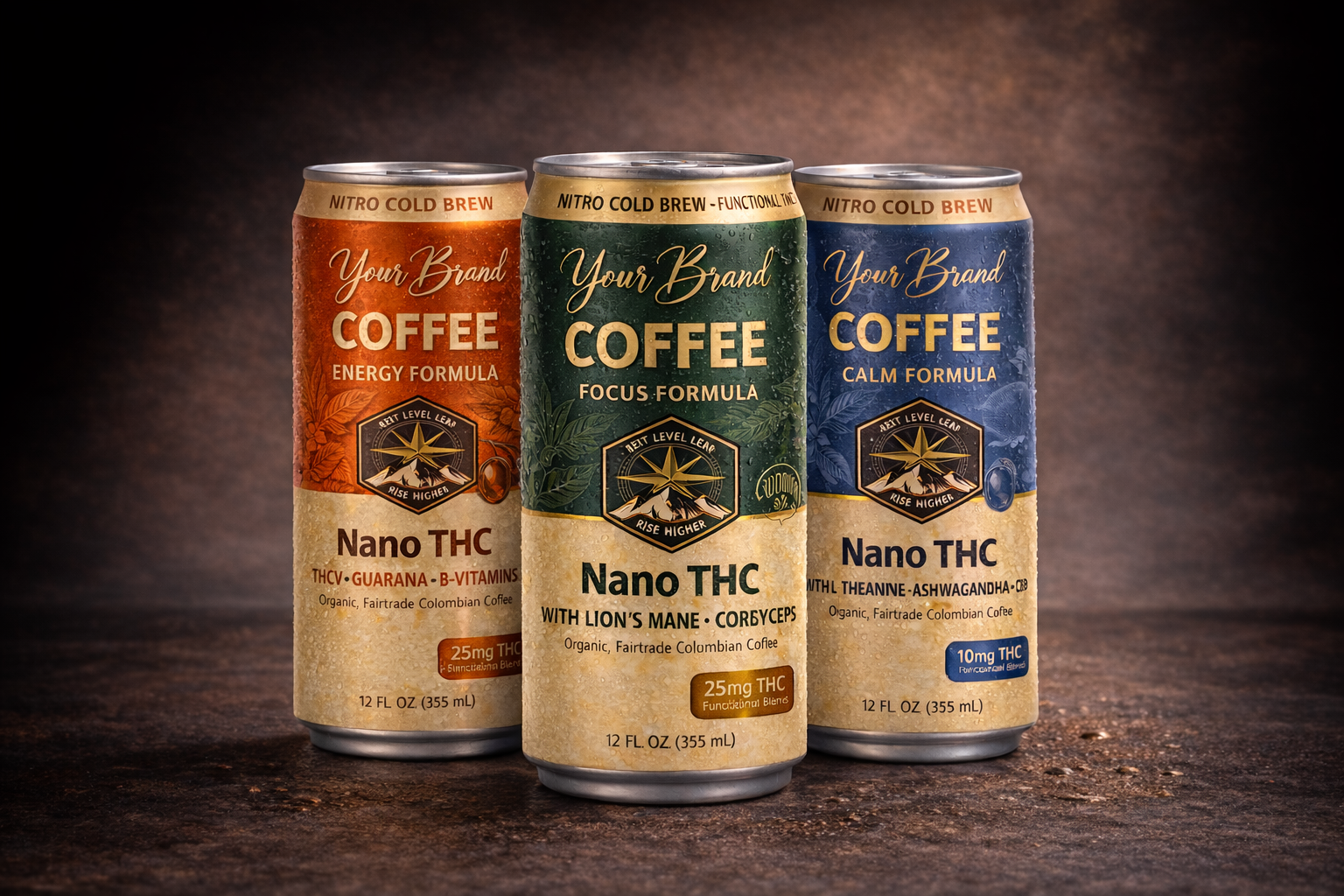
Functional coffee is not one product. A founder may be exploring a focus-oriented coffee, an energy coffee, a calmer lifestyle product, a mushroom coffee, an adaptogenic coffee, a nootropic-style coffee, a cannabinoid coffee, or a broader coffee-plus-function line. Each direction changes the cost discussion because each one has different ingredient, flavor, testing, documentation, and positioning needs.
Focus coffee
Often built around clarity, productivity, and workday positioning. Cost depends on the functional stack, flavor, caffeine structure, and claim-safe label language.
Energy coffee
Usually leans into drive, stimulation, or active-use positioning. The quote depends on whether the concept stays coffee-first or layers in additional active ingredients.
Calm coffee
Often positioned around smoother energy, balance, or lifestyle use. Cost depends on flavor design, ingredient fit, and how clearly the product can communicate the concept.
Mushroom coffee
Mushroom coffee can create a more differentiated story, but mushroom selection, taste management, sourcing, and documentation can affect the quote.
Adaptogenic coffee
Adaptogenic positioning can be strong, but the cost depends on ingredient architecture, flavor compatibility, and whether the first run uses a simple or complex stack.
Nootropic coffee
Nootropic-style coffee can sharpen the focus story, but it may require more careful ingredient selection, formulation, and customer-facing explanation.
MOQ changes total launch budget more than founders expect
MOQ matters because it determines how many finished cans need to be produced in the first run. Even if a per-can quote looks reasonable, the total budget changes quickly when you multiply that cost by the required production volume, packaging, testing, and freight.
The practical question is not simply whether a brand can afford one can. It is whether the first run gives the brand enough inventory to sell, sample, test channels, and learn from the market without creating unnecessary launch risk. For more detail, review the functional coffee MOQ guide.
Packaging and label choices can affect both cost and timing
Standard can formats and pressure-sensitive labels are usually easier for early production planning. Printed cans, cartons, multipacks, specialty finishes, or complex retail packaging can support a premium presentation, but they may increase lead time, minimums, and coordination.
For functional coffee, packaging also has to communicate the product clearly. Customers should quickly understand what the drink is, what occasion it is built for, what functional direction it represents, and whether the product is non-cannabinoid, cannabinoid-infused, mushroom-based, adaptogenic, nootropic-style, or coffee-first with a lighter functional layer.
Testing, COAs, and documentation should be part of the budget
Functional coffee brands should plan for documentation from the start. If the product includes cannabinoids, finished-product testing and COA access become especially important. If the product uses mushrooms, adaptogens, nootropics, or other functional ingredients, ingredient documentation and careful label language also matter.
Strong documentation can make the product easier to discuss with retailers, distributors, internal teams, and partners. It can also reduce friction when comparing flavors, doses, packaging options, production timelines, and target launch states.
The clearer your first product direction is, the easier it is to estimate cost. A strong quote request usually defines format, flavor, functional direction, caffeine level, can size, first-run volume, packaging plan, and whether the drink includes cannabinoids.
How to prepare before requesting a quote
You do not need everything finalized before you ask for help. But the more detail you can provide, the more useful the first estimate will be.
- Can size and format you are considering
- Desired coffee direction: black, flavored, nitro, latte-style, focus, energy, calm, mushroom, adaptogenic, nootropic-style, or infused
- Approximate first-run volume or target MOQ
- Flavor ideas and sweetness level
- Functional ingredients or cannabinoids you want to explore
- Packaging goals, including label-only, custom cans, cartons, or retail multipacks
- Target states, retail channels, distribution plans, or buyer type
- Launch timing and whether samples or R&D are needed first
Where to go next
For broader category planning, start with the functional coffee hub. If you are still defining the category, read what functional coffee is. If you are comparing launch structure, review how to launch a functional coffee brand and the functional coffee MOQ guide.
If you are closer to choosing a product direction, compare mushroom coffee white-label options, adaptogenic coffee brand strategy, nootropic coffee versus regular coffee, focus coffee, energy coffee, and calm coffee.
When you are ready to scope a product, the next step is to request a quote so the concept can be reviewed around MOQ, ingredients, packaging, testing, and production timing.
Related functional coffee resources
Ready to estimate your functional coffee launch?
Tell us what kind of coffee product you want to build and we can help scope the right path around MOQ, ingredients, packaging, testing, freight, and production timing.