

Functional Coffee MOQ for White-Label Coffee Brands
Functional coffee MOQ is one of the first questions founders need to understand because it affects launch budget, SKU count, packaging choices, testing, inventory planning, and the path from idea to first production run.
This guide explains how minimum order quantity works for ready-to-drink functional coffee, including white-label coffee, custom coffee, mushroom coffee, adaptogenic coffee, nootropic coffee, and cannabinoid coffee concepts.
Functional coffee MOQ is the minimum number of finished cans or cases needed for a practical production run. The right MOQ depends on the coffee format, SKU count, ingredients, packaging, testing, and whether the brand is using a white-label path or a custom formula.
For many first commercial runs, a useful planning benchmark is one strong SKU before expanding into multiple flavors or functional directions. Smaller prototype or R&D runs may be handled separately, but the first commercial MOQ should give the brand enough inventory to sample, sell, test demand, and support retailer or distributor conversations.
What does MOQ mean for functional coffee?
MOQ means minimum order quantity. In beverage manufacturing, it is the smallest production run that makes practical sense for the equipment, ingredients, packaging, labor, testing, and finished-product handling involved.
For a functional coffee brand, MOQ is not just a manufacturing number. It affects how much cash is needed for the first run, how much product can be used for samples, how many retailers can be tested, how quickly reorders may be needed, and whether the launch has enough finished inventory to learn from the market.
Total units
MOQ sets how many finished cans or cases need to be produced for the first commercial run.
Cash planning
The first run budget depends on finished units, ingredients, packaging, testing, labeling, and freight.
Market testing
The run should support samples, buyer conversations, retailer tests, launch inventory, and early reorder planning.
Production fit
MOQ helps the manufacturer run efficiently without wasting ingredients, packaging, production time, or testing resources.
Why functional coffee MOQ varies
Functional coffee can be simple or complex. A straightforward canned coffee using an existing production path is easier to scope than a custom product with multiple functional ingredients, new flavors, special packaging, or cannabinoid additions.
The more variables in the drink, the more important MOQ planning becomes. Coffee base, sweetness, flavor masking, functional ingredients, can size, label path, and finished-product testing all affect the first-run plan.
| MOQ factor | How it affects the first run | What to clarify early |
|---|---|---|
| White-label vs custom | White-label options are usually easier to scope because the product direction is closer to production. Custom products may need more formulation, sampling, and ingredient planning. | Do you want the fastest path or a more differentiated custom beverage? |
| SKU count | Each flavor or functional direction may require its own run, label, inventory plan, and testing process. | Are you launching one lead SKU or a multi-SKU line? |
| Functional ingredients | Mushrooms, adaptogens, nootropics, amino acids, vitamins, electrolytes, and cannabinoids can affect sourcing, taste, stability, and documentation. | Which ingredients are essential for the first version? |
| Packaging | Pressure-sensitive labels and standard can formats are usually simpler than printed cans, cartons, multipacks, or specialty retail packaging. | Do you need speed, premium presentation, or both? |
| Testing and documentation | Finished-product testing, COAs, lot documentation, and label review can affect timeline and cost, especially for cannabinoid or function-forward beverages. | What documentation do your retailers, distributors, or target states expect? |
One SKU is often the smarter first MOQ decision
Many founders want to launch with several flavors, but each additional SKU can increase cost and complexity. A focused first run gives the brand a cleaner way to test product-market fit, gather feedback, learn which message works, and decide whether expansion is justified.
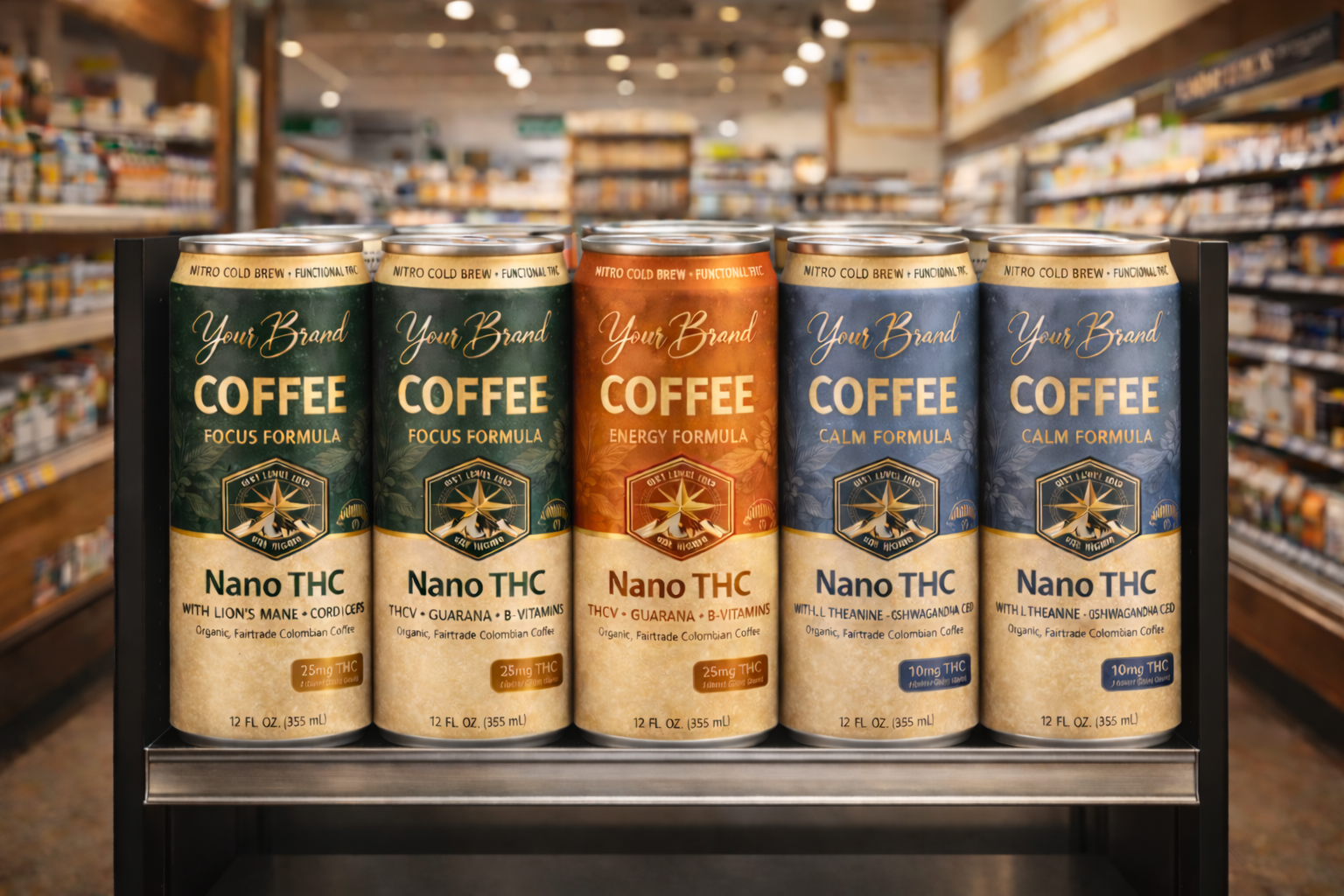
For functional coffee, one strong SKU can often be more useful than several under-tested ideas. A clear focus coffee, energy coffee, calm coffee, mushroom coffee, or adaptogenic coffee gives the market a simple story to understand.
A focused first run is often easier to sell, easier to explain, easier to sample, and easier to improve. Once the brand sees traction, additional flavors and functional directions become easier to justify.
White-label functional coffee and MOQ
White-label functional coffee can reduce early decision pressure because the production path is more defined. That can help a brand estimate volume, pricing, packaging, timeline, and label needs faster than starting from a blank formula.
This path can make sense for brands that want to test the market before investing in a heavily custom product. It can also make sense for retailers, operators, and founders who know they want a functional coffee line but need help choosing the first product direction.
Custom functional coffee and MOQ
Custom functional coffee gives the brand more control over the customer experience. That may include a specific coffee base, flavor profile, sweetness level, caffeine level, functional ingredient stack, cannabinoid addition, or packaging system.
The tradeoff is that custom development may require more planning before the MOQ can be quoted accurately. Ingredient availability, flavor performance, stability, packaging, testing, and label language all need to be considered.
How product direction affects MOQ planning
The broad MOQ conversation is similar across functional coffee, but each product direction changes what needs to be scoped. A focus-oriented product may require different ingredient and message planning than a calm coffee, mushroom coffee, or cannabinoid coffee.
Energy coffee
Best when the product story leans into drive, active use occasions, and a stronger stimulation position.
Mushroom coffee
Best when the concept needs a differentiated functional coffee identity with a familiar wellness-oriented cue.
Adaptogenic coffee
Best when the brand wants a broader ingredient-positioning system built around a clear functional promise.
Nootropic coffee
Best when the brand wants a stronger focus, clarity, or cognitive-positioning story inside coffee.
How MOQ affects cost per can
MOQ and cost per can are connected, but they are not the same thing. A smaller run may reduce total first-run investment, but it can sometimes increase per-unit cost. A larger run may improve production efficiency, but it requires more upfront inventory and a stronger sales plan.
The best MOQ is not always the lowest possible MOQ. The right MOQ is the volume that gives the brand enough inventory to launch responsibly, test demand, support samples, and avoid running out before there is enough market feedback.
How to think about first-run inventory
Before choosing a first MOQ, think about where the finished product will go. Will the product be used for retail tests, distributor samples, event sampling, wholesale outreach, online demand where permitted, or a local launch with a defined store list?
That plan helps determine whether the first run is large enough to matter. A functional coffee brand needs enough finished product to create real market learning, not just a small batch that disappears before the sales channel can be tested.
Set aside product
Samples for buyers, retailers, distributors, partners, and founders should be part of first-run planning.
Plan store count
Estimate store count, cases per store, reserve cases, and reorder timing before finalizing the first run.
Track feedback
The first run should help the brand learn which flavor, message, format, and use occasion gets traction.
What to prepare before asking for MOQ guidance
You do not need a finished product spec to start the conversation, but you should have a practical direction. The clearer the concept, the easier it is to discuss MOQ and quote the first run.
- One primary product direction: focus, energy, calm, mushroom, adaptogenic, nootropic, nitro, flavored, or cannabinoid coffee
- One or two possible flavors
- Can size and packaging style
- Whether the product is white-label, lightly customized, or fully custom
- Functional ingredients or cannabinoids you want to explore
- Target launch states, retail channels, or wholesale strategy
- Whether the first run is for retail, samples, distributors, online demand where allowed, or a local pilot
- Ideal timeline for samples, label work, and production
Where to go next
For broader planning, start with the functional coffee hub. If you are trying to understand total startup costs, read the cost to start a functional coffee brand. If you are still shaping the category, review what functional coffee is and how to launch a functional coffee brand.
When the product direction is clear enough to scope, the next step is to request a quote so MOQ, cost, packaging, testing, and production timing can be reviewed together.
Related functional coffee resources
Functional coffee MOQ FAQ
Need help scoping your first functional coffee run?
Share your product idea and we can help review the right path around MOQ, flavor, ingredients, packaging, testing, and production timing.