

Adaptogenic Coffee Brand Strategy for Functional Beverage Brands
A strong adaptogenic coffee brand strategy starts with one clear product direction, not a crowded ingredient list. The best concepts make it easy for a customer, retailer, or distributor to understand what the drink is, when someone would use it, and why it deserves shelf space.
This guide helps founders think through functional coffee positioning, ingredient architecture, RTD format decisions, MOQ and pricing factors, claims-safe language, and what to prepare before requesting a quote.
Adaptogenic coffee is a coffee-plus-function product built around a clear use occasion, such as focus, smoother energy, calm alertness, or daily routine. The brand strategy should start with the customer experience first, then use ingredients, flavor, packaging, and manufacturing decisions to support that direction.
For founders, the practical goal is to build a product that is easy to explain, commercially realistic to produce, and strong enough to support a quote conversation around MOQ, format, packaging, and first-run planning.
In this guide
One clear promise
The product should be easy to describe in one sentence. If it needs a long explanation, the positioning probably needs to be tightened.
Believable ingredient fit
The ingredient system should make the product direction more credible, not create a complicated formula that is hard to understand.
Quote-ready plan
The clearer the format, audience, flavor, ingredient direction, and first run are, the easier it is to scope MOQ, pricing, and production path.
What a good adaptogenic coffee strategy actually looks like
A lot of functional coffee ideas start with a list of trending ingredients. That usually creates a weaker product. The stronger approach is to decide what the coffee should mean to the customer first, then choose the ingredients that make that promise more believable.
For a beverage founder, adaptogenic coffee should not feel like a generic wellness product with coffee added. It should still feel like coffee: familiar, premium, easy to drink, and connected to a daily ritual. The functional layer should sharpen the product, not make it confusing.
The strongest adaptogenic coffee concepts are not built around “more ingredients.” They are built around a clearer reason for the customer to choose that drink.
Start with the customer occasion
The first decision is the drinking occasion. A coffee meant for a focused work session is different from a coffee meant for smoother energy, a calmer afternoon, or a premium morning ritual.
Good product directions often begin with a simple sentence:
- This is a functional coffee for focused productivity.
- This is a smoother energy coffee for people who want less of a harsh caffeine experience.
- This is a mushroom-forward coffee for a premium daily routine.
- This is a balanced coffee concept for customers who want coffee plus a more thoughtful functional stack.
Choose one functional lane before expanding
One of the easiest ways to weaken an adaptogenic coffee brand is to try to make one product say everything. Focus, energy, calm, mood, immunity, beauty, recovery, and wellness can all be interesting ideas, but they do not all belong in the same first product.
Focus coffee
Best for productivity, mental clarity, workday ritual, and nootropic-style coffee concepts.
Smooth energy coffee
Best when the product is still clearly coffee, but the goal is a cleaner, less harsh, or more premium energy story.
Calm / balance coffee
Best for brands that want a more nuanced coffee experience instead of a stronger stimulation message.
Why focus is often the cleanest starting point
Focus is easy for customers to understand because coffee already sits inside work, study, and productivity routines. A focus-oriented adaptogenic coffee can use that existing behavior instead of trying to create a new one.
Why calm or balance can be differentiated
Calm and balance concepts can work when the brand is built around smoother energy or a more refined coffee experience. The key is to keep the message realistic and not turn the product into a treatment-oriented claim.
Ingredient architecture should support the brand, not overwhelm it
Once the functional lane is clear, ingredient architecture becomes easier. The question is not “How many ingredients can we add?” The question is “Which ingredients make this product easier to understand and easier to believe?”
Common adaptogenic coffee directions
Adaptogenic coffee concepts often include functional mushrooms, adaptogens, botanicals, amino acids, vitamins, or nootropic-style ingredients. The right stack depends on the customer promise, flavor realities, production path, and how the product will be presented in retail or online.
- Lion’s Mane or nootropic-style direction: often fits focus and workday coffee concepts.
- Cordyceps or energy-forward direction: often fits performance, morning, or active-use positioning.
- Reishi, adaptogen, or balance direction: often fits smoother energy or daily ritual concepts.
- Multi-ingredient blends: can work, but only when the product story stays simple.
Claims discipline matters
Adaptogenic coffee should be described as a functional beverage concept, not a medical product. Avoid disease, treatment, cure, anxiety, sleep disorder, pain, inflammation, or medication-replacement claims.
A safer brand direction is to talk about the product experience, the coffee ritual, the ingredient stack, the occasion, and the intended positioning without promising a health outcome.
Format, MOQ, and production decisions affect the strategy
Brand strategy and manufacturing strategy have to match. A product that sounds great on paper still needs to work as a real beverage with a realistic first run, a workable flavor profile, a packaging plan, and a production path that fits the founder’s budget and sales channel.
Ready-to-drink coffee vs other formats
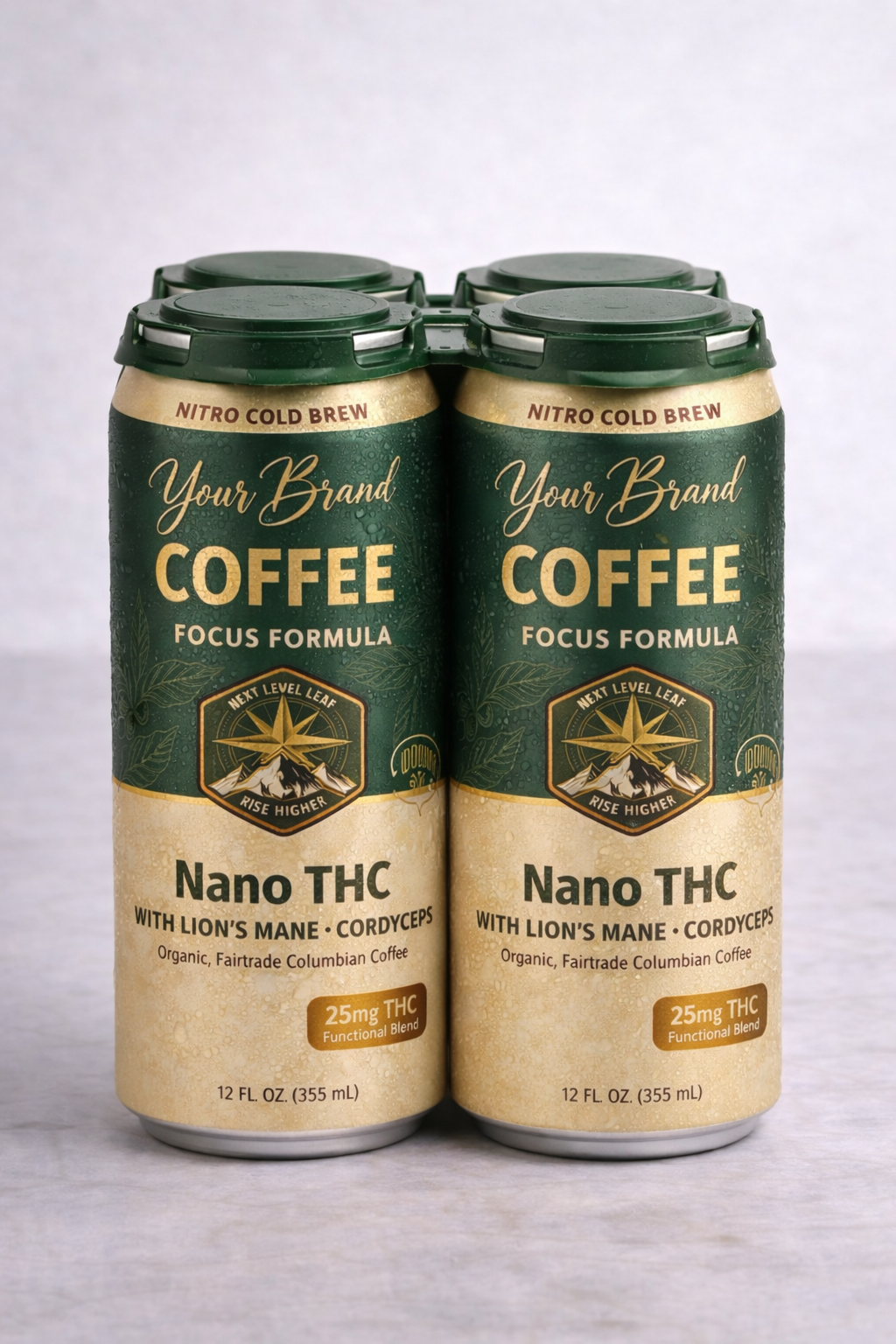
Many founders think about adaptogenic coffee as a powder, but a ready-to-drink coffee concept creates a different kind of opportunity. RTD coffee can feel more premium, more convenient, more retail-ready, and more visually differentiated when the can, flavor, and product story all work together.
Nitro cold brew and canned cold brew
Nitro cold brew or canned cold brew can make sense when the brand wants a premium coffee-first product with a modern feel. The functional stack should be chosen carefully so the coffee still tastes good and the product remains easy to explain.
What affects pricing and MOQ
Adaptogenic coffee pricing is usually shaped by the coffee base, can size, run size, ingredient stack, flavor direction, packaging, testing, documentation, and whether the product follows a simpler white-label path or requires custom development.
- Product format and can size
- First-run quantity and SKU count
- Functional mushroom, adaptogen, or nootropic ingredient selection
- Flavor system and sweetness level
- Packaging, label, and retail presentation
- Testing, COAs, and documentation expectations
Common adaptogenic coffee strategy mistakes
Trying to do too much in one SKU
A first product does not need to cover every possible benefit or customer. A focused SKU is usually easier to launch, easier to price, easier to explain, and easier to test in the market.
Letting ingredient trends replace brand strategy
Trendy ingredients can help, but they do not automatically create a brand. The product still needs a clear occasion, a believable reason to exist, and a customer who immediately understands why they would buy it.
Forgetting that it still has to taste like coffee
Functional ingredients can create flavor challenges. The beverage still has to taste good enough for repeat use, especially if the product is built around a daily ritual.
Making medical-style claims
Functional positioning should not drift into treatment language. The product can be clear, premium, and compelling without making disease or drug-like claims.
What to prepare before requesting a quote
You do not need every detail finalized before starting the quote process, but a few decisions make the conversation much more productive.
- Your target product format: canned cold brew, nitro coffee, or another RTD coffee concept
- The core functional lane: focus, smoother energy, calm/balance, mushroom coffee, or daily routine
- Ingredient ideas or ingredients you want to avoid
- Flavor direction and sweetness preference
- Can size, label direction, and retail presentation
- Estimated first-run quantity and number of SKUs
- Target sales channel, launch states, and whether cannabinoids are part of the concept
If you are still early, start with the broader Functional Coffee hub. If you are comparing specific white-label directions, the Mushroom Coffee White Label page is a strong next read. When you are ready to scope the product, use the quote request page.
Frequently asked questions
Related reading
Ready to build a stronger adaptogenic coffee concept?
Tell us what kind of coffee product you want to build, the functional direction you are considering, and where you are in the launch process. We’ll help you think through format, ingredient direction, MOQ, packaging, and the next practical step.