

White label
Use an established coffee starting point
Best when an existing coffee profile already fits the brand and only limited approved changes are needed.
White-label mushroom coffee lets a beverage brand sell ready-to-drink functional coffee under its own name without developing every part of the product from scratch.
Next Level Leaf works with canned cold brew and nitro coffee. Current production-ready coffee profiles include Black, Vanilla Mocha, and Salted Caramel. Mushroom or other functional additions are evaluated for formulation fit and may require custom R&D when they materially change flavor, stability, processing, or the finished formula.
Updated September 23, 2026 • Published and maintained by Next Level Leaf
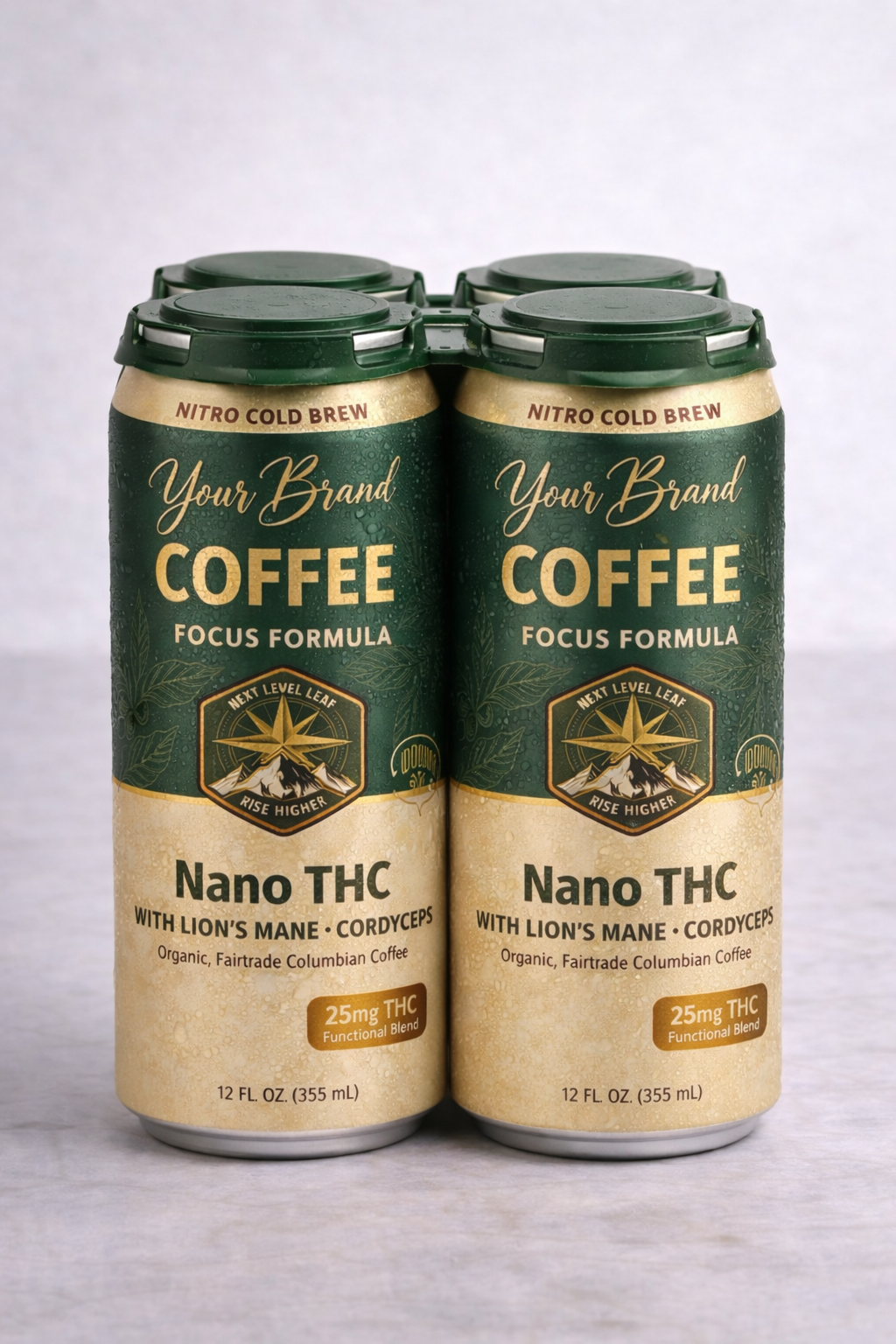
Mushroom coffee white label is a ready-to-drink coffee product sold under your brand using an established coffee production path as the starting point. For Next Level Leaf projects, that can mean beginning with Black, Vanilla Mocha, or Salted Caramel cold brew or nitro coffee, then evaluating the mushroom blend, flavor impact, packaging, testing, and whether the formula can move forward as a modified existing profile or needs custom R&D. The primary commercial MOQ is approximately 1,200 cans per SKU, with selective prototype runs available for qualified projects.
Start Here
For a canned beverage brand, white label means starting from an existing coffee production path instead of creating the entire coffee base from the beginning.
Current production-ready coffee profiles include Black, Vanilla Mocha, and Salted Caramel. These provide a faster starting point when the coffee base, flavor, can format, and production requirements fit the brand.
Mushrooms are not automatically a drop-in addition. The ingredient form, amount, taste, solubility, stability, processing requirements, and finished-product goals have to work with the coffee.
White Label vs Private Label
Yes. The same buyer intent often appears as white-label mushroom coffee, private-label mushroom coffee, or custom mushroom coffee. The difference is how much of the product already exists before your project starts.
Best when an existing coffee profile already fits the brand and only limited approved changes are needed.
Useful when the coffee base works but the project needs an approved mushroom addition, flavor adjustment, sweetness change, cannabinoid option, or other limited modification.
Appropriate when the mushroom blend, functional ingredients, flavor, mouthfeel, or processing requirements create a genuinely different product.
Why Brands Care
Coffee already has a familiar daily use. Adding mushrooms can give a brand a more specific ingredient story, but the product still has to taste good, be easy to explain, and make sense at its price point.
Mushroom ingredients can help distinguish the product from a standard RTD coffee when the ingredient story is clear and the finished drink supports the price point.
Coffee already fits morning, workday, and afternoon habits. That makes it easier to explain when the product belongs in the customer’s day.
Brands often position mushroom coffee around a simple use occasion such as a morning routine, workday coffee, active lifestyle, or broader functional coffee line.
A strong coffee-based product can later connect to adaptogens, nootropics, cannabinoids, or a wider ready-to-drink beverage line.
Mushroom Directions
Lion’s Mane, Cordyceps, Reishi, Chaga, and multi-mushroom blends are common directions in the category. The practical questions are taste, ingredient form, serving amount, cost, stability, and what the brand can responsibly say about the finished product.
Lion’s Mane is commonly used by brands in focus-oriented and workday coffee concepts. The formula still needs to be evaluated for taste, ingredient form, serving amount, and claims.
Cordyceps is commonly used in energy-oriented and active-lifestyle coffee concepts. The ingredient choice should fit the flavor, customer, and overall formula rather than rely on a broad performance promise.
Reishi is often used in coffee concepts positioned around a calmer or more relaxed routine. Taste, ingredient form, and responsible claims still need to be considered.
Chaga is often used in earthy, functional coffee concepts. For beverage development, the more practical questions are flavor, ingredient form, serving amount, and how it fits the rest of the formula.
Multi-mushroom blends can give a brand a broader ingredient story, but more ingredients can also increase flavor, cost, sourcing, and formulation complexity. The label should still be easy to understand.
Some projects combine mushrooms with adaptogens, nootropics, caffeine, or cannabinoids. Every additional ingredient can affect taste, stability, cost, testing, and claims, so more is not automatically better.
Format Decisions
A useful quote starts with the coffee base, mushroom ingredients, flavor, package, number of SKUs, first-run quantity, and whether the project can use an existing profile or needs custom R&D.
A canned RTD coffee, cold brew, and nitro coffee concept may have different processing, packaging, texture, and sensory expectations.
The mushroom system, serving level, taste impact, and functional stack all influence the formula and what the finished formula needs.
Black coffee, mocha, vanilla, caramel, and lighter functional concepts tell very different stories and can change the cost and production path.
The primary commercial starting point is approximately 1,200 cans per SKU. Selective qualified projects may use an approximately 360-can prototype run before commercial production.
Can size, label-ready cans, printed cans, cartons, and retail presentation can all change the project scope and timeline.
Ingredient records, lot information, finished-product expectations, and any cannabinoid-related testing needs should be considered early.
Format Clarification
This page is about canned ready-to-drink coffee manufacturing.
Next Level Leaf’s current coffee manufacturing path is ready-to-drink cold brew and nitro coffee, not instant mushroom coffee powder or stick packs. Powdered and instant products use a different manufacturing process. If your goal is a canned mushroom coffee, we can evaluate an existing coffee profile or a custom RTD formula.
Infused Adjacency
Both categories can fit a coffee-based beverage strategy, but they do different jobs for the brand.
Mushroom coffee is typically built around coffee plus a functional ingredient story. It can be a smart product idea for brands that want a premium coffee ritual without starting with THC or CBD as the main reason to buy.
The product still needs to be clear. A customer should quickly understand whether the drink is for focus, morning energy, calm routine, or a broader wellness-style coffee occasion.
Infused coffee adds another layer: THC, CBD, or other cannabinoid strategy. That changes the conversation around dose, state rules, testing, COAs, age-gating, packaging, and where the product will be sold.
For brands considering that direction, the infused coffee hub and THC coffee pricing guide are the best next reads.
Claims Discipline
Functional coffee can be commercially compelling without turning the drink into a medical product.
The strongest mushroom coffee concepts are usually built around routine, flavor, format, and customer occasion. That gives the brand a clear story without promising a specific health outcome.
A mushroom coffee brand should not present the product as a medical product, medication replacement, or guaranteed health outcome. The better path is to make the formula, taste, serving size, and intended occasion easy to understand.
If cannabinoids are included, state rules, age-gating, testing, labeling, and finished-product COAs become even more important.
Quote Planning
You do not need every answer before reaching out. These details simply make it easier to choose the right production path and avoid pricing that is too vague to be useful.
Share whether you are thinking about canned RTD coffee, cold brew, nitro coffee, or another coffee-based beverage format.
Bring the mushroom direction if you have one, such as Lion’s Mane, Cordyceps, Reishi, Chaga, or a broader blend concept.
Black coffee, mocha, vanilla, caramel, and creamier coffee concepts can have different ingredient and production considerations.
Estimated order quantity, SKU count, and desired timing help shape MOQ, production planning, and whether a white-label path makes sense.
Can size, label status, printed can interest, cartons, and retail presentation can all change the quote and launch timeline.
Clarify whether the product is non-infused functional coffee or part of a hemp-derived THC, CBD, or broader cannabinoid beverage plan.
Functional Coffee Cluster
Mushroom coffee can stand on its own or sit beside other functional coffee products. The best next step depends on whether the brand wants to lead with mushrooms, a broader functional ingredient idea, or an infused coffee concept.
Use the functional coffee hub and what is functional coffee guide to understand how coffee, format, function, and customer occasion fit together.
The launch guide, MOQ guide, and cost guide help translate the concept into a realistic first production path.
Mushroom coffee can point toward focus, energy, or calm, but the first SKU should be clear enough for a buyer to understand quickly.
Related Reading
Use these guides to compare product formats, ingredients, MOQ, cost, and launch decisions before requesting a quote.
FAQ
Direct answers to the white-label, private-label, RTD format, MOQ, mushroom ingredient, and quote questions brands ask most often.
Share the coffee base, mushroom ingredients, flavor, can size, number of SKUs, first-run quantity, packaging status, and timeline. We can help determine whether an existing coffee profile or custom R&D is the better fit.