

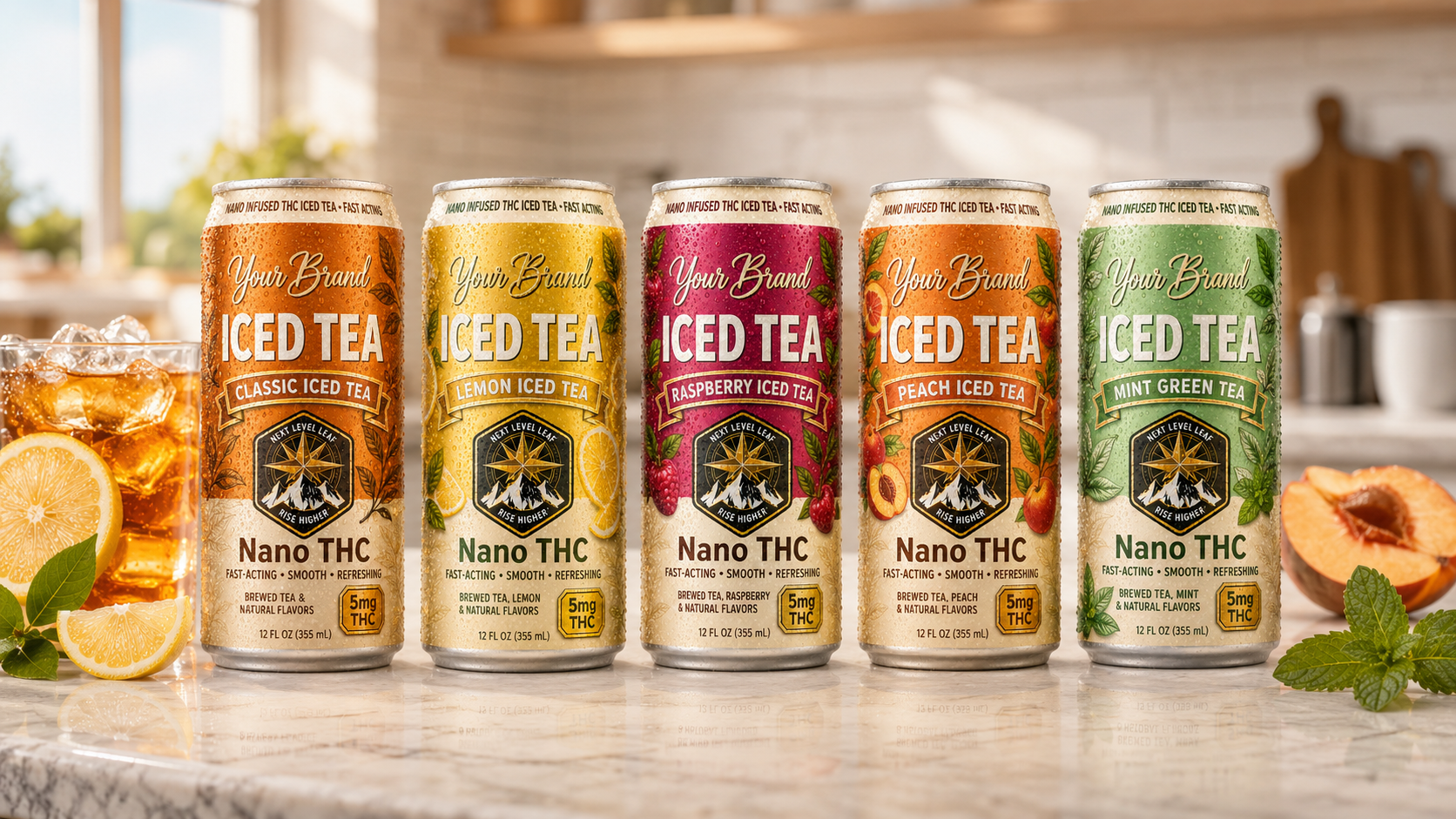
What is CBN?
CBN stands for cannabinol. It is a minor cannabinoid that naturally appears as THC ages and oxidizes. That is why CBN is often connected with aged cannabis material and with products built around evening, calm, or sleepy beverage concepts.
For a beverage brand, CBN is not usually the main event the way THC is. It works more like a supporting cannabinoid that can change the feel of the drink. A THC + CBN beverage can tell a different story than a THC-only drink, a CBD-only drink, or a bright daytime cannabinoid stack with CBG or THCV.
CBN is commercially interesting because the customer already has an intuitive idea of when they might use it. It belongs closer to an after-dinner drink, evening tea, nighttime mocktail, tart cherry spritzer, or low-dose unwind beverage than to an energy coffee or active daytime seltzer.
Context note: This page discusses reported experiences, anecdotal use, emerging research, and plausible physiological interpretation. These are not guaranteed effects, medical claims, or medical advice. Individual response can vary based on dose, THC level, CBD level, timing, food intake, tolerance, medications, and the finished formula.
CBN works best when the drink has a clear evening purpose: what is in the can, how many milligrams it contains, when someone might drink it, and what the beverage is built to feel like.
What does CBN feel like?
People often describe CBN as sleepy, calm, heavy, slow, body-oriented, and more nighttime-friendly than CBD, CBG, or THCV. Some people associate it with feeling ready to wind down, less mentally active, more settled, and more connected to an end-of-day routine.
This is not a guaranteed effect. Some people may feel very little from CBN by itself. Others may notice it more when it is paired with THC, CBD, botanicals, terpene-inspired flavors, or a beverage format that already feels like an evening ritual.
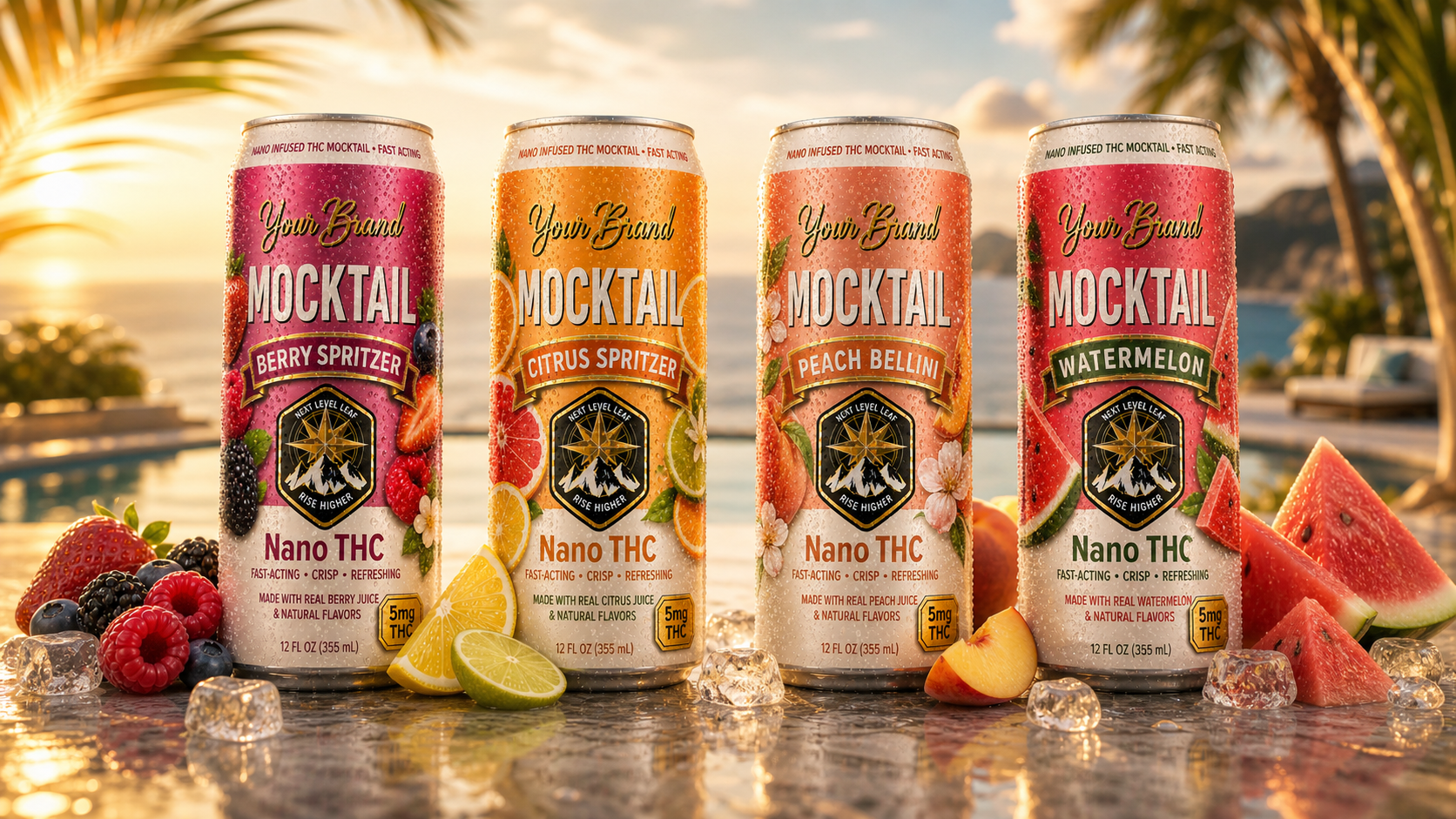
In a drink, that can translate into a THC + CBN berry mocktail, CBN peach iced tea, THC + CBN tart cherry spritzer, botanical lemonade, root beer, black cherry soda, or low-dose evening mocktail. The product should feel like it belongs after work, after dinner, or during a slower adult-use occasion.
Sleepy and heavy
Many consumers associate CBN with a slower, heavier, nighttime-friendly feel compared with brighter cannabinoids like CBG or THCV.
End-of-day ritual
CBN makes the most sense when the drink is clearly connected to an evening ritual, after-dinner moment, or unwind occasion.
Best with a clear formula
CBN should be planned alongside THC dose, CBD balance, flavor, sweetness, format, onset expectations, and customer tolerance.
How CBN may work physiologically
CBN interacts with the endocannabinoid system. It is commonly discussed as a weaker cannabinoid receptor activator than THC, with activity at CB1 and CB2 receptors and a profile that appears milder than Delta-9 THC. In plain language, CBN seems to touch some of the same cannabinoid pathways as THC, but it is usually discussed as less intoxicating and more supportive in a stack.
That matters for beverages because CBN is usually not used to create the main effect by itself. It is often added to help steer the overall feel of the product: calmer, heavier, softer, more evening-friendly, more body-oriented, or more sleep-adjacent.
Some of the interest around CBN also comes from how cannabinoids, metabolites, and sleep-wake pathways may interact. Research is still early, but it gives brands a reason to treat CBN as more than a label decoration. The dose, ratio, delivery system, and product format all matter.
What research and consumer reports suggest CBN may support
CBN has a strong reputation in the market around sleep, but the science is still developing. Recent preclinical work has used objective sleep measures to explore CBN and CBN metabolites, while human research has been looking at CBN dosing, sleep quality, insomnia-related outcomes, safety, and next-day effects.
That research direction is important, but a beverage should not sound like a treatment for insomnia or a sleep medication. A canned drink is not the same thing as a controlled clinical study. Dose, route, timing, cannabinoid combination, food intake, and individual response can all change the experience.
Consumer reports are still commercially useful. Many people associate CBN with feeling sleepy, calm, heavy, relaxed, less wired, or ready to wind down. Some people describe CBN as more body-oriented than CBD and more nighttime-friendly than CBG or THCV.
For beverage brands, the useful takeaway is not that CBN treats sleep problems. The useful takeaway is that CBN has a clear evening association, and that can help a THC beverage feel more specific, mature, and occasion-driven.
CBN is being explored in sleep, insomnia, sleep architecture, sedation, and next-day effect research.
This supports evening, nighttime-friendly, and sleep-adjacent beverage concepts, not sleep-treatment claims.
People often describe CBN as sleepy, heavy, calm, slow, relaxed, and ready-for-bed.
CBN fits drinks built around end-of-day rituals, mocktails, teas, and low-dose unwind beverages.
CBN may help shape how THC feels when it is part of a broader cannabinoid stack.
This can make a THC beverage feel more evening-oriented than a standard THC-only drink.
Cannabinoid research has explored CBN and related pathways connected with comfort, inflammatory signaling, and body-oriented experiences.
This can inform calm, body-oriented beverage concepts without making pain or inflammation claims.
CBN effects may vary depending on dose, THC level, CBD level, timing, tolerance, and the individual customer.
Clear dosing, serving guidance, finished-product testing, and realistic customer expectations are especially important.
What CBN can add to the customer experience
The best reason to use CBN is that it helps the customer understand the moment the drink is built for. CBN is not usually about refreshment alone. It is about a slower, calmer, end-of-day beverage occasion.
A THC + CBN drink can feel different from a social THC seltzer. It can feel less like a party drink and more like a nightcap, mocktail, tea, or after-dinner beverage. That gives brands a more specific lane inside the THC beverage category.
After work or after dinner
CBN can fit a drink that belongs at the end of the day, when the customer wants something slower and more intentional.
Softer THC occasion
CBN can help a THC beverage feel calmer, heavier, and more nighttime-friendly than a bright social seltzer.
Adult evening format
Mocktails, teas, spritzers, and fruit-forward drinks can make CBN easier to understand as an adult evening beverage.
CBN vs THC, CBD, CBG, and THCV
CBN is easiest to understand when it is compared with other cannabinoids. THC usually drives the main adult-use effect. CBD can make the product feel softer or more familiar. CBG and THCV are more often connected with clearer, lighter, daytime-friendly products. CBN usually points in the opposite direction: slow, calm, heavy, and evening-oriented.
Euphoric, mood-lifting, relaxing, appetite-forward, sensory, body-heavy, or stronger depending on dose.
Main experience driver for hemp-derived Delta-9 beverages.
Subtle, calm, balanced, soft, familiar, and less intense.
Often used to round out THC or create approachable low-dose concepts.
Clear-headed, lighter, focused, calm-but-not-sleepy, and more daytime-friendly.
Often used in citrus, tea, seltzer, real fruit, or active/social drink ideas.
Clearer, lighter, more alert, less heavy, and more appetite-conscious.
Often used for daytime THC, active-use, or sharper premium cannabinoid stacks.
Sleepy, slow, calm, heavy, body-oriented, and nighttime-friendly.
Often used for nighttime mocktails, herbal-style teas, and low-dose unwind beverages.
How CBN can change the drink experience
The right CBN stack can make a beverage feel more specific. Instead of a generic THC drink, the brand can create a product built for a particular end-of-day moment.
CBN can also help separate a beverage line into clearer use occasions. CBG or THCV might point toward daytime. CBD might point toward familiar calm. CBN points toward nighttime-friendly, slower, heavier, sleep-adjacent, or after-dinner drinks.
Calmer, heavier, slower, and more evening-oriented THC experience.
Nighttime mocktail, herbal tea, berry spritzer, tart cherry drink, or unwind lemonade.
Softer, less intoxicating, calm-positioned, and nighttime-friendly.
Low-dose tea, nighttime lemonade, relaxation-friendly fruit drink, or botanical beverage.
Balanced evening stack with a smoother adult-use occasion.
Evening mocktail, botanical spritzer, low-sugar nighttime drink, or after-dinner beverage.
More ritual-based, herbal, sensory, and nighttime-friendly.
Chamomile-style tea, hibiscus drink, lemon balm-inspired beverage, or botanical mocktail.
More approachable, flavorful, and easier to understand.
Berry lemonade, peach tea, tart cherry spritzer, black cherry soda, or citrus mocktail.
Best beverage formats for CBN
CBN is usually strongest in formats that already feel appropriate for the evening. A customer should not have to work hard to understand why CBN is in the drink.
Mocktails already feel adult, social, intentional, and evening-friendly.
Alcohol-free nightcap, dinner party, hospitality, event, or after-work unwind.
Tea feels familiar, calming, and ritual-based.
Evening tea, herbal-style beverage, lemon tea, hibiscus, peach tea, or nighttime ritual.
Lemonade can carry flavor, sweetness, and acidity while still feeling approachable.
Low-dose evening lemonade, THC + CBN lemonade, or fruit-forward unwind drink.
Fruit and carbonation can make CBN easier to understand as a lifestyle beverage.
Berry, citrus, peach, tart cherry, or tropical evening spritzer.
Bold soda flavors can help support cannabinoid flavor masking and after-dinner occasions.
Root beer, black cherry, cola, cream soda, or nostalgic evening soda concept.
How to position a CBN beverage
The strongest CBN beverage concepts usually stay close to the occasion: evening unwind, nighttime-friendly mocktail, calm adult-use beverage, after-dinner drink, low-dose THC + CBN ritual, or botanical tea-style beverage.
CBN should not be vague. “Sleepy cannabinoid” is easy to understand, but it can become too medical if the language goes too far. The better direction is a drink that clearly feels like it belongs at night, after work, after dinner, or during a slower adult-use occasion.
THC + CBN mocktail
A premium alcohol-alternative drink for slower evenings, dinner, hospitality, or after-work unwind.
CBN peach iced tea
A familiar beverage ritual that can feel soft, calm, and easy to understand as an end-of-day drink.
Tart cherry spritzer
A fruit-forward CBN drink can feel premium, flavorful, and nighttime-friendly without sounding medical.
How to talk about CBN without overclaiming
CBN can be discussed clearly without making the beverage sound like a sleep drug. The product should stay grounded in the drink itself: the dose, the cannabinoid stack, the flavor, the format, the use occasion, and the adult beverage experience.
A CBN drink should not be positioned as a product for insomnia, anxiety, pain, inflammation, or medication replacement. It also should not promise sleep, guarantee rest, or sound like it acts like a sedative medication.
The more durable path is an evening beverage concept that feels calm, slow, adult, and nighttime-friendly. A customer should be able to look at the drink and understand that it is for winding down, not for treating a condition.
CBN can make a beverage feel more evening-specific, but the product still needs strong fundamentals: good flavor, stable emulsion, clear milligram labeling, finished-product testing, COAs, adult-oriented packaging, and a format that makes sense for the customer.
CBN, flavor, and emulsion planning
CBN still has to work inside a real beverage. Cannabinoids are oil-based, and drinks are water-based. That means emulsion, flavor masking, sweetness, acidity, mouthfeel, carbonation, and dose consistency all matter.
Evening formats often benefit from flavors that already feel calm or adult: berry, tart cherry, peach, lemon, hibiscus, ginger, vanilla, cola, root beer, black cherry, mint, lavender-style botanicals, and herbal tea profiles.
The formula should be planned around the whole experience. A light spritzer may need a cleaner input and tighter flavor system. A soda or tea may provide more room for cannabinoid notes. A mocktail may need more layered flavor and a premium mouthfeel.
For formulation planning, review Emulsions, Nano vs Emulsion, and Flavor Systems.
CBN beverage concepts that may work well
CBN can fit several beverage directions when the format and occasion are clear. These concepts give brands practical starting points for flavor, dose, cannabinoid stack, and customer experience planning.
THC + CBN berry mocktail
A social, adult, alcohol-free evening beverage for slower nights, events, dinners, or hospitality settings.
CBN peach iced tea
A familiar, soft, easy-to-understand end-of-day drink with a calm tea ritual feel.
THC + CBN tart cherry spritzer
A fruit-forward, nighttime-friendly, premium beverage concept with strong adult-use occasion clarity.
CBN hibiscus lemonade
A colorful botanical beverage that can feel refreshing, calm, and evening-appropriate without making medical claims.
THC + CBN root beer
A nostalgic, after-dinner, flavor-forward beverage direction with enough body to support cannabinoid flavor planning.
THC + CBD + CBN evening mocktail
A more layered cannabinoid beverage for brands that want a smoother adult-use unwind concept.
CBN with CBD, botanicals, mushrooms, or terpenes
CBN can be paired with other ingredients, but the formula still needs to be easy to understand. A CBN beverage can quickly become too complicated if the stack includes too many cannabinoids, botanicals, mushrooms, adaptogens, and flavor directions without a clear reason.
CBD + CBN can create a softer, less intoxicating nighttime-friendly direction. THC + CBD + CBN can create a more layered adult-use evening stack. CBN with botanicals or terpene-inspired flavors can make the drink feel more ritual-based and sensory.
Some brands may also explore CBN with functional ingredients, but the final drink should still feel like a beverage first. It should be clear whether the product is a mocktail, tea, lemonade, spritzer, soda, or shot-style drink.
For adjacent ingredient planning, review Adaptogens, Mushrooms, and Probiotics.
Testing, COAs, and retailer confidence
CBN beverages need strong documentation. Finished-product testing, batch-specific COAs, dose accuracy, label clarity, adult-oriented packaging, and lot-level records help retailers and distributors evaluate the product more confidently.
This is especially important for evening-oriented cannabinoid products because the language can drift too easily into sleep, wellness, or therapeutic territory. A professional product should be built around clear milligrams, realistic serving expectations, batch documentation, and responsible product language.
If a product includes THC, CBN, CBD, CBG, THCV, terpenes, botanicals, mushrooms, or other functional ingredients, the finished can needs to match the label, the COA, and the sales conversation.
What to know before scoping a CBN beverage
A CBN beverage project is easier to scope when the intended experience, target dose, drink format, and first-run goals are clear. You do not need a finished formula, but the beverage direction should be specific enough to discuss.
The clearer these choices are, the easier it is to turn a CBN idea into a realistic beverage plan with the right format, dose, flavor system, testing expectations, packaging path, MOQ, and production timeline.
- Beverage format, such as tea, lemonade, mocktail, soda, fruit spritzer, shot, or functional drink
- Target Delta-9 THC dose per serving and per container
- Target CBN dose, if known
- Whether CBD, CBG, THCV, adaptogens, mushrooms, probiotics, botanicals, or terpenes are part of the concept
- The intended feel, such as evening, calm, unwind, sleep-adjacent, slow, body-oriented, social, or alcohol-alternative
- Flavor direction, sweetness target, acidity, carbonation, mouthfeel, and shelf-life goals
- Packaging status, target states, first-run quantity, launch timeline, and budget expectations
Where to go next
Still comparing cannabinoid options? Start with the Cannabinoids hub. To understand the main adult-use cannabinoid in most THC drinks, review THC for Beverages. For a softer familiar cannabinoid, review CBD for Beverages. For a clearer, daytime-friendly cannabinoid, review CBG for Beverages. For a lighter, sharper THC stack, review THCV for Beverages.
When the product direction is clear, the next step is to request a quote so the beverage can be scoped around format, cannabinoid dose, flavor, packaging, testing, MOQ, and production timing.