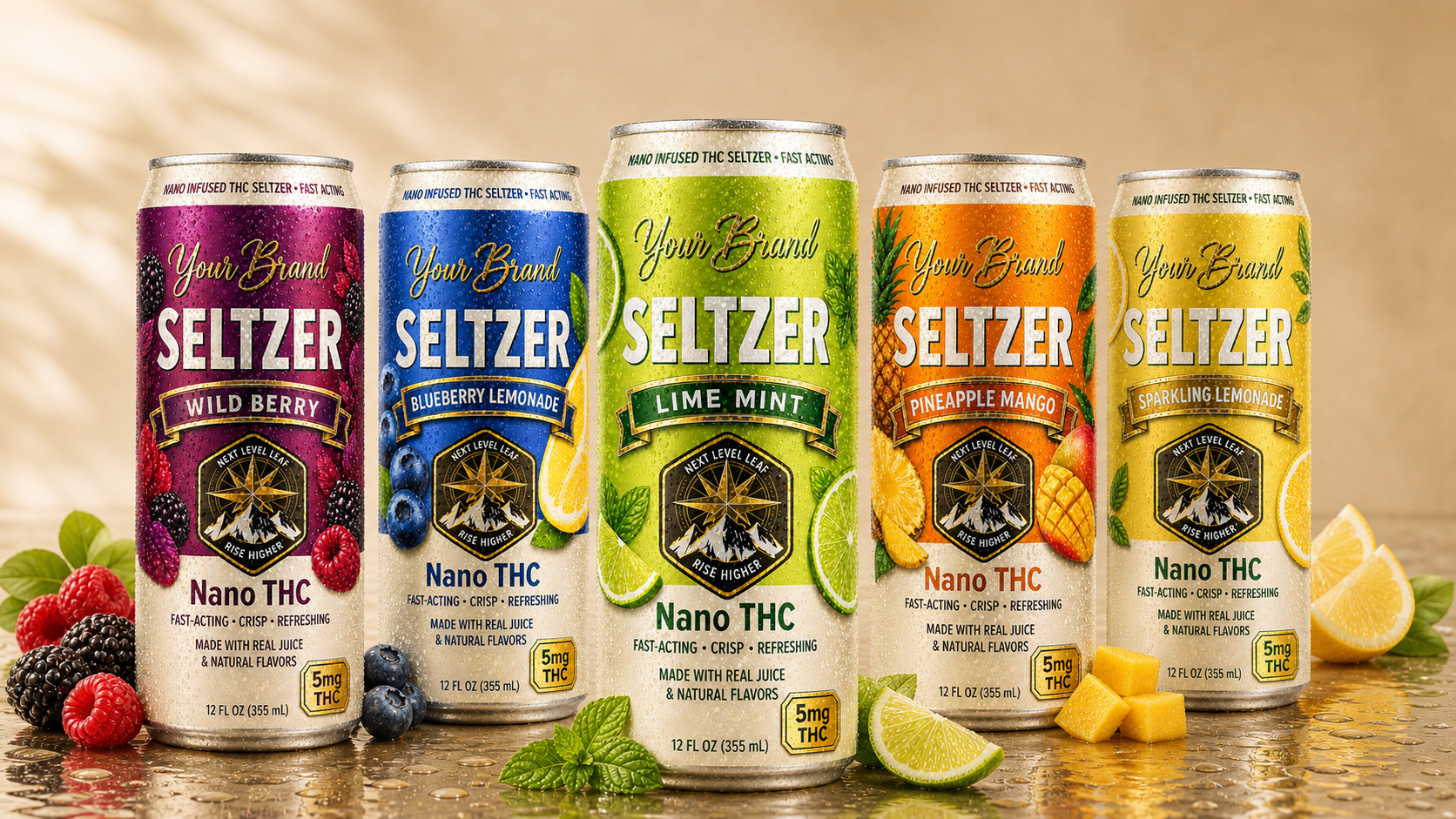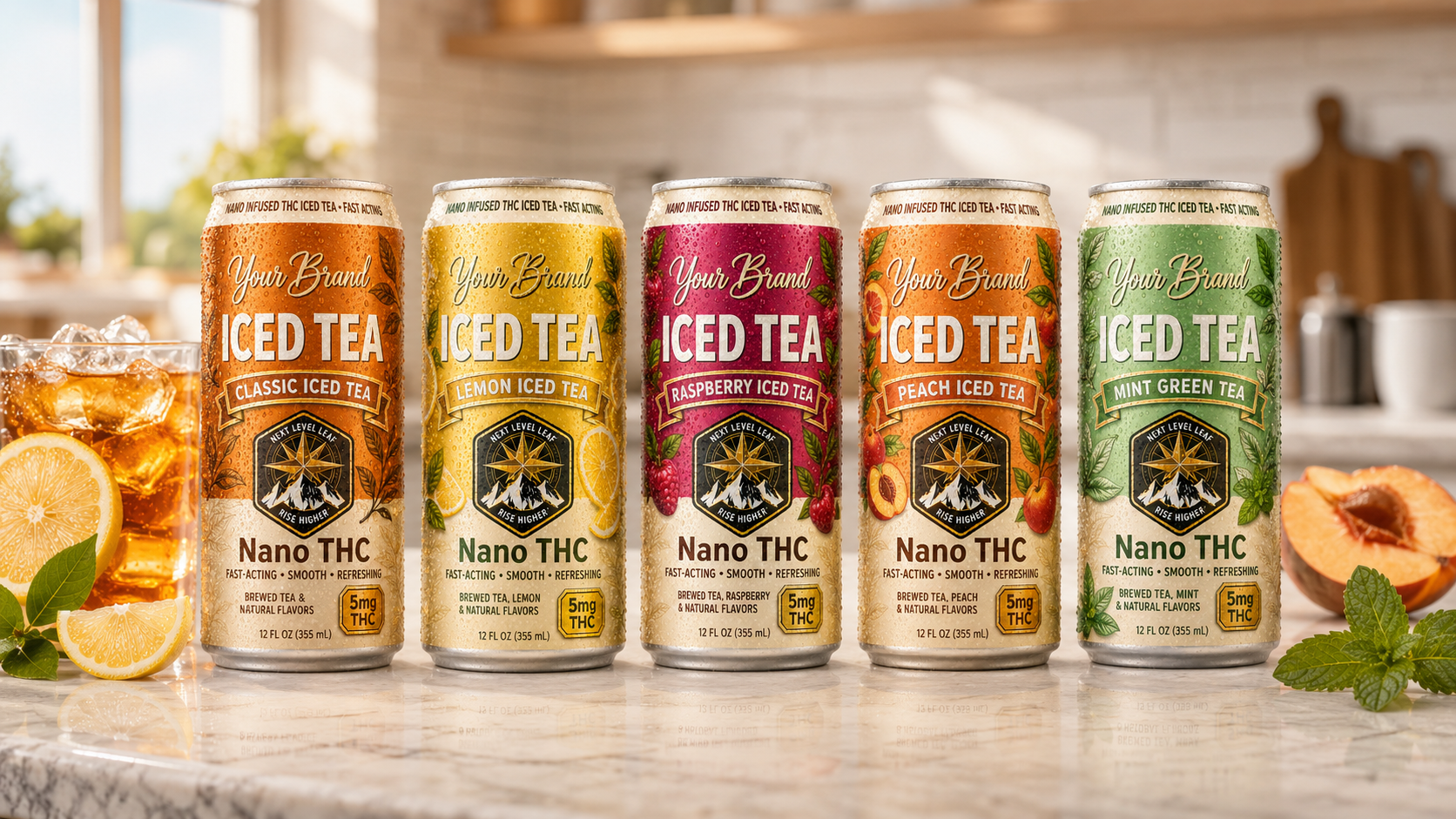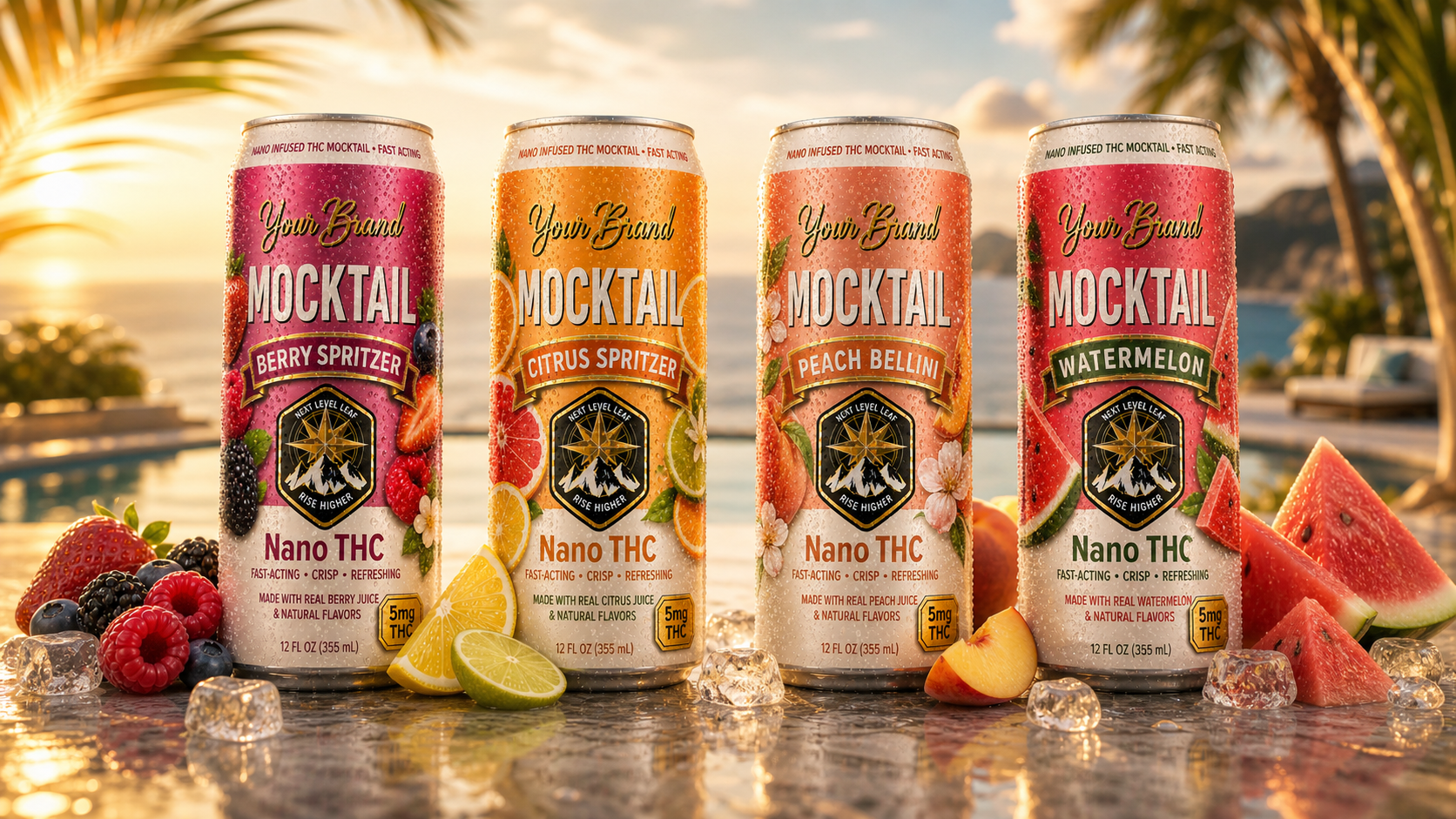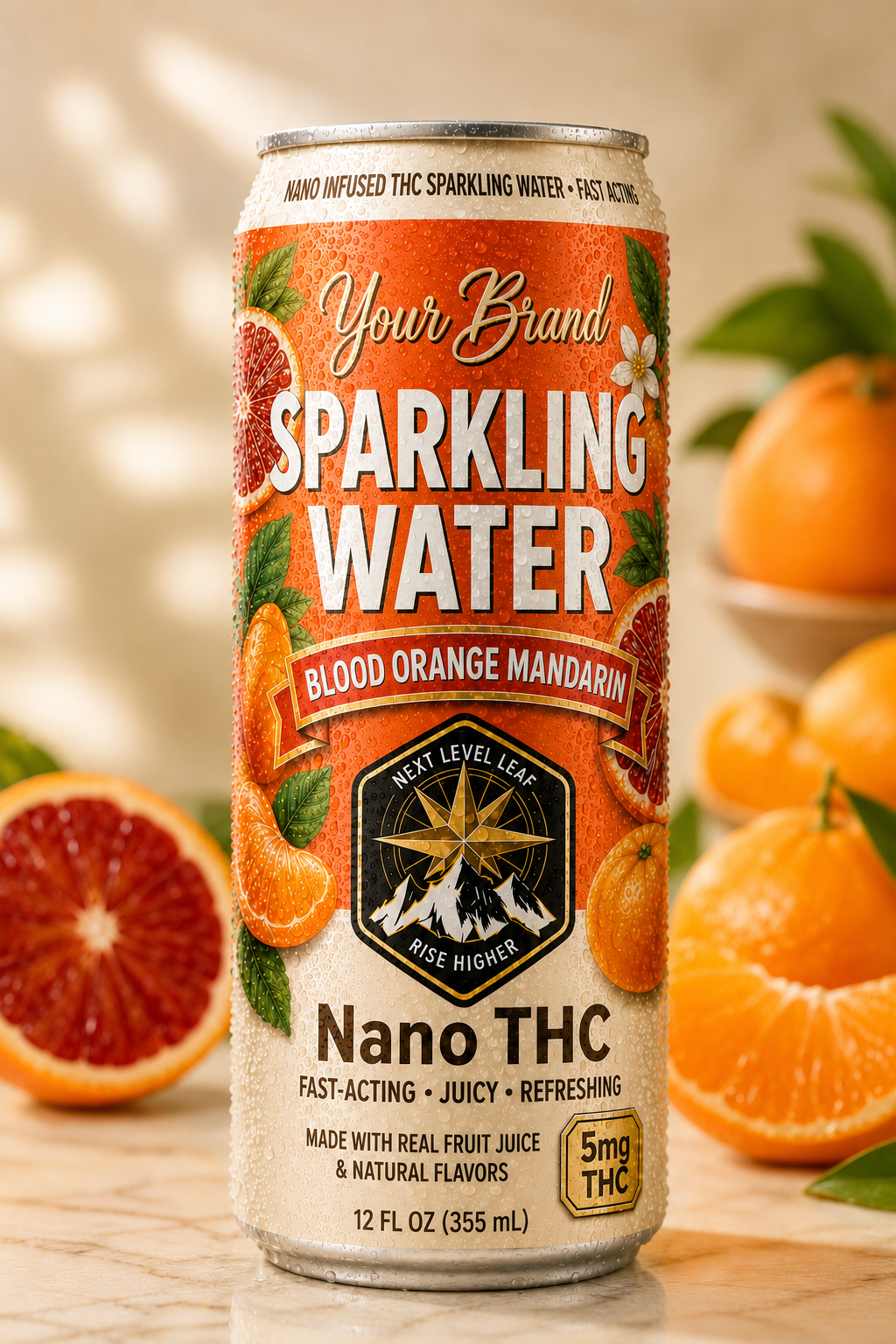


What is CBG?
CBG stands for cannabigerol. It is a cannabinoid found in cannabis and hemp, usually in much smaller amounts than THC or CBD. CBG is often called a “minor cannabinoid,” but that does not mean it is unimportant.
The acidic form of CBG, called CBGA, is part of the plant’s cannabinoid pathway. As the plant develops, CBGA can be converted into other cannabinoid acids that later become better-known cannabinoids like THC and CBD. That is why CBG is sometimes described as a precursor cannabinoid.
For beverage brands, CBG matters because it gives the drink a more specific cannabinoid direction than THC alone. It can help a drink feel more intentional, more functional, and more modern when the beverage format and dose make sense.
CBG should not be added just because it sounds advanced. It works best when the customer can quickly understand what kind of drink it is, when they might drink it, and why the cannabinoid stack makes sense.
What does CBG feel like?
CBG is generally described as non-intoxicating on its own. It does not create the classic THC high by itself. The more useful question for beverage brands is how people often describe the CBG experience.
Consumer reports, anecdotal feedback, and N-of-1 experiences often describe CBG as:
- Clear-headed: less foggy and less heavy than many THC-forward products.
- Focused: easier to associate with daytime tasks, creative work, errands, events, or active use.
- Calm but not sleepy: smoother and more balanced without feeling like a nighttime cannabinoid.
- Light in the body: less couch-heavy than a stronger THC or CBN-oriented product.
- Bright or alert: a better fit for citrus, tea, lemonade, real fruit, or sparkling formats than sleepy evening drinks.
- Balanced with THC: often used to make a THC beverage feel more intentional than a THC-only product.
Those descriptions are not promises, and individual response can vary based on dose, tolerance, THC level, CBD level, beverage format, timing, food intake, and the finished formula. But they are specific enough to matter when building a drink. A customer should be able to understand whether the product is meant for a light social moment, a daytime refreshment, a clearer THC experience, or a focused or daytime-style beverage occasion.
When might someone drink a CBG beverage?
CBG usually makes more sense for daytime and early-evening products than for sleepy nighttime products. It can work well when the intended moment is active, social, light, creative, or refreshing.
Afternoon refreshment
A citrus seltzer, sparkling lemonade, or iced tea with CBG can make sense when the drink should feel light and usable.
Clearer THC sipping
A low-dose THC + CBG drink can fit social settings where the brand wants something less heavy than a classic edible-style effect.
Outdoor and event occasions
CBG can fit real fruit spritzers, teas, and seltzers built around hiking, golf, beach days, festivals, or other adult-use lifestyle occasions.
For a deeper look at THC itself, review THC for THC Beverages.
How CBG may work physiologically
CBG interacts with the endocannabinoid system, but it does not behave exactly like THC. THC is strongly associated with CB1 receptor activity, which helps explain the classic intoxicating THC experience. CBG is being explored across several receptor and signaling pathways, including cannabinoid receptors, serotonin-related signaling, adrenergic receptors, TRP channels, and other pathways.
In plain English, CBG is interesting because it appears to have a different profile from THC and CBD. That gives brands another way to build a cannabinoid drink that feels different from a THC-only or CBD-only product.
The customer does not need a science lecture, but the drink should have a clear reason for including CBG. A 5mg THC + CBG sparkling lemonade, a CBD + CBG iced tea, and a CBG real fruit spritzer are all different products with different expectations.
What research suggests CBG may support
The research around CBG is still early compared with THC and CBD, but it is becoming more interesting. Human research is limited, but one placebo-controlled crossover study explored acute CBG use in healthy adults and looked at anxiety, stress, mood, memory, subjective drug effects, and possible impairment markers.
Preclinical and mechanistic research has explored CBG in relation to stress-related signaling, comfort pathways, inflammation-related pathways, neurological research, digestive research, and other areas. That research is useful because it helps explain why people are paying attention to CBG, but it should not be turned into disease or treatment claims for a beverage.
For beverage brands, the important takeaway is practical: CBG has enough consumer interest and emerging research interest to support a more specific drink concept. It gives brands a way to create a clearer, lighter, more daytime-friendly cannabinoid beverage without making the product sound like a supplement or a medical product.
What CBG can add to the customer experience
CBG can make a beverage feel more intentional. It gives the customer a reason to see the product as more than a standard THC drink, especially when the can clearly explains the milligrams and the drink has an obvious use occasion.
Less heavy THC concepts
CBG can fit THC drinks that are meant to feel lighter, clearer, more balanced, and more daytime-friendly.
More specific use moments
CBG can help separate an afternoon spritzer, golf-course seltzer, creative-work tea, or social lemonade from a generic THC beverage.
Multi-cannabinoid concepts
CBG can work with THC, CBD, THCV, adaptogens, mushrooms, or botanicals when the formula stays understandable.
CBG vs CBD
CBD is more familiar to mainstream customers. It is commonly associated with calm, balance, and daily wellness routines. CBG is less familiar, but that can be an advantage for brands that want a more advanced cannabinoid direction.
A CBD beverage may feel approachable and broad. A CBG beverage may feel more novel, functional, and ingredient-forward. A CBD + CBG beverage may work when the brand wants a non-intoxicating cannabinoid concept. A THC + CBG beverage may work when the goal is a more distinctive adult-use drink.
CBG vs CBN
CBN and CBG usually point in different product directions. CBN is commonly associated with evening, calm, and nighttime-friendly beverage concepts. CBG is more often associated with daytime, clear, clear, focused drink concepts.
That difference matters. A THC + CBN beverage may make sense as an evening mocktail or unwind drink. A THC + CBG beverage may make more sense as a daytime seltzer, tea, lemonade, spritzer, coffee, or functional drink.
CBG vs THCV
THCV and CBG can both feel interesting for clearer, lighter, more modern THC beverage concepts, but they are not the same ingredient. THCV is a varin cannabinoid structurally related to THC and often discussed in relation to appetite, food-reward, and metabolic research. CBG is a non-intoxicating minor cannabinoid with a broader functional and cannabinoid-stack direction.
For many brands, CBG may be easier to explain than THCV because it can fit naturally into a THC + CBG, CBD + CBG, or focused cannabinoid beverage concept. THCV may still be valuable, but it often needs more careful education and pricing discussion.
How CBG can change the drink experience
CBG can change the way a drink is perceived before the customer ever opens the can. A THC-only seltzer may feel familiar. A THC + CBG seltzer may feel more intentional. A CBD + CBG tea may feel more calm-but-clear. A CBG real fruit drink may feel more modern than a basic flavored product.
The ingredient should support the whole beverage experience. Flavor, sweetness, carbonation, mouthfeel, onset expectations, can size, serving size, and milligram structure all affect how the drink lands with customers and retailers.
Lighter, clearer, more daytime-friendly THC experience.
Seltzer, sparkling lemonade, real fruit spritzer, tea, or mocktail.
Non-intoxicating, balanced, calm-but-clear product direction.
Iced tea, lemonade, wellness-style sparkling water, or functional drink.
Clearer, lighter, more active-use cannabinoid direction.
Citrus seltzer, electrolyte drink, real fruit spritzer, or golf/beach/event beverage.
More alert, coffee-compatible, and routine-based.
Nitro cold brew, iced coffee, tea, or focus-style beverage.
More layered, balanced, and approachable than THC alone.
Low-dose spritzer, social seltzer, lemonade, or fruit-forward beverage.
Best beverage formats for CBG
CBG can fit several beverage types, but it should be matched to the occasion. The best format depends on whether the drink is meant to feel light and social, functional and daytime-friendly, premium and cocktail-inspired, or fruit-forward and approachable.
Seltzers and spritzers
Good fit for light, crisp, low-dose THC + CBG concepts where the beverage should feel clean and easy to drink.
Tea and lemonade
Good fit for approachable CBG drinks with familiar flavors, afternoon occasions, and more room for flavor balance.
Real fruit drinks
Good fit for fruit-forward CBG beverages where flavor, color, and a premium drink experience matter.
Mocktails
Good fit for elevated alcohol-alternative products where a THC + CBG stack can feel more intentional.
Coffee
Good fit for brands exploring a more focused cannabinoid coffee, especially when the dose and customer occasion are clear.
Functional drinks
Good fit for CBG with adaptogens, mushrooms, electrolytes, botanicals, or other ingredients when claims remain responsible.
How to position a CBG beverage
The strongest CBG beverage concepts are usually built around a clear occasion. A customer should be able to look at the can and quickly understand whether it is a daytime drink, a social drink, an active-use drink, a THC + CBG beverage, a CBD + CBG beverage, or a fruit-forward cannabinoid drink.
CBG works best when the product promise is simple: what is in the can, how many milligrams it contains, when someone might drink it, and what kind of beverage experience the brand is trying to create.
A clear cannabinoid stack with a simple dose and a real beverage occasion.
A complicated ratio that customers and retailers cannot quickly understand.
A citrus, tea, real fruit, or sparkling drink that feels light, clear, and built for daytime adult-use occasions.
A formula that sounds impressive but does not translate into a clear drink experience.
A non-intoxicating cannabinoid beverage with a calm, clear, or daily ritual feel.
A product that starts to feel more like a supplement than a beverage.
How to talk about CBG without overclaiming
CBG can be discussed clearly without turning the beverage into a medical product. The best approach is to talk about reported consumer experience, the intended occasion, the dose, the flavor format, the cannabinoid stack, and the finished beverage.
A CBG beverage should not be positioned as a product for anxiety, sleep disorders, pain, inflammation, digestive disease, neurological conditions, or medication replacement. Those topics may appear in research, but the drink itself should stay beverage-first.
For a drink brand, the goal is simple: use CBG to help create a beverage people can understand, want to drink, and know when to use.
Formulation planning for CBG drinks
CBG is oil-based, and beverages are water-based. That means emulsion planning matters. The input has to disperse properly, stay consistent, support dose accuracy, and work with the flavor system.
CBG inputs can affect bitterness, clarity, mouthfeel, aroma, and finish. A light seltzer may expose more cannabinoid taste than a soda, tea, lemonade, coffee, or fruit-forward beverage. That does not make one format better than another, but it does change the formulation plan.
For more on this part of the beverage build, review Nano vs. Emulsion, Emulsions, and Flavor Systems.
Brands should think through:
- Target CBG dose per can or serving
- Whether the product includes THC, CBD, CBN, THCV, or other cannabinoids
- Whether the drink should be still, sparkling, carbonated, nitro, or shot-style
- How much sweetness, fruit, acidity, tea, coffee, or botanical flavor the formula needs
- Whether the target states and sales channels can support the intended cannabinoid stack
- What testing and COA expectations retailers will have
CBG beverage concepts that may work well
CBG can fit several beverage concepts when the drink has a clear role in the product line. The best ideas usually combine a familiar beverage format with a more specific cannabinoid direction.
THC + CBG sparkling lemonade
A crisp, familiar format that can make a low-dose THC + CBG stack easier for customers to understand.
CBD + CBG iced tea
A non-intoxicating cannabinoid drink direction for brands that want a calm-but-clear, daily ritual-style beverage.
CBG real fruit spritzer
A fruit-forward drink that uses real fruit flavor, color, and acidity to support a more premium cannabinoid concept.
THC + CBG mocktail
A more elevated alcohol-alternative drink for brands that want a premium adult beverage feel.
CBG + THCV citrus seltzer
A clearer, lighter cannabinoid concept for brands that want a more active-use, daytime, or appetite-conscious beverage direction.
Functional CBG coffee
A more specific coffee concept for brands exploring caffeine, cannabinoids, and functional ingredient combinations.
CBG with adaptogens, mushrooms, or probiotics
CBG can be considered alongside functional ingredients, but the drink still has to make sense as a beverage. A formula can look impressive on paper and still fail if it tastes too bitter, feels too complicated, or makes the label hard to understand.
Adaptogens, mushrooms, probiotics, electrolytes, botanicals, fruit systems, and natural flavors can all change the beverage direction. The key is keeping the concept focused enough for customers and retailers to understand quickly.
For more ingredient planning, review Adaptogens, Mushrooms, and Probiotics.
Testing, COAs, and retailer confidence
CBG beverages need clear documentation. Finished-product testing, batch-specific COAs, dose accuracy, label clarity, adult-oriented warnings, and lot-level records help retailers and distributors evaluate the product more confidently.
This is especially important for multi-cannabinoid drinks. If a product includes THC, CBG, CBD, CBN, THCV, or functional ingredients, the finished can needs to match what the label and sales materials say.
What to know before scoping a CBG beverage
A CBG beverage quote is easier to scope when the product direction is clear. You do not need a finished formula, but the core decisions should be specific enough to evaluate.
The clearer these choices are, the easier it is to turn a CBG idea into a realistic beverage plan with the right format, dose, flavor system, testing expectations, packaging path, MOQ, and production timeline.
- Beverage format, such as seltzer, tea, lemonade, mocktail, soda, coffee, real fruit drink, shot, or functional drink
- Target CBG dose per can or serving
- Target THC dose, if any
- Whether CBD, CBN, THCV, adaptogens, mushrooms, probiotics, or botanicals are part of the concept
- Flavor direction and sweetness preference
- Desired experience, such as clear, focused, social, daytime, alcohol-alternative, or fruit-forward
- Target states and sales channels
- Packaging status, first-run quantity, and launch timeline
Where to go next
If you are still comparing cannabinoids, start with Cannabinoids for THC Beverages. If you want to understand the core intoxicating cannabinoid in these products, review THC for THC Beverages. If you want a more familiar non-intoxicating cannabinoid direction, review CBD for THC Beverages. If you want an evening-oriented cannabinoid stack, review CBN for THC Beverages. If you want a lighter, clearer, more appetite-conscious THC stack, review THCV for Beverages.
If the CBG direction is clear, the next step is to request a quote so the beverage can be scoped around format, dose, flavor, packaging, testing, target states, MOQ, and production timeline.