White-label infused & functional beverage manufacturing
Built for brands, visionaries, and industry leaders.
Hemp Beverage Co-Packer • THC Drink Production • Packaging & Testing

Hemp Beverage Co-Packer

Find a practical production path for hemp-derived THC beverages, from formulation and cannabinoid infusion to canning, packaging, testing, and first-run planning.

For beverage founders, hemp brands, breweries, retailers, distributors, and CPG operators, the right co-packing path can make it possible to launch hemp-derived beverages without building or retrofitting your own production facility.

A hemp beverage co-packer is a production partner that helps brands manufacture hemp-derived THC or cannabinoid beverages without building their own beverage facility. Depending on the project, a co-packing path may include formulation, infusion, batching, canning, packaging, testing coordination, and finished-case production. The right path depends on beverage format, potency, MOQ, packaging, testing, target market, and quote-readiness.

hemp beverage co-packer production process for finished THC drink manufacturing
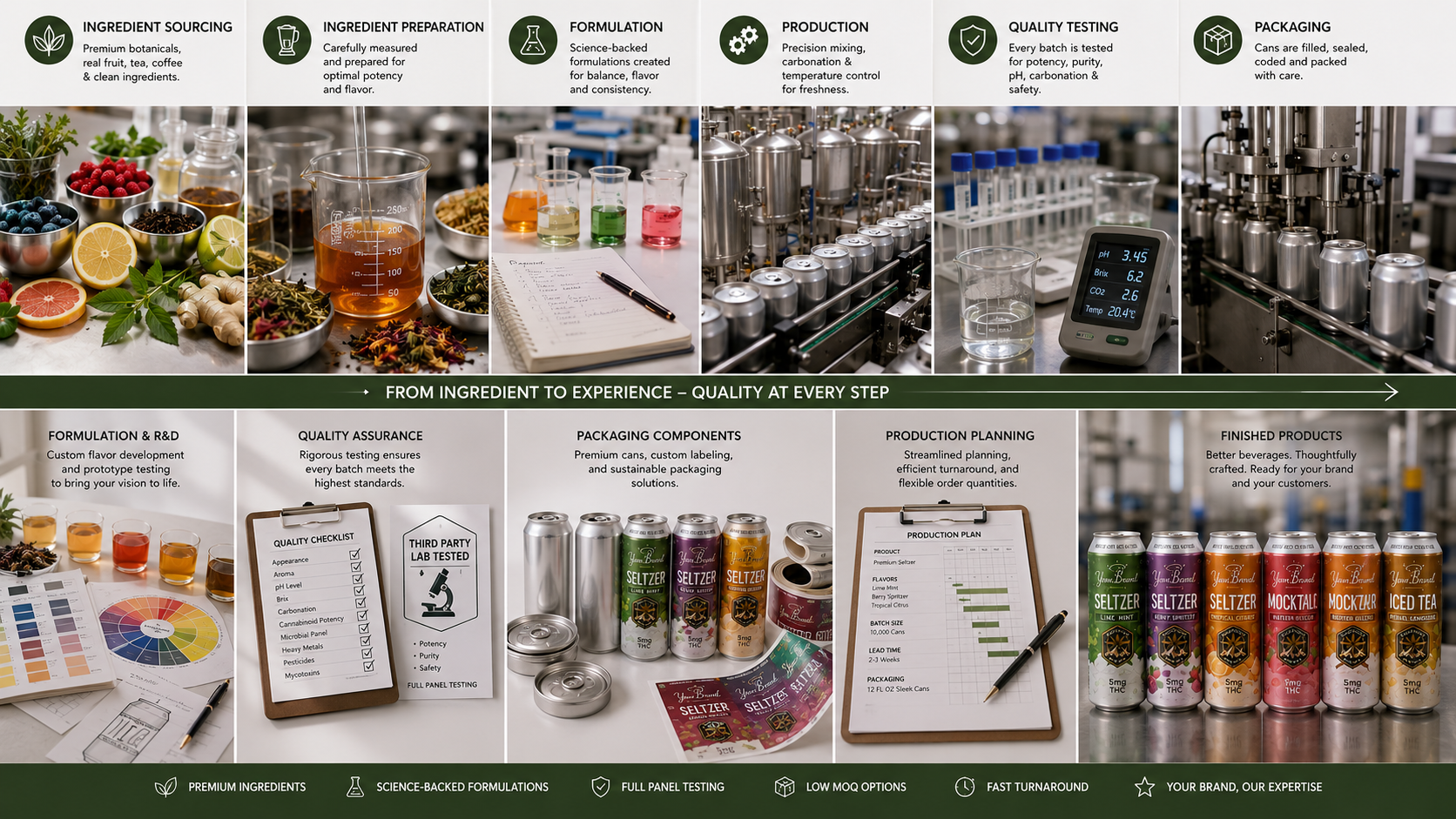
A hemp beverage co-packing path should connect production, infusion, packaging, testing, and first-run planning before the product goes to market.

Find the right production partner for hemp-derived beverages

Choosing a hemp beverage co-packer is not the same as choosing a general beverage packer. Hemp-derived THC drinks add planning around cannabinoid inputs, dose consistency, flavor balance, packaging, documentation, target-market review, and finished-product testing.

Best fit

Brands that need production support

Co-packing can help when you have a beverage idea, launch plan, or selected formula but do not want to own the production line.

Core decision

Partner fit matters

The right partner should fit the beverage format, target dose, packaging plan, first-run volume, documentation needs, and timeline.

Quote readiness

Specifics drive the path

Format, potency, SKU count, packaging, label readiness, target state, and first production volume shape the recommendation.

Who uses hemp beverage co-packers?

Hemp beverage co-packing can make sense for beverage founders, hemp brands, cannabis retailers, distributors, breweries, liquor-store groups, functional beverage brands, and existing CPG companies that want to add hemp-derived THC drinks without building a beverage facility.

The key question is not simply whether a co-packer can fill cans. The stronger question is whether the production path can support your beverage format, intended potency, packaging, testing expectations, launch market, and first-run economics.

What a hemp beverage co-packer can help with

The scope of co-packing depends on the production partner and the product stage. Some brands need help moving a defined formula into production. Others need support deciding whether white label hemp beverages, private label hemp beverages, co-packing, or custom hemp beverage formulation is the better path.

If you already have a base recipe, the next step is usually production review. If the product is still only an idea, the project may need formulation support before a co-packer can accurately quote the run.

Formula

Product review

Evaluate whether the beverage is production-ready or needs formula, flavor, sweetener, acidity, or ingredient adjustments.

Infusion

Cannabinoid planning

Plan the hemp-derived THC or cannabinoid input, target milligrams per can, dose consistency, and flavor impact.

Packaging

Canning and labels

Coordinate can size, label method, artwork readiness, case pack needs, QR strategy, and finished-case production.

Documentation

Testing and COAs

Support potency testing, batch records, COA documentation, label review, and target-market requirements.

Why hemp beverage co-packing is different from regular beverage co-packing

A standard beverage co-packer may be able to make soda, tea, lemonade, coffee, or sparkling drinks. Hemp-derived THC beverages add another layer because cannabinoid inputs must be planned for water-based beverages, target potency, taste, testing, documentation, and the intended sales channel.

Many cannabinoid inputs are hydrophobic, which means they do not naturally blend evenly into water-based beverages. That is why beverage formulation, emulsion behavior, flavor balancing, dose planning, and production review matter before a product moves to the line.

A co-packing path should also account for shelf-stability planning, processing fit, carbonation or still format, and whether the beverage can move from sample to commercial production without creating packaging, testing, or consistency problems.

hemp beverage co-packing packaging concepts for branded cans and cases Packaging

The package affects production

Can size, label type, case pack, printed-can timing, QR code strategy, and retail presentation can affect the co-packing path.

hemp beverage co-packer testing and COA documentation for THC drink production Testing

Documentation supports buyers

Testing and COA support can help retailers and distributors understand potency, batch details, and product documentation, with expectations shaped by product type, target market, and buyer requirements.

Co-packing vs white label, private label, and custom formulation

Co-packing sits between production execution and product strategy. It can overlap with white label, private label, or custom formulation, but the focus is outsourced production support for a beverage that needs to become finished inventory.

This page focuses on choosing an outsourced production partner. If you are mainly trying to understand how hemp-derived THC beverages are infused, packaged, and tested, start with hemp-derived THC beverage manufacturing.

White label hemp beverages

The fastest path when an existing or production-ready beverage option can be produced under your brand.

Private label hemp beverages

A more brand-owned path with stronger packaging, product-line, positioning, and launch direction.

Hemp beverage co-packing

An outsourced production partner path for brands that need batching, canning, packaging, testing coordination, and finished-case production.

Custom hemp beverage formulation

The right fit when the product needs deeper R&D, flavor development, cannabinoid profile work, functional ingredients, or scale-up support.

Buyer takeaway: A good hemp beverage co-packing conversation starts with the product path, not just the price per can. The clearer the product, package, potency, and target market are, the easier it is to scope the right production plan.

Beverage formats a co-packing path may support

Hemp beverage co-packing can support different formats, but each format has different production considerations. A sparkling seltzer, a nitro-style coffee, a lemonade, and a higher-flavor soda can each require different planning around taste, carbonation or still format, packaging, and target potency.

Sparkling

THC seltzers

Light, crisp, low-sugar, and common for alcohol-alternative retail and social occasions.

Ritual

Coffee and tea

Good for brands building around familiar beverage rituals, caffeine, flavor, or functional positioning.

Flavor-forward

Sodas and lemonades

Useful when bold flavor and sweetness can help the product feel familiar and retail-friendly.

Premium

Mocktails and real-fruit drinks

Helpful when the brand wants a more elevated adult beverage or fruit-forward non-alcoholic format.

MOQ, cost, and quote-readiness

Hemp beverage co-packing cost is project-specific. A first quote depends on the beverage type, target potency, cannabinoid profile, number of SKUs, formula stage, packaging plan, label type, first-run volume, testing needs, freight destination, and timeline.

  • MOQ and volume: Smaller runs can reduce total upfront commitment, but they may affect unit cost and production efficiency.
  • Formula stage: Production-ready products are easier to scope than ideas that still need flavor, ingredient, or stability review.
  • Potency: Target milligrams per can can affect cannabinoid cost, flavor balance, testing, and market positioning.
  • Packaging: Can size, label method, case pack, printed-can timing, and artwork readiness can affect cost and lead time.
  • Testing: Finished-product COAs and batch documentation should be planned before production.

For deeper planning, compare low-MOQ hemp beverage manufacturing and hemp beverage manufacturing cost.

Questions to ask before choosing a hemp beverage co-packer

The right co-packer should fit the beverage and the launch plan. Before you choose a partner, clarify what they can support and what they expect from your team.

Capability

Can they support the format?

Ask whether the production path fits still or carbonated beverages, coffee, tea, lemonade, soda, seltzer, mocktail, or functional drinks.

Cannabinoids

Can they support the dose?

Ask how target potency, cannabinoid input, emulsion behavior, and finished-product testing are handled.

Operations

What is needed for a quote?

Ask what product, label, market, volume, packaging, timeline, and freight details are required before pricing can be scoped.

Testing, compliance, and target-market review

Hemp-derived beverage rules vary by state, dose, product type, package, label, and sales channel. A serious co-packing path should account for testing and labeling expectations before production, not after finished cans are already made.

We are not attorneys, and this page is not legal advice. Final legal conclusions should be confirmed with qualified counsel for the intended market. For broader planning, review compliance considerations and state resources before finalizing your target markets.

What to prepare before requesting a co-packing quote

The clearer your product direction is, the easier it is to identify the right production path and avoid a quote that is too vague to act on.

Product

Format and potency

Know the beverage type, still or carbonated format, target milligrams per can, cannabinoid profile, and flavor direction.

Production

Formula and volume

Clarify whether you have a formula, need formulation support, how many SKUs you want, and the first-run volume.

Package

Can and label plan

Share preferred can size, label status, artwork readiness, case pack needs, and any QR-code or COA expectations.

Market

Launch path

Identify the target state or channel, retail or distributor plan, timeline, freight destination, and whether low-MOQ production matters.

If you are comparing outsourced production with a broader commercial beverage launch path, review the main beverage manufacturing page before requesting a quote.

Frequently asked questions

A hemp beverage co-packer is a production partner that helps brands manufacture hemp-derived THC or cannabinoid beverages without building their own beverage facility. Depending on the project, a co-packing path may include formulation, infusion, batching, canning, packaging, testing coordination, and finished-case production.
A hemp beverage co-packer may help with formula review, ingredient planning, hemp-derived cannabinoid infusion, batching, carbonation or still beverage production, canning, labeling, case packing, testing coordination, and production scheduling. The exact scope depends on the facility and the brand’s product stage.
Hemp beverage co-packing adds cannabinoid-specific considerations such as water-compatible infusion, dosing consistency, flavor balancing, testing, COA documentation, label review, and target-market requirements. A general beverage co-packer may not be equipped for those added requirements.
In many cases, yes, if the production path supports carbonated beverages, the intended dose, packaging format, testing needs, and target-market requirements. Seltzers also require attention to flavor balance, emulsion behavior, carbonation, and finished-product documentation.
Some co-packing paths overlap with white label production. White label usually starts with an existing or production-ready beverage option, while co-packing focuses more on outsourced production support for a selected product path.
The terms can overlap. A hemp beverage manufacturer may describe the broader company or production capability, while a co-packer usually refers to an outsourced production partner that produces beverages on behalf of a brand.
MOQ depends on the beverage format, packaging, production complexity, number of SKUs, ingredient needs, and whether the product is production-ready or requires formulation work. A low-MOQ path may be possible for focused first runs, but the exact volume should be confirmed during quote review.
Cost depends on potency, cannabinoid input, beverage format, order volume, packaging, label method, SKU count, testing, freight, and whether the project requires additional formulation or development work. The most accurate quote starts with format, dose, volume, market, and packaging details.
Testing and COA documentation are important for hemp beverage brands because retailers, distributors, and state-by-state sales channels may expect clear potency and product documentation. Testing expectations vary by state, product type, and sales channel.
Prepare the beverage type, still or carbonated format, target milligrams per can, cannabinoid profile, number of SKUs, target market, can size, label status, first-run volume, launch timing, and whether you need white label, private label, co-packing, or custom formulation support.
Not always. Some brands come with an existing formula that needs production review, while others only have a beverage idea and need formulation support first. A co-packer may need to evaluate ingredient compatibility, stability, flavor, processing requirements, packaging fit, and production feasibility before quoting a run.
Some breweries explore hemp-derived THC beverage production, but the project still needs planning around cannabinoid infusion, dosing consistency, testing, documentation, label review, and target-market requirements. Many operators choose a qualified hemp beverage co-packing path instead of trying to retrofit an existing line.
A commercial kitchen may support small food or beverage preparation, but a beverage co-packer is usually built around commercial production, filling, packaging, batch records, and scale. Hemp-derived THC beverages add further requirements around infusion, potency, testing, and documentation.

Looking for a hemp beverage co-packer?

Tell us your beverage format, target potency, number of SKUs, first production volume, packaging goals, and target launch market. We can help you evaluate whether co-packing, white label, private label, low-MOQ production, or custom formulation is the right next step.