Hemp Beverage Manufacturing
Launch hemp-derived beverages with a production path built around formulation, cannabinoid infusion, packaging, testing, low-MOQ planning, and quote-ready next steps.
For beverage founders, hemp brands, cannabis retailers, distributors, breweries, CPG operators, and existing brands, the first step is choosing the right hemp beverage manufacturing path for hemp-derived THC, CBD, or cannabinoid beverages.
Hemp beverage manufacturing is the process of turning hemp-derived cannabinoids, beverage formulation, packaging, testing, and production planning into a finished ready-to-drink product. For brands, the key decision is whether to start with white label hemp beverages, build a more brand-specific private label hemp beverage, use a hemp beverage co-packer, or move into custom hemp beverage formulation.
Start with the manufacturing path, not just the beverage idea
A serious hemp beverage project needs more than a flavor idea. The product has to be manufacturable, testable, package-ready, and aligned with the target market where it will be sold. The right path depends on how much already exists, how much customization is needed, what dose the brand wants, and how quickly the first run needs to move.
Founders and operators
Use this page if you are comparing manufacturers, planning a first SKU, responding to distributor interest, or moving a hemp-derived beverage from idea to quote.
Speed vs control
White label is usually the fastest path. Private label and custom formulation can give the brand more product direction, but they also require more planning.
Specifics matter
Format, potency, SKU count, packaging, target market, and first-run volume all shape the quote, timeline, cost, and production recommendation.
Explore hemp beverage manufacturing resources
Use the resources below to choose the right production path. These pages help you compare white label, private label, hemp-derived THC production, co-packing, low-MOQ planning, cost drivers, and custom formulation under the broader THC Beverage Manufacturing section.
White label, private label, co-packing, or custom formulation?
The most important buyer decision is not simply “which manufacturer can make this?” It is which production model fits the brand’s stage, budget, timeline, product complexity, and target market.
Choose this when you want a faster path using production-ready beverage options, standard packaging choices, and a simpler first launch.
Choose this when the beverage needs to feel more brand-owned, with stronger direction around flavor, package, audience, retail channel, and product positioning.
Choose this when you need a production partner for batching, canning, packaging, testing coordination, and finished-case production instead of building your own facility.
Choose this when the product requires a unique flavor system, cannabinoid profile, functional ingredient stack, sweetness profile, mouthfeel, or beverage experience.
Buyer takeaway: A focused first product is easier to quote, manufacture, test, and sell than a scattered launch with too many flavors, dose levels, ingredients, or packaging variables.
How hemp-derived THC beverage manufacturing works
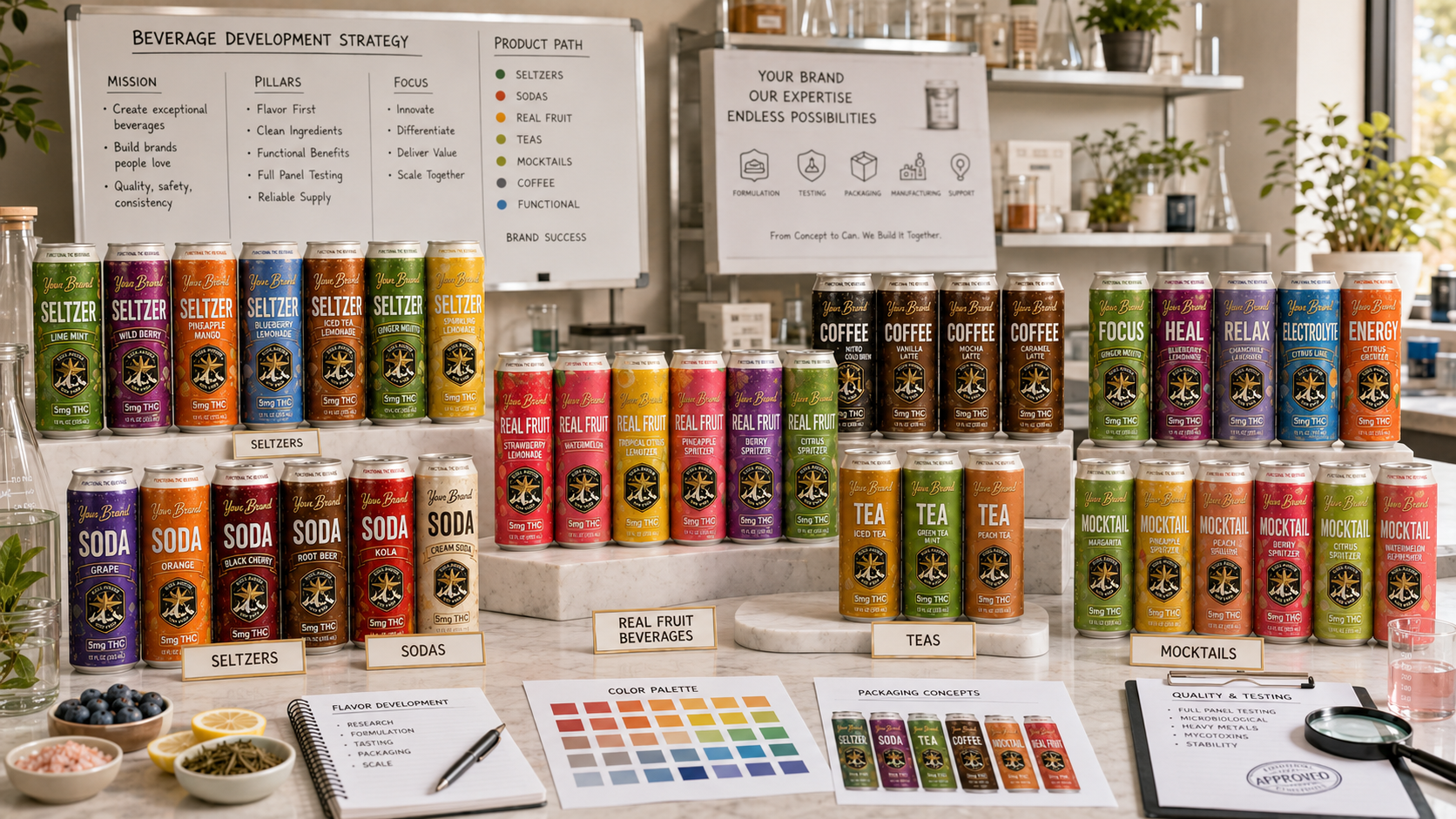
Hemp-derived THC beverage manufacturing combines traditional beverage production with cannabinoid-specific planning. A finished drink may start as a seltzer, coffee, tea, lemonade, soda, juice-style drink, mocktail, real-fruit style beverage, or functional drink. From there, the product needs the right cannabinoid input, flavor system, production method, package, label plan, testing approach, and market review.
Many cannabinoid inputs are hydrophobic, which means they do not naturally blend evenly into water-based beverages. That is why beverage formulation, water-compatible cannabinoid inputs, flavor balancing, dose consistency, and stability planning are important before production. A beverage that tastes good as a small sample still has to work in a commercial tank, can, case, pallet, and retail setting.
Production
From formula to finished can
The manufacturing path may include formula review, ingredient sourcing, cannabinoid infusion planning, batching, canning, labeling, case packing, testing, and freight planning.
Documentation
Testing supports retail confidence
Finished-product COAs, potency testing, lot tracking, and clear label documentation can help retailers and distributors understand what they are carrying.
Common hemp beverage formats
The format should match the customer occasion, dose strategy, flavor system, sales channel, and retail story. A 5mg sparkling drink, a 10mg seltzer, a 25mg coffee, and a higher-potency soda are different products from a manufacturing, cost, and customer-experience perspective.
Seltzers and spritzers
Light, crisp, low-sugar, and easy to position around social sipping and alcohol-alternative occasions.
Sodas and lemonades
Useful when bold flavor, sweetness, and stronger flavor masking can help the product feel familiar and retail-friendly.
Coffee and tea
Good for brands that want to build around familiar daily rituals, premium flavors, caffeine, or functional ingredient stacks.
Mocktails and real-fruit drinks
Helpful for brands that want a more elevated adult beverage experience, fruit-forward positioning, or non-alcoholic social format.
Low-MOQ planning and first-run economics
Low-MOQ hemp beverage manufacturing can help a brand test demand before committing to a large production run. It is especially useful for first launches, retailer pilots, distributor conversations, new flavors, or proof-of-concept inventory.
Low MOQ does not automatically mean lowest unit cost. A smaller run can reduce total upfront commitment, but setup time, ingredients, packaging, testing, freight, and line efficiency still affect the finished price. Brands that need the lowest possible unit cost may eventually need larger volume, tighter SKU focus, or simpler packaging.
What affects hemp beverage manufacturing cost?
Hemp beverage cost is project-specific. The clearest way to estimate the project is to define the beverage type, potency, cannabinoid profile, number of SKUs, formulation path, packaging plan, first-run volume, and freight destination.
- Beverage format: seltzer, coffee, tea, lemonade, soda, juice, mocktail, and functional drinks each have different production considerations.
- Cannabinoid dose: a 2.5mg, 5mg, 10mg, 25mg, or higher-dose beverage can have different ingredient costs, flavor needs, and market positioning.
- Formula complexity: custom flavors, acids, sweeteners, caffeine, electrolytes, botanicals, mushrooms, adaptogens, or nootropics can add cost and R&D time.
- Production path: white label, private label, co-packing, and custom formulation have different cost structures.
- Packaging: can size, label style, printed cans, cartons, multipacks, case count, and artwork readiness affect cost and lead time.
- Testing and documentation: potency testing, COAs, label review, QR-code strategy, and target-market requirements should be planned before launch.
- Freight: finished beverages are heavy, so delivery location, pallet count, liftgate needs, and distribution plan can materially affect landed cost.
For a deeper cost planning page, use hemp beverage manufacturing cost. For broader budget planning, compare it with THC beverage manufacturing cost.
Testing, COAs, labeling, and target-market review
Hemp-derived beverage rules vary by state, channel, dose, package, and product type. A serious manufacturing path should account for testing and labeling expectations before production, not after the cans are already made.
Potency and quality checks
Finished-product testing can help verify cannabinoid content and support batch-specific documentation for buyers, retailers, and distributors.
Documentation matters
COAs, lot traceability, ingredient records, and label support can make the product easier to evaluate and place in a commercial channel.
State rules vary
Brands should confirm compliance requirements for the intended market, including dose, labeling, packaging, age-gating, distribution, and retail channel expectations.
We are not attorneys, and this page is not legal advice. This page is designed to help founders and operators understand the practical manufacturing decisions that affect product readiness. Final legal conclusions should be confirmed with qualified counsel for the intended market.
For broader planning, review compliance considerations, state resources, and the main beverage manufacturing page before finalizing the product path.
What to prepare before requesting a quote
The quote process is much easier when the first version of the product is clear. You do not need every answer finalized, but the more specific the brief is, the easier it is to recommend the right manufacturing path.
Format and dose
Know the beverage type, target milligrams per can, cannabinoid profile, flavor direction, and whether the product is still or carbonated.
SKU count and market
Estimate the number of flavors, target states or channels, first-run volume, launch timing, and retail or distributor plan.
Can and label direction
Share preferred can size, label style, artwork status, case pack needs, QR-code expectations, and any multipack or retail display goals.
Manufacturing preference
Clarify whether you want white label speed, private label control, co-packing support, low-MOQ testing, or custom formulation.
Related THC beverage manufacturing resources
If you are comparing hemp-derived beverage production against broader THC beverage manufacturing, these existing resources can help you choose the right next page.
Frequently asked questions
Ready to scope a hemp beverage manufacturing project?
Tell us your target beverage format, potency, number of SKUs, packaging goals, launch market, first-run volume, and desired timeline. We can help you evaluate whether white label, private label, co-packing, low-MOQ production, or custom formulation is the right next step.