
Focus-positioned drinks
Lion’s Mane can fit a product line built around daytime routines, creative work, daily ritual, or lighter functional beverage positioning.
Lion’s Mane can support a focus-positioned, daytime-friendly functional beverage story when the drink format, flavor system, cannabinoid dose, and claim language are planned carefully.
Use this ingredient guide to evaluate Lion’s Mane for THC coffee, tea, functional seltzer, citrus drinks, mocktails, and other mushroom-forward beverage concepts before moving into quote planning or custom formulation.
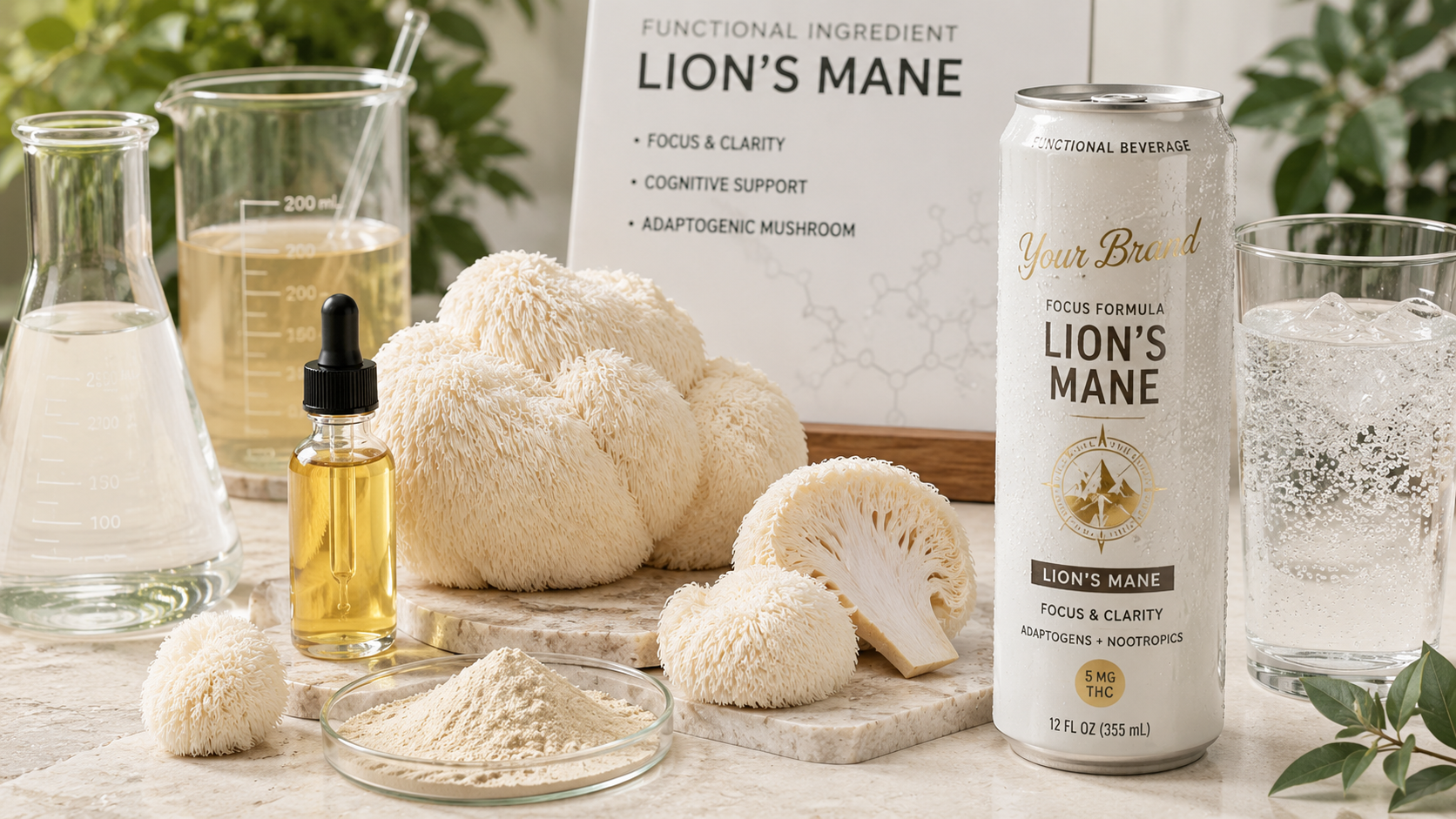
Lion’s Mane works best as part of a clear beverage concept, not as a vague functional add-on.
Lion’s Mane for THC beverages is a functional mushroom direction that can help shape a daytime, focus-positioned, ingredient-forward drink concept. It should be positioned around beverage occasion, ingredient identity, and customer expectations — not as a product that guarantees cognitive, medical, or performance outcomes.
Ingredient Fit
For beverage brands, Lion’s Mane is most useful when it clarifies the product’s occasion and makes the drink easier to understand.
Lion’s Mane can fit a product line built around daytime routines, creative work, daily ritual, or lighter functional beverage positioning.
Coffee, green tea, citrus, ginger, berry, and botanical flavor systems can help create a more finished Lion’s Mane beverage concept.
The best Lion’s Mane drinks explain what they are, when they are for, what they contain, and how the ingredient supports the beverage direction.
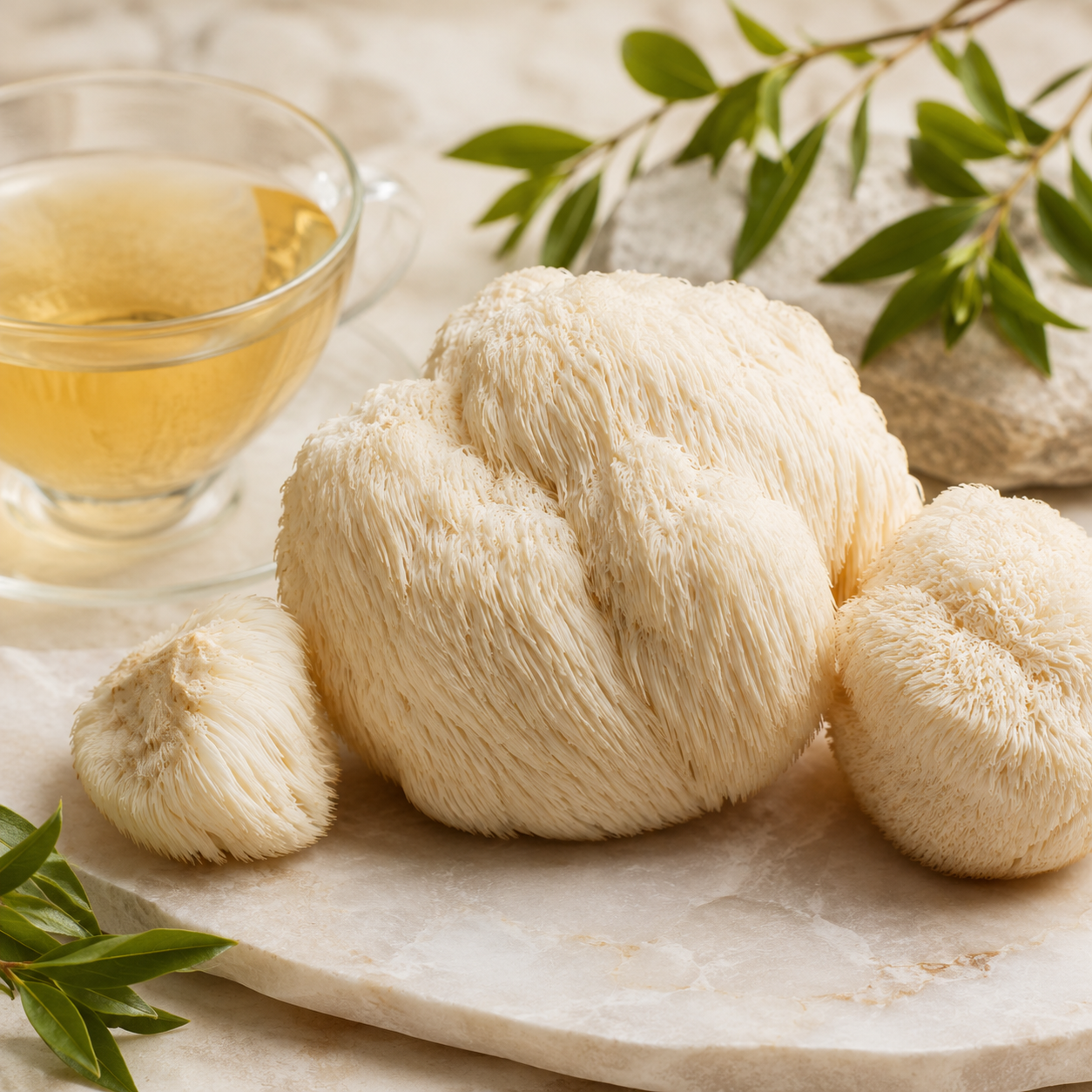
Lion’s Mane is an edible mushroom used in functional foods, powders, capsules, coffees, and beverage concepts. In commercial beverage planning, it is often selected because consumers already recognize it as a functional mushroom associated with focus-oriented products.
The practical question is whether the ingredient improves the product story. A Lion’s Mane beverage usually makes the most sense when the drink is daytime-friendly, easy to explain, and supported by a flavor system that still tastes complete.
Consumers often associate Lion’s Mane with focus, clarity, workday routines, and mushroom coffee culture. Those associations can be useful for positioning, but they should not be presented as guaranteed effects.
For customer-facing language, the safer direction is to describe the ingredient, the beverage format, and the intended drinking occasion. Avoid disease claims, treatment claims, cognitive treatment language, or hard performance promises.
A stronger product story is: “a low-dose THC beverage with Lion’s Mane for a focus-positioned daytime drinking occasion.” A weaker and riskier story is: “a THC drink that improves cognition.”
Lion’s Mane can work in several functional beverage formats. The best format depends on flavor, sweetness, cannabinoid dose, caffeine strategy, and the customer occasion.
Coffee already has roasted bitterness, ritual use, and consumer familiarity with mushroom coffee.
Works with mocha, vanilla, salted caramel, nitro coffee, and low-dose functional coffee concepts.
Tea can support a cleaner focus-friendly beverage direction and softer functional positioning.
Can pair with L-theanine, citrus, ginger, honey, agave, or botanicals depending on the product concept.
Fruit systems can give enough brightness and acidity to support functional mushroom ingredients.
Flavor masking, acid balance, sweetness, and mouthfeel should be tested early.
A low-dose functional seltzer can work when the formula is simple and the flavor is strong enough.
Very light flavors may make earthy or mushroom notes more noticeable.
Lion’s Mane may be evaluated alongside THC, CBD, CBG, or other cannabinoids depending on the product direction. For a daytime concept, brands often think in terms of lower-dose THC, clear flavor, and a functional ingredient stack that is easy for customers and retailers to understand.
If you are still evaluating the cannabinoid side of the formula, review the Cannabinoids ingredient hub. If you are comparing related functional directions, review Adaptogens and the broader Mushrooms hub.
Lion’s Mane is not usually the main flavor of the beverage. It works best when the drink has a primary flavor identity such as coffee, mocha, vanilla, green tea, lemon, ginger, berry, citrus, or tropical fruit.
The formulation plan should consider ingredient source, use level, flavor impact, color, solubility, sediment, finished-product stability, label accuracy, cannabinoid testing, and COA documentation.
Related Ingredient Paths
Compare Lion’s Mane with other mushroom, adaptogen, cannabinoid, and beverage format decisions before moving into production planning.
Compare Lion’s Mane, Cordyceps, Reishi, mushroom coffee, mushroom beverage positioning, formulation, and quote planning.
Explore mushrooms →Explore Cordyceps for energy-adjacent, active, coffee, tea, citrus, and functional beverage concepts.
Explore Cordyceps →Explore Reishi for calm, evening, tea, cacao, mocktail, and grounded functional beverage concepts.
Explore Reishi →Compare Lion’s Mane with L-theanine for calm-focus, tea, coffee, and smoother functional beverage concepts.
Explore L-Theanine →Use mushroom and functional ingredient strategy in coffee, cold brew, nitro coffee, and daily ritual concepts.
Explore functional coffee →Share your format, dose, functional direction, flavor, packaging status, target states, and first-run goals.
Start the quote request →FAQ
Use these answers to evaluate whether Lion’s Mane belongs in a functional THC beverage concept.
Share the beverage format, target cannabinoid dose, functional mushroom direction, flavor profile, packaging status, target states, and first-run goals. Those details make it easier to scope the right formulation and production path.