Daytime fit
Cordyceps can support brighter beverage concepts intended for daytime, social, movement-friendly, or lighter-use occasions.
Cordyceps can help a THC beverage brand build a brighter, daytime, active-use, or energy-adjacent product concept when the formula, flavor, cannabinoid dose, and claim language are planned carefully.
Use this page to think through cordyceps in functional seltzers, coffee, tea, citrus beverages, hydration-style drinks, mocktails, and low-dose THC concepts without turning the product into a medical or sports-performance claim.
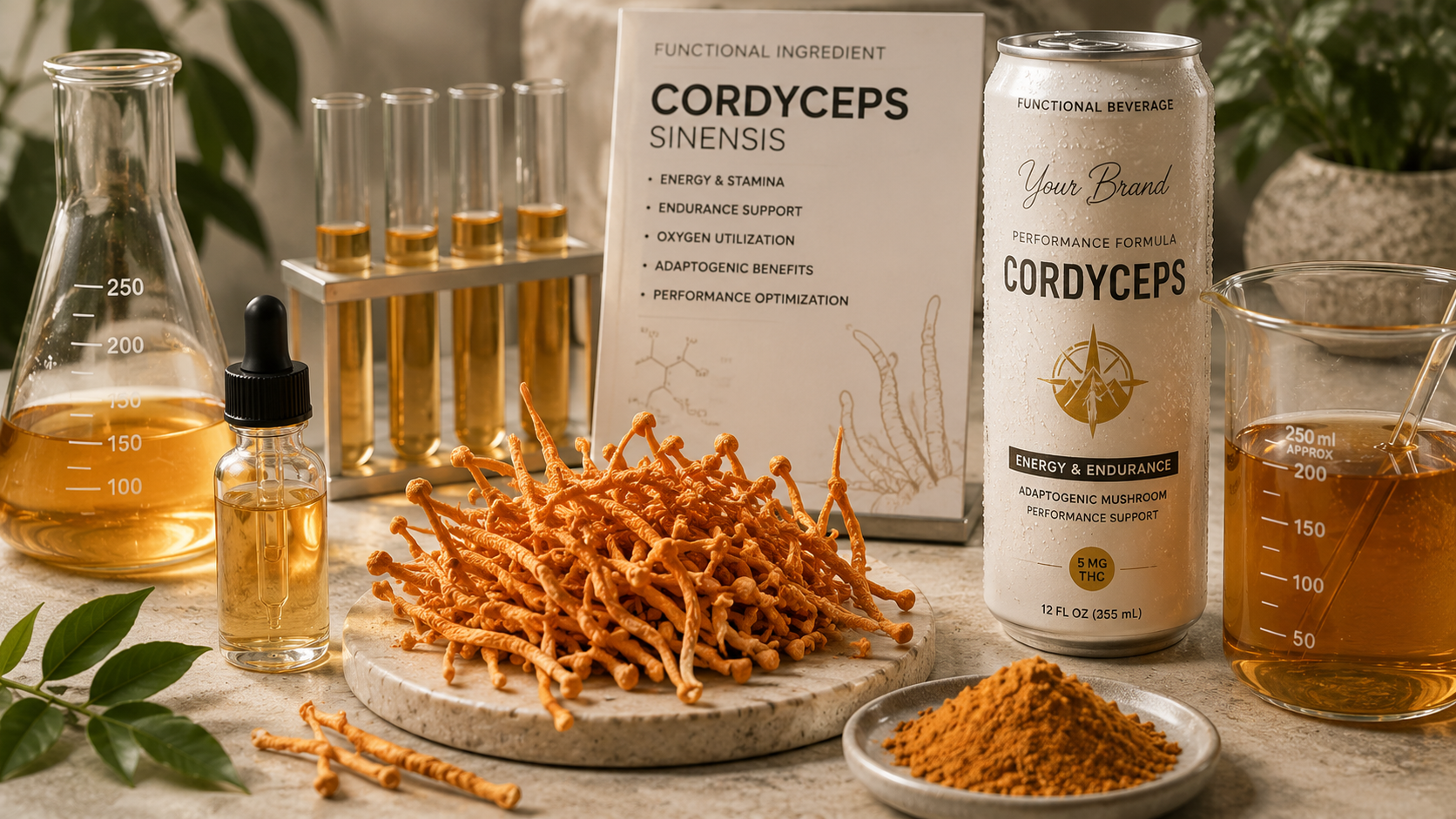
Cordyceps works best when the finished drink has a clear daytime occasion, a clean flavor system, and responsible functional positioning.
Cordyceps for THC beverages is best understood as an energy-adjacent functional mushroom direction, not a guaranteed energy or performance claim. It can fit active-use beverage concepts when the ingredient form, flavor system, THC dose, caffeine strategy, documentation, and retail positioning are all considered before production.
Cordyceps refers to a group of fungi commonly used in functional mushroom products. In beverage planning, brands usually explore cordyceps because consumers associate it with active routines, movement-friendly occasions, and brighter functional drink concepts.
For a THC beverage brand, the practical question is not whether cordyceps sounds interesting. The question is whether cordyceps helps clarify the beverage occasion, fits the flavor system, and supports the product story without overcomplicating the label.
Cordyceps is often a better fit for daytime and active-use beverage directions than for heavy evening formulas. It may make sense in citrus seltzers, green tea drinks, functional coffee, ginger-lime beverages, tropical drinks, hydration-style concepts, and low-dose THC drinks where the intended experience should feel lighter.
It can also be evaluated alongside caffeine, green tea, guarana, B vitamins, electrolytes, CBG, THCV, or lower-dose THC depending on the product direction. The final formula still needs to taste like a finished beverage first.
Good cordyceps beverage positioning usually describes the ingredient direction and drinking occasion. It should avoid promising energy, endurance, stamina, athletic performance, treatment outcomes, or guaranteed effects.
Cordyceps inputs may affect taste, color, sediment, mouthfeel, and stability depending on the ingredient form and level. Some formulas need stronger flavor architecture to avoid tasting earthy, bitter, powdery, or unfinished.
Brands should think through extract type, input level, solubility, flavor masking, sweetness, acid balance, carbonation, cannabinoid emulsion, label statements, and finished-product testing before locking the concept.
Cordyceps can be paired with THC, CBD, CBG, CBN, or other cannabinoids depending on the product goal. For active-use or daytime positioning, the cannabinoid strategy should be simple enough for customers to understand and controlled enough that the functional mushroom concept is not overwhelmed.
For a broader cannabinoid planning path, review Cannabinoids for THC Beverages. To compare other functional directions, review Lion’s Mane, Reishi, and Adaptogens.
Brand Planning
Use cordyceps to make the drinking occasion clearer, not to make the product harder to explain or more claim-sensitive.
Cordyceps can support brighter beverage concepts intended for daytime, social, movement-friendly, or lighter-use occasions.
It may pair with caffeine, green tea, guarana, B vitamins, electrolytes, CBG, THCV, citrus, ginger, or tropical flavor systems.
The strongest public-facing story focuses on ingredient identity, format, dose, and occasion rather than energy or performance promises.
Beverage Formats
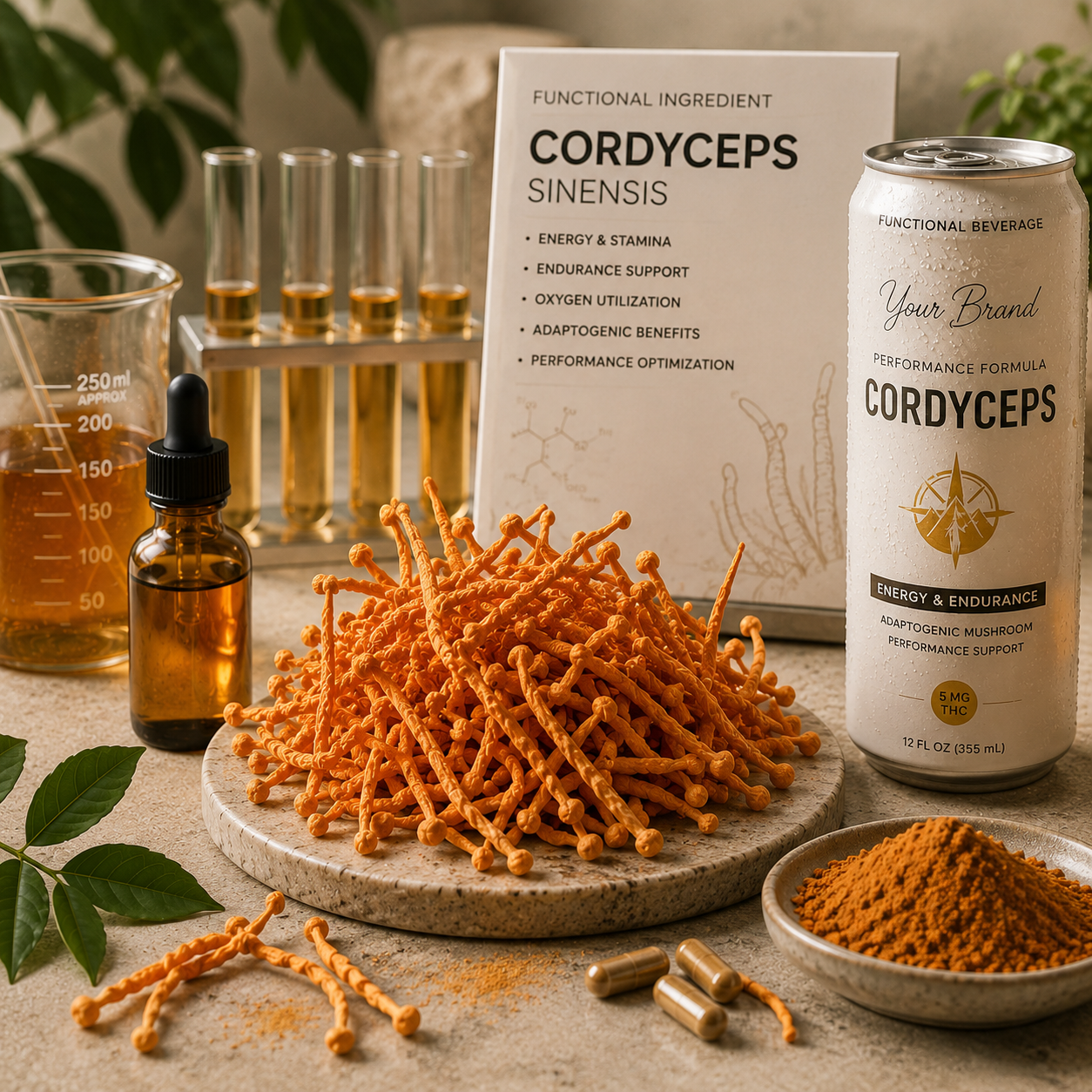
The more active the product story, the more important it is to keep the formula simple, drinkable, and easy to explain.
Light citrus, ginger-lime, grapefruit, orange, or tropical seltzer profiles can support brighter functional positioning.
Coffee can support mushroom ingredients with roasted notes, body, and a daily ritual use case.
Tea formats can work when the brand wants a lighter caffeine direction and a familiar botanical base.
Electrolyte or active-use concepts can fit cordyceps if the claims stay careful and the taste remains clean.
Related Paths
Connect cordyceps to sibling mushroom ingredients, cannabinoid planning, functional drink formats, and the quote path.
Compare Lion’s Mane, Cordyceps, and Reishi for functional beverage concepts.
Explore mushrooms →Explore a focus-friendly mushroom direction for coffee, tea, seltzer, and low-dose THC concepts.
Explore Lion’s Mane →Explore a calm or evening-oriented mushroom direction for grounded functional drink concepts.
Explore Reishi →Compare ashwagandha, lemon balm, rhodiola, L-theanine, and mushroom-adjacent functional directions.
Explore adaptogens →Plan THC, CBD, CBG, CBN, and other cannabinoid choices around the beverage occasion.
Explore cannabinoids →Share the format, dose, functional stack, flavor direction, packaging status, and first-run goals.
Start the quote request →FAQ
These answers help brands evaluate cordyceps before scoping a production-ready product.
Share the beverage format, target cannabinoid dose, caffeine strategy, functional stack, flavor profile, packaging status, target states, and first-run goals. Those details make it easier to scope the right formulation and production path.