

THC vs. alcohol at a glance
| Comparison point | THC beverage | Alcoholic beverage | What it means for a brand |
|---|---|---|---|
| How the serving is measured | Milligrams of THC per serving and per container. | Alcohol by volume and, for education, standard drinks containing about 14 grams of pure alcohol. | Use precise milligram and serving communication. Do not create an unsupported THC-to-alcohol conversion. |
| Onset | Oral cannabis products may take 30 minutes to 2 hours to produce intoxicating effects. Formulation and individual factors matter. | Alcohol enters the bloodstream quickly, with effects influenced by amount, pace, food, body composition, and metabolism. | Avoid guaranteeing an exact onset time. Give clear serving guidance and discourage rapid redosing. |
| Duration | Effects can last longer than expected, especially with higher doses or repeated consumption. | Duration depends on dose, drinking pace, absorption, and the body's steady metabolism of alcohol. | Design the package and occasion around the expected experience, not just the first sensation. |
| Impairment | Can affect reaction time, decision-making, coordination, memory, and perception. | Can impair judgment, reaction time, coordination, and driving ability, including below common legal BAC limits. | Never frame either product as compatible with driving or safety-sensitive tasks. |
| Calories and sugar | Depends mostly on the base beverage. A THC drink may be zero-sugar, low-calorie, or indulgent. | Includes calories from alcohol and may also contain sugar, juice, cream, or other caloric ingredients. | Compare actual nutrition facts and ingredients, not category stereotypes. |
| Next-day experience | No classic alcohol hangover, but prolonged or unwanted effects can occur and a symptom-free next day is not guaranteed. | Excessive use can produce a hangover that may last 24 hours or longer. | Avoid “no hangover” guarantees. Use accurate, non-medical product language. |
| Combined use | Using cannabis and alcohol together can increase impairment and physical risk. | Do not promote mixing as the intended consumption experience. | |
This is not a dose-equivalence calculator. A 5mg or 10mg THC beverage cannot responsibly be described as equal to one beer, one glass of wine, or one cocktail. The substances act differently, product formats differ, and consumer responses vary.
How are alcohol and THC servings measured differently?
Alcohol content is commonly communicated through alcohol by volume, while public-health education also uses the concept of a standard drink. In the United States, one standard drink contains about 14 grams of pure alcohol, which is approximately the amount in a 12-ounce 5% beer, a 5-ounce 12% wine, or a 1.5-ounce 40% spirit.
A THC beverage is measured in milligrams of THC. The package may contain one serving or multiple servings, and the experience can vary with dose, tolerance, prior cannabis exposure, food, medications, alcohol use, and individual biology.
For brand positioning, a 2.5mg beverage may support a lighter entry-level or sessionable lane, 5mg may support a clear lower-dose social position, and 10mg may be a stronger single-can experience for many consumers. These are product-strategy lanes, not promises of how every person will feel.
For a deeper dose discussion, review Low-Dose THC Drinks.
Which has a faster onset?
Alcohol is absorbed from the stomach and intestines into the bloodstream and can build more quickly when someone drinks faster than the body metabolizes it. Food, pace, body size, sex, genetics, and other factors influence blood alcohol concentration and experience.
CDC guidance for oral cannabis products, including infused foods and drinks, states that intoxicating effects may take 30 minutes to 2 hours to appear and can last longer than expected. Some beverage systems are developed for a faster consumer experience, but a brand should not promise an exact onset time across all people or all use conditions unless that claim is adequately supported and legally reviewed.
Faster absorption does not mean instant predictability
The amount consumed, pace, food, and individual metabolism affect blood alcohol concentration and impairment.
Delayed effects increase redosing risk
Clear serving communication matters because consumers may drink more before the first serving has fully taken effect.
How long do the effects last?
Neither category has one universal duration. Alcohol is absorbed faster than it is metabolized, and the body clears it at a relatively steady rate that varies between individuals. The experience depends heavily on total intake and drinking pace.
Oral THC effects may last longer than expected, especially with higher doses, repeated servings, an empty stomach, concurrent alcohol or medication use, or an inexperienced consumer. This is one reason a beverage brand should design the can size, dose, serving statement, and intended occasion together.
Which category is more predictable?
Alcohol has a mature framework for measuring alcohol content and estimating blood alcohol concentration, but that does not make impairment identical across people. For THC, a labeled milligram dose is essential, yet blood THC concentration does not translate into individual impairment as directly as BAC does for alcohol.
For THC beverage brands, predictability comes from product controls rather than a universal physiological formula:
- Accurate finished-product potency testing
- Homogeneity across the batch and container
- Clear per-serving and per-container dose statements
- Consistent flavor, appearance, carbonation, and package fill
- Conservative onset and experience language
- Lot traceability and repeatable manufacturing specifications
Do THC beverages impair driving?
Yes. Cannabis can slow reaction time, impair coordination and decision-making, and distort perception. Alcohol also impairs the abilities needed to drive safely, and impairment can begin below the legal BAC limit used in most states.
The responsible message is straightforward: consumers should not drive after using an impairing THC beverage or alcohol. Restaurants, bars, events, retailers, and brands should build transportation and responsible-service considerations into the experience rather than implying that a lower-dose product makes driving acceptable.
How do calories and sugar compare?
The answer depends on the actual beverage. Alcohol itself contributes calories, and beer, wine, hard seltzer, cocktails, and ready-to-drink products vary widely in sugar and total calories. THC contributes very little to total calorie content at beverage doses, but the beverage base may still contain sugar, juice, cream, coffee ingredients, or other caloric components.
A useful brand comparison is therefore:
- Calories per can
- Added sugar and total sugar
- Serving size and servings per container
- Alcohol-free status
- THC milligrams per serving and container
- Caffeine and functional ingredients, where applicable
“THC beverage” does not automatically mean low-calorie, and “alcoholic beverage” does not automatically mean high-sugar. The label and formula determine the nutritional comparison.
Do THC beverages cause hangovers?
Alcohol hangovers are a recognized set of symptoms that can include fatigue, thirst, headache, nausea, stomach pain, anxiety, sleep disruption, and impaired attention or coordination. NIAAA notes that symptoms can last 24 hours or longer.
THC beverages do not create that same alcohol-metabolism hangover, but a brand should not translate that distinction into a guaranteed “no hangover” promise. Oral THC can last longer than expected, and excessive consumption can lead to anxiety, confusion, rapid heart rate, nausea, vomiting, or other unwanted effects.
“Alcohol-free” is a measurable product fact. “No hangover,” “safer,” and “healthy buzz” are broad outcome claims that a beverage brand should avoid unless the exact claim is legally permissible and supported.
Can THC and alcohol be consumed together?
CDC states that using alcohol and cannabis at the same time is likely to produce greater impairment than using either substance alone. That greater impairment can increase the risk of physical harm.
For brand and hospitality strategy, this means a THC beverage should not be marketed as a mixer for alcohol or as part of a combined-use challenge. Restaurants and bars considering THC beverage service should evaluate applicable state and local rules, age restrictions, staff training, menu communication, product storage, serving limits, and transportation planning before launch.
Where do THC beverages fit socially?
THC beverages can compete for selected alcohol occasions without replacing alcohol in every context. The strongest opportunities often involve a clearly defined moment:
Lower-dose gathering
A measured alternative for adults who want an alcohol-free social beverage where lawful.
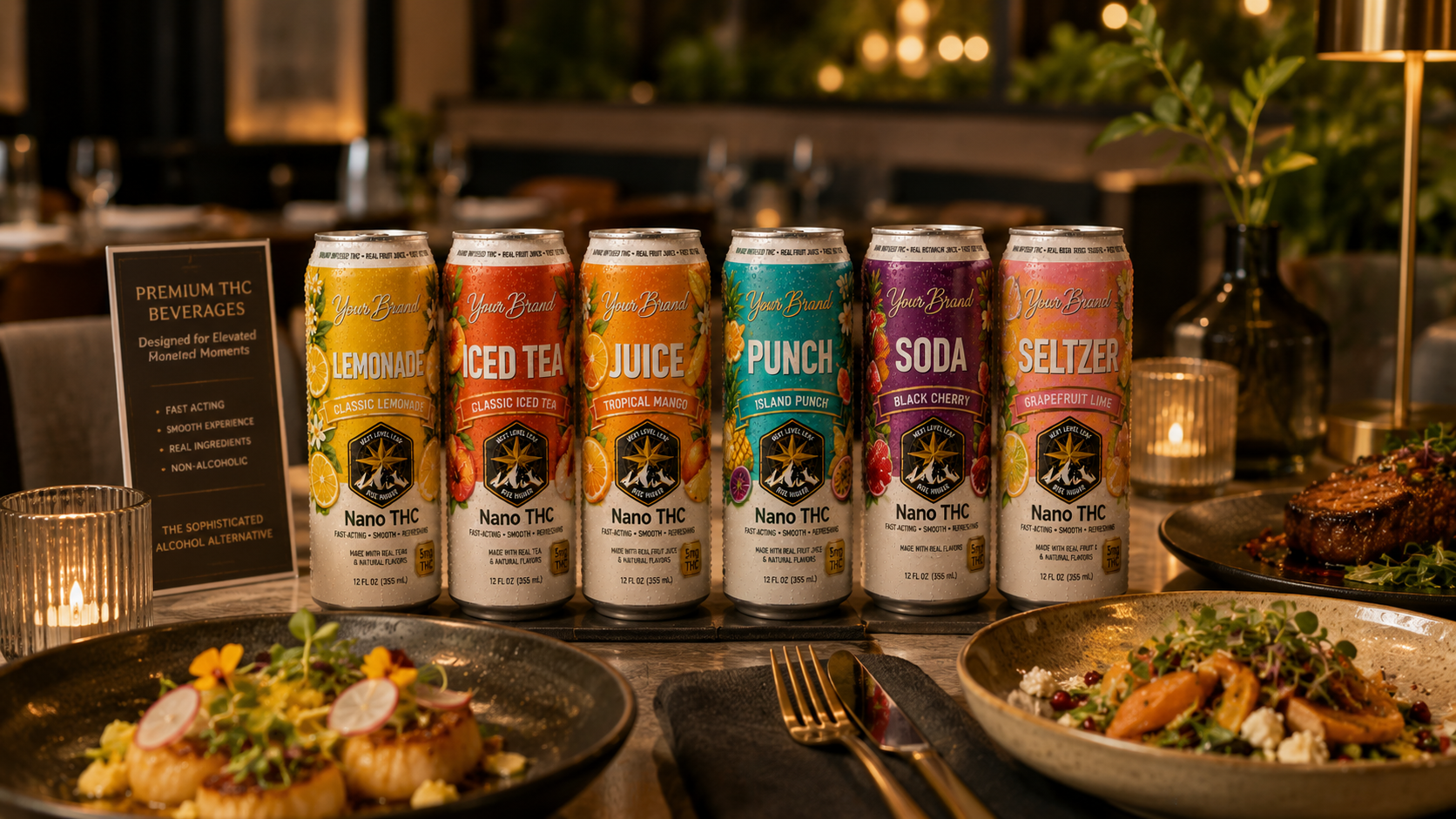
Restaurant or bar menu
A packaged beverage with clear dose, ingredients, and service rules rather than an improvised infusion.
Soda, lemonade, tea, or mocktail
A flavor-led product built to complement a meal or evening occasion.
Coffee or tea format
A familiar beverage ritual that requires careful dose, caffeine, timing, and experience positioning.
Single-serve cold-box purchase
A can that communicates dose, flavor, alcohol-free status, and intended experience quickly.
THC plus non-THC options
A broader platform that can serve different customers, channels, states, and occasions.
Who should avoid THC beverages?
This page is not medical advice, and individual risk depends on health history, medications, age, pregnancy status, and other factors. At a minimum, brands should not position THC beverages for children or teenagers, pregnant or breastfeeding people, anyone who plans to drive or operate machinery, or anyone for whom cannabis is medically or legally inappropriate.
CDC and FDA advise against cannabis use during pregnancy and breastfeeding. Cannabis may also interact with prescription medications, so consumers with medication or health questions should speak with a qualified healthcare professional.
How should a THC beverage brand position against alcohol?
Use measurable, supportable facts
- Alcohol-free
- THC milligrams per serving and container
- Calories and sugar
- Ingredients and allergens
- Caffeine or functional ingredients
- Serving size and package size
- Flavor and intended occasion
Avoid broad outcome promises
- “Safer than alcohol”
- “Healthy buzz”
- “No hangover guaranteed”
- “Drive-safe dose”
- “Equivalent to one drink”
- Therapeutic or disease claims
- Claims that every consumer will feel the same onset
FDA distinguishes among health claims, nutrient-content claims, and structure/function claims for conventional foods. Disease-risk claims require specific authorization or qualified-claim pathways, and labeling must remain truthful and non-misleading. THC beverage brands also face cannabinoid-specific federal and state issues, so claims should be reviewed in the context of the exact formula, market, label, and channel.
What should founders decide before building an alcohol-alternative THC beverage?
- Choose the exact occasion: restaurant meal, evening social use, convenience purchase, event, coffee ritual, or another defined moment.
- Define the audience: newer consumers, experienced THC users, alcohol moderators, flavor-first customers, or another clear segment.
- Select the dose lane: 2.5mg, 5mg, 10mg, another state-appropriate dose, or a non-THC option.
- Choose target states and channels: the legal and operational plan should precede final formula and inventory commitments.
- Build the beverage first: flavor, sweetness, carbonation, aroma, mouthfeel, and packaging need to work without relying on the THC headline.
- Write supportable claims: focus on product facts and occasion rather than health or safety superiority.
- Plan responsible use communication: serving size, delayed effects, no driving, secure storage, and no combined-use positioning.
- Validate manufacturing: formula, finished-product testing, homogeneity, packaging, shelf life, MOQ, timeline, and repeatability.
A possible prototype pathway may begin around 360 cans, while a common initial production scope is around 1,200 cans per SKU. The appropriate path depends on whether the brand is using an existing beverage framework, customizing a base, or developing a new formula.
Continue with THC Beverage Trends, review Start a THC Beverage Brand, compare Co-Packing vs. White Label, or explore the broader THC Beverage Manufacturing process.
Sources and scope
This page was reviewed on August 4, 2026. It provides general educational and product-positioning information for beverage founders and is not medical or legal advice. Health effects, laws, labeling requirements, and service rules vary by person, product, state, and channel.