

What does the current market data show?
Measured retail data suggests the THC beverage category has moved beyond a small experiment. NIQ's 2026 category perspective reports strong year-over-year growth, broad consumer curiosity, and adoption concentrating in low-to-mid dose products and familiar retail channels.
Measured category sales
NIQ's latest 52-week measured THC beverage sales figure.
Year-over-year growth
Growth in the same measured period, showing momentum beyond early trials.
Interested in trying
Share of U.S. adults NIQ reports as interested in cannabis-infused beverages.
U.S. adults drinking alcohol
Gallup's 2026 reading, tying the lowest U.S. alcohol participation rate in its polling history dating to 1939.
Market growth is not the same as guaranteed brand success. The data supports a real category opportunity, but the products that last still need a clear customer, a credible beverage, repeatable manufacturing, appropriate testing, workable channels, and a legal strategy that fits the target states.
How can a founder tell a durable trend from temporary hype?
A durable trend changes repeated customer behavior or improves the economics of getting a product to market. Hype usually creates attention without improving repeat purchase, channel access, quality, or long-term brand fit.
It solves a recurring occasion
The product fits a recognizable moment such as a social evening, restaurant visit, afternoon refreshment, coffee ritual, or controlled lower-dose experience.
It appears in real retail channels
The trend is supported by placement, reorder behavior, retailer interest, and formats that customers already understand how to shop.
It depends on one buzzword
A product built only around “nano,” “functional,” “premium,” or another broad claim may not have a specific customer promise.
It ignores legal or manufacturing reality
Demand does not rescue a product that cannot be produced consistently, tested accurately, labeled appropriately, or sold through the intended channel.
Trend 1: lower-dose and sessionable products are becoming more important
Lower-dose products can make the category feel more approachable and easier to understand for social occasions. NIQ specifically identifies low-to-mid dose products as an area where adoption is concentrating.
For product planning, it helps to separate different dose lanes rather than calling every beverage “low dose.” A 2.5mg or 5mg drink can support a sessionable or entry-level position. A 10mg beverage is better treated as a more noticeable single-can experience for many consumers, not a universal low-dose product.
| Dose lane | Potential product role | Founder decision | Watchouts |
|---|---|---|---|
| 2.5mg | Entry-level, light social, or multi-can session strategy. | Decide whether the brand is recruiting newer consumers or building a lighter occasion. | The promise still needs to be clear; “less THC” alone is not a brand. |
| 5mg | Common lower-dose social position with a straightforward single-can structure. | Align flavor, onset expectations, serving instructions, and channel. | State rules, package structure, and consumer tolerance still vary. |
| 10mg | More noticeable single-can product for established THC consumers. | Use precise positioning rather than describing it as universally sessionable. | May be too strong for some audiences or occasions. |
| Ultra-low contingency | A materially sub-0.4mg-per-container concept designed around a possible federal contingency lane. | Evaluate whether the product still has a credible customer promise at that level. | The federal threshold is not a food-law approval or a universal state safe harbor. |
For a deeper dose discussion, review Low-Dose THC Drinks.
Trend 2: THC beverages are competing for alcohol-alternative occasions
The strongest alcohol-alternative opportunity is not based on the assumption that consumers will stop drinking alcohol completely. It is based on a broader moderation pattern in which people build different beverage choices around different occasions.
Gallup reported in August 2026 that 54% of U.S. adults say they drink alcohol, tying the lowest level in its polling history dating to 1939. Alcohol participation has fallen from 62% in 2023 to 54% in 2025 and 2026. Gallup also found that 17% of Americans used nonalcoholic beer, wine, or spirits instead of alcohol during the past year, and among drinkers who use those alternatives, 38% say they are consuming more of them than they used to.
That does not mean consumers will automatically move from alcohol to THC beverages. It does show that the adult beverage occasion is becoming more flexible. Consumers are increasingly willing to choose different drinks for different situations, which creates room for zero-proof products, functional beverages, low-dose THC beverages, and other alternatives alongside traditional beer, wine, and spirits.
A THC beverage does not have to replace every alcoholic drink. It needs to earn a specific occasion where the customer wants a measured, flavorful, non-alcohol beverage option.
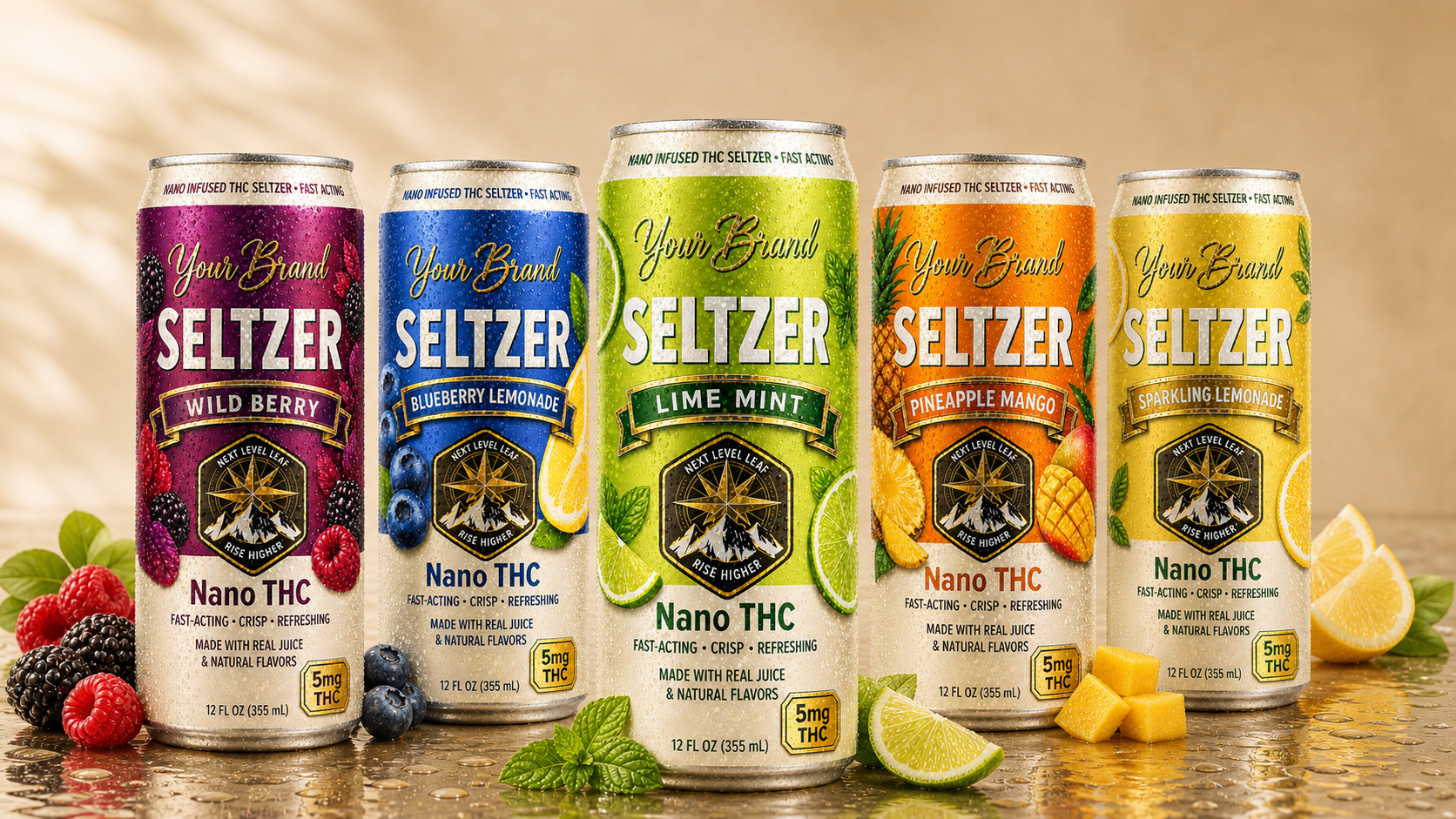
For a THC beverage brand, the opportunity is to define that occasion clearly. A crisp lower-dose seltzer might fit a gathering or happy hour, a flavor-forward soda may work with food, and a mocktail-style drink can create an evening ritual. THC can help define the experience, but the beverage still has to earn repeat purchase through flavor, packaging, dose clarity, and a reason to choose it again.
Trend 3: familiar beverage formats are winning attention
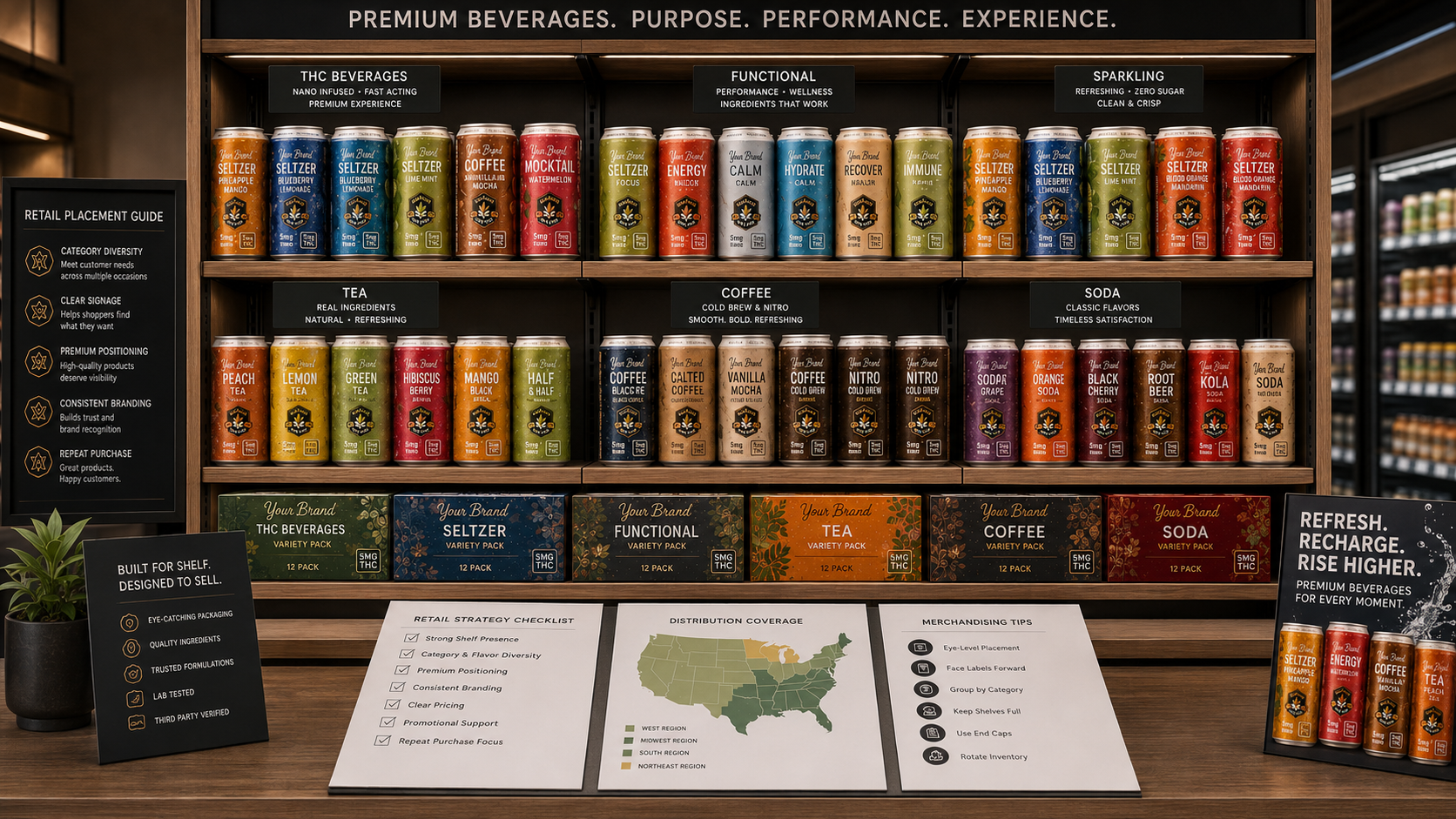
Customers understand beverages through familiar categories. A founder may be excited about the cannabinoid system, but the shopper usually sees a seltzer, soda, lemonade, tea, coffee, mocktail, juice-style drink, or functional beverage first.
Clean and social
Light flavor, carbonation, and lower-dose positioning can create an easy alcohol-alternative story.
- Strong familiarity
- Clarity and flavor defects are more visible
- Easy to become generic without a sharper concept
Flavor-forward and approachable
Bold flavor can support stronger masking, nostalgia, indulgence, or a clear food-pairing occasion.
- More room for differentiated flavor
- Can support higher sweetness and calorie levels
- Needs a deliberate brand and occasion
Ritual-driven formats
Existing beverage rituals can make the product easy to understand, especially when the caffeine, dose, flavor, and time-of-day story are clear.
- Strong category identity
- Complex flavor and stability considerations
- Requires careful experience positioning
Benefit-led or occasion-led
Botanicals, adaptogens, mushrooms, nootropics, hydration, and mocktail cues can create differentiation when the formula and claims remain disciplined.
- More ways to build a portfolio
- More ingredient interactions
- Avoid vague promises and medical claims
Trend 4: growth is expanding beyond dispensary-style retail
NIQ identifies liquor and convenience as leading measured adoption channels. That matters because these environments frame THC beverages as part of a broader beverage occasion rather than only as a cannabis product.
Channel expansion also raises the standard. A product that may attract attention in a specialty setting still has to compete on flavor, package readability, cold-box presence, margin, case configuration, reliable replenishment, and retailer confidence.
- Liquor retail: strong alcohol-alternative context, but state rules and retailer policies matter.
- Convenience: familiar single-serve behavior and cold availability, with limited time to communicate dose and product identity.
- Specialty and hemp retail: educated buyers and cannabinoid familiarity, but product quality still affects repeat purchase.
- Hospitality and foodservice: potential for restaurants, bars, hotels, events, and entertainment venues where permitted, with added service and compliance considerations.
- Direct sales: possible in some markets, but age verification, shipping, state restrictions, and platform policies must be built into the plan.
Trend 5: flavor quality is replacing novelty as the standard
Early category curiosity can generate a first purchase. Flavor and experience determine whether the customer buys again. This is why the trend toward recognizable beverage formats is inseparable from higher expectations for taste, aroma, mouthfeel, sweetness, carbonation, and consistency.
A strong beverage should not require the customer to forgive it because it contains THC. The formula still needs to work as a beverage.
Trend 6: brands are building broader and more resilient portfolios
Regulatory uncertainty is encouraging some founders to think beyond a one-product THC strategy. A more resilient portfolio may include multiple dose levels, state-specific THC products, non-THC functional beverages, coffee, mushroom or adaptogenic products, hydration, or other companion SKUs.
This is not a recommendation to add ingredients simply because they are trending. Each product needs its own customer promise, formula, claims discipline, channel, and economics. The advantage of a broader platform is that the brand can serve more than one occasion and reduce dependence on a single regulatory pathway.
For ingredient-specific planning, review the Adaptogens for Functional Beverages resource.
Trend 7: finished-product quality is becoming part of the brand promise
As the category reaches more mainstream channels, professional buyers increasingly need evidence that the product can be reordered and trusted. That makes finished-product testing, lot documentation, label review, packaging quality, shelf-life work, and issue tracking part of the commercial strategy, not just back-of-house manufacturing details.
- Finished-product cannabinoid potency and homogeneity
- Microbiological and other appropriate beverage testing
- Batch and lot traceability
- Ingredient and allergen documentation
- Package and label accuracy
- Stability, flavor, appearance, and shelf-life monitoring
- Repeatable specifications and change control
Trend 8: regulatory volatility is changing product architecture
As of August 22, 2026, federal law is scheduled to narrow the hemp definition on November 12, 2026. Public Law 119-37 excludes final hemp-derived cannabinoid products containing greater than 0.4 milligrams combined total THC and similar-effect cannabinoids per retail container, along with other restrictions.
That scheduled federal change does not answer every state-law question, and staying below a federal controlled-substance threshold would not itself establish that a beverage may lawfully be added to food or sold in every state. FDA's food-law position and state requirements remain separate considerations.
Practical response: Do not build a national launch around one broad assumption. Map target states and channels first, confirm how the formula and package fit those markets, and create contingency options before inventory is committed.
Which trends should influence the first product?
| Trend | Best fit | What it changes | Question to answer |
|---|---|---|---|
| Lower dose | Social, entry-level, or sessionable concepts. | Dose, package structure, flavor intensity, and consumer education. | Who is the drink for, and how many cans should fit the occasion? |
| Alcohol alternative | Liquor, hospitality, social, and evening occasions. | Brand language, flavor, ritual, and channel strategy. | Which alcohol occasion is the product trying to earn? |
| Familiar format | Founders who need an immediately understandable customer story. | Category choice, formula, packaging, and shelf placement. | Would the beverage still be compelling without the THC headline? |
| Functional portfolio | Brands with a broader wellness, coffee, hydration, or benefit-led platform. | Ingredient stack, claims, testing, and portfolio architecture. | Is the benefit clear and supportable, or is it only a trend label? |
| Retail expansion | Brands preparing for broader distribution and repeat orders. | Case packs, margins, labeling, supply reliability, and sales materials. | What does the target retailer need to say yes and reorder? |
| Regulatory resilience | Any brand planning beyond one local market. | State map, dose lanes, formula flexibility, inventory, and contingency SKUs. | What happens to the brand if one product lane or state closes? |
What should a founder do with these trends now?
- Choose the occasion: social, meal, afternoon, coffee ritual, hospitality, convenience, or another specific use case.
- Define the customer: new-to-THC, experienced, wellness-focused, flavor-first, alcohol-moderating, or another clear segment.
- Select the dose lane: 2.5mg, 5mg, 10mg, another state-appropriate dose, or a non-THC product.
- Choose target states and channels together: do not finalize the formula before understanding where and how it will be sold.
- Make the beverage credible: flavor, sweetness, carbonation, ingredients, appearance, and package should fit the category promise.
- Plan the portfolio: decide whether the first SKU stands alone or creates a platform for future dose, flavor, format, or non-THC extensions.
- Validate production: formula, packaging, testing, shelf-life expectations, MOQ, timeline, and repeatability should be addressed before launch.
A possible prototype path may begin around 360 cans, while a common initial production scope is around 1,200 cans per SKU. The right path depends on whether the product uses an existing beverage framework, needs custom R&D, and how much inventory the launch plan can support.
Continue with Start a THC Beverage Brand, compare Co-Packing vs. White Label, or explore the broader THC Beverage Manufacturing process.
Sources and timing note
Market data changes quickly. The market evidence and legal status discussed on this page were reviewed on August 22, 2026. NIQ figures refer to the latest 52-week period reported in its 2026 perspective, not a complete estimate of every THC beverage sale in the United States. Gallup's August 2026 update reports that 54% of U.S. adults say they drink alcohol and documents growing use of nonalcoholic alternatives.