
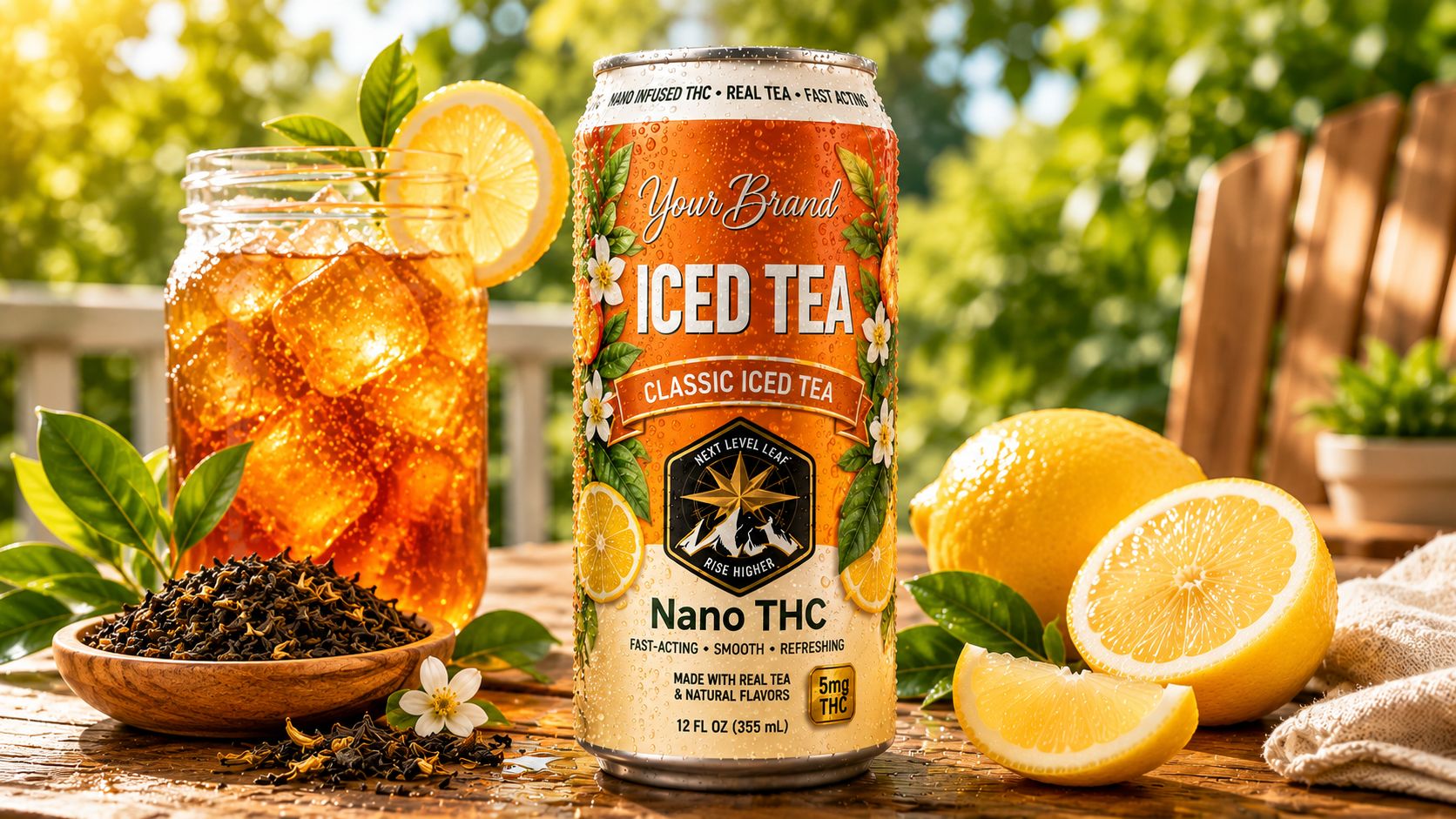
Still THC tea works because the drinking ritual is already familiar
Tea has a built-in beverage ritual. It can feel classic, refreshing, relaxing, premium, or functional depending on the base and flavor direction. That makes it a strong still THC format for brands that want a product people can understand without much explanation.
The main decisions are tea base, caffeine, sweetness, flavor, dose, and package story. A sweet tea product, a peach iced tea, a green tea, and a caffeine-free herbal tea are not the same business idea. They attract different customers and may belong in different retail contexts.
Practical starting point: Define the format, target dose, flavor direction, packaging status, target states, launch channel, and first-run quantity before comparing production paths.
Decisions that shape the finished drink
- Customer occasion: decide whether the drink is for social sipping, refreshment, retail cooler placement, hospitality, wellness-adjacent use, or alcohol-alternative moments.
- Dose and serving logic: make the THC amount easy to understand and appropriate for the channel.
- Flavor and base: align sweetness, acidity, tea or fruit systems, and cannabinoid flavor management.
- Packaging and documentation: prepare label direction, QR/COA access, testing expectations, and adult-oriented presentation.
- Production path: compare white label, private label, co-packing, and custom formulation based on complexity and timeline.