
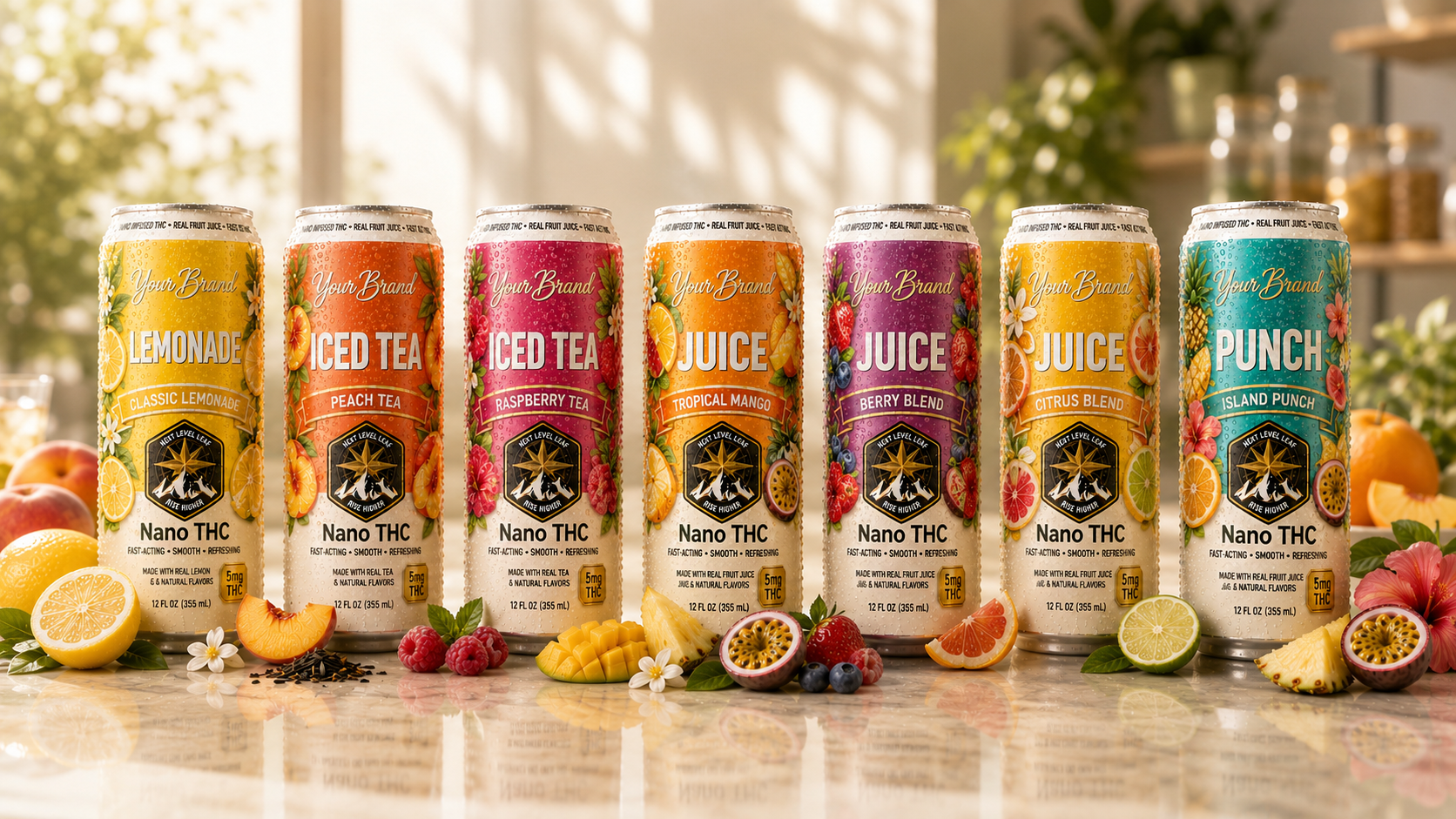
Flavor has to do more than taste good
For still THC drinks, flavor has a job. It has to make the product easy to understand, support the target dose, work with the beverage base, and make sense in the sales channel. A flavor that sounds exciting but is hard to manufacture, hard to stabilize, or hard to place in retail may not be the best first SKU.
The strongest still drink flavors are usually familiar enough to sell quickly and interesting enough to feel like a brand. Lemonade, peach tea, raspberry lemonade, tropical fruit, mango, pineapple, watermelon, citrus, berry, and fruit punch-style directions can all work when the formula supports them.
Practical starting point: Define the format, target dose, flavor direction, packaging status, target states, launch channel, and first-run quantity before comparing production paths.
Decisions that shape the finished drink
- Customer occasion: decide whether the drink is for social sipping, refreshment, retail cooler placement, hospitality, wellness-adjacent use, or alcohol-alternative moments.
- Dose and serving logic: make the THC amount easy to understand and appropriate for the channel.
- Flavor and base: align sweetness, acidity, tea or fruit systems, and cannabinoid flavor management.
- Packaging and documentation: prepare label direction, QR/COA access, testing expectations, and adult-oriented presentation.
- Production path: compare white label, private label, co-packing, and custom formulation based on complexity and timeline.