How still THC drink manufacturing should be scoped
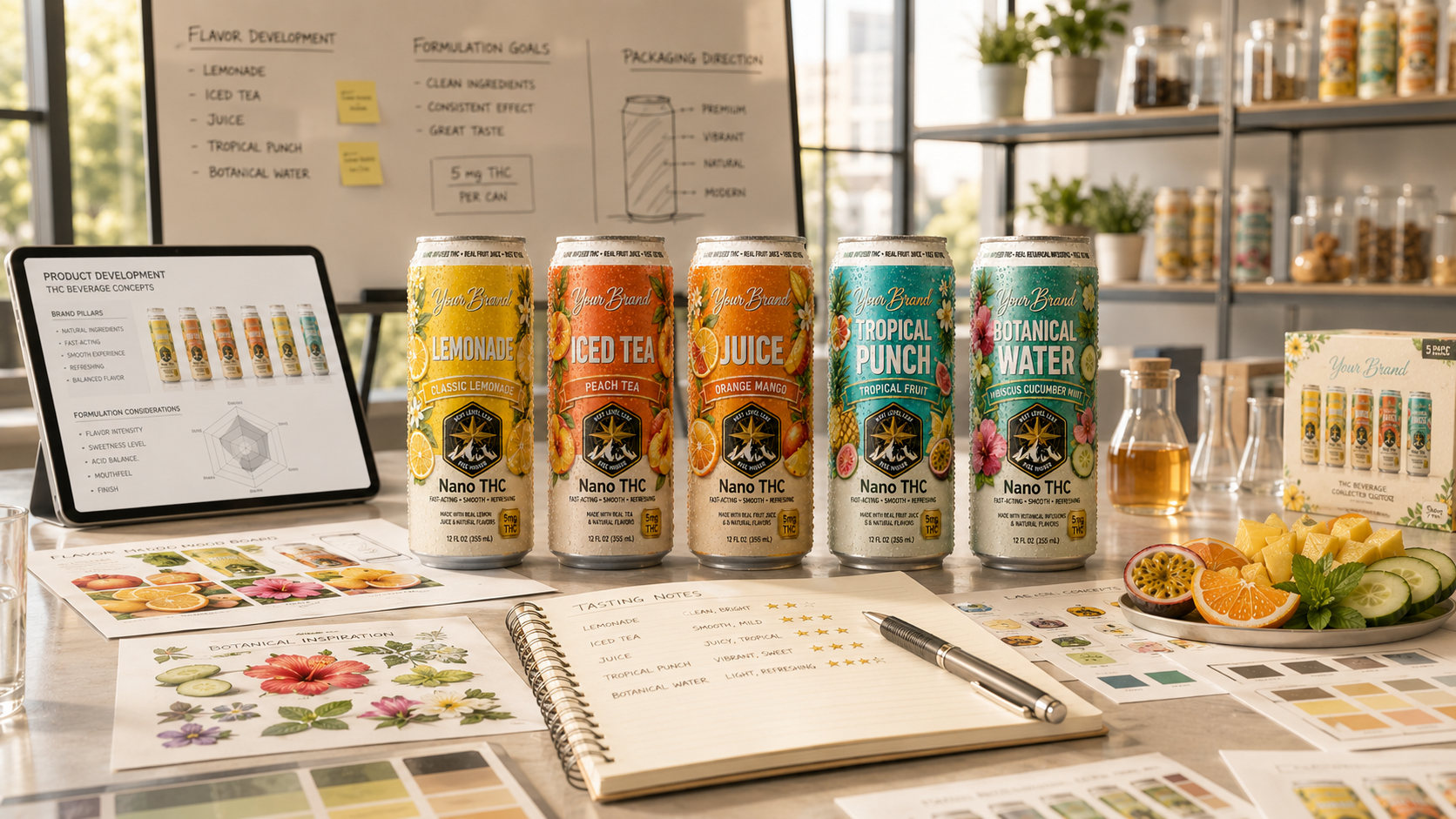
A still beverage project should be scoped around the finished product, not just the idea. Lemonade, tea, juice, and fruit-forward still drinks each bring different decisions around acidity, sweetness, flavor masking, emulsion compatibility, packaging, and shelf life.
The most useful early conversation is practical: what drink are you trying to make, what dose should it carry, what flavors are realistic, what can size and label approach are planned, where will it be sold, and how much inventory is needed for a first run?
Practical starting point: Define the format, target dose, flavor direction, packaging status, target states, launch channel, and first-run quantity before comparing production paths.
Decisions that shape the finished drink
- Customer occasion: decide whether the drink is for social sipping, refreshment, retail cooler placement, hospitality, wellness-adjacent use, or alcohol-alternative moments.
- Dose and serving logic: make the THC amount easy to understand and appropriate for the channel.
- Flavor and base: align sweetness, acidity, tea or fruit systems, and cannabinoid flavor management.
- Packaging and documentation: prepare label direction, QR/COA access, testing expectations, and adult-oriented presentation.
- Production path: compare white label, private label, co-packing, and custom formulation based on complexity and timeline.