


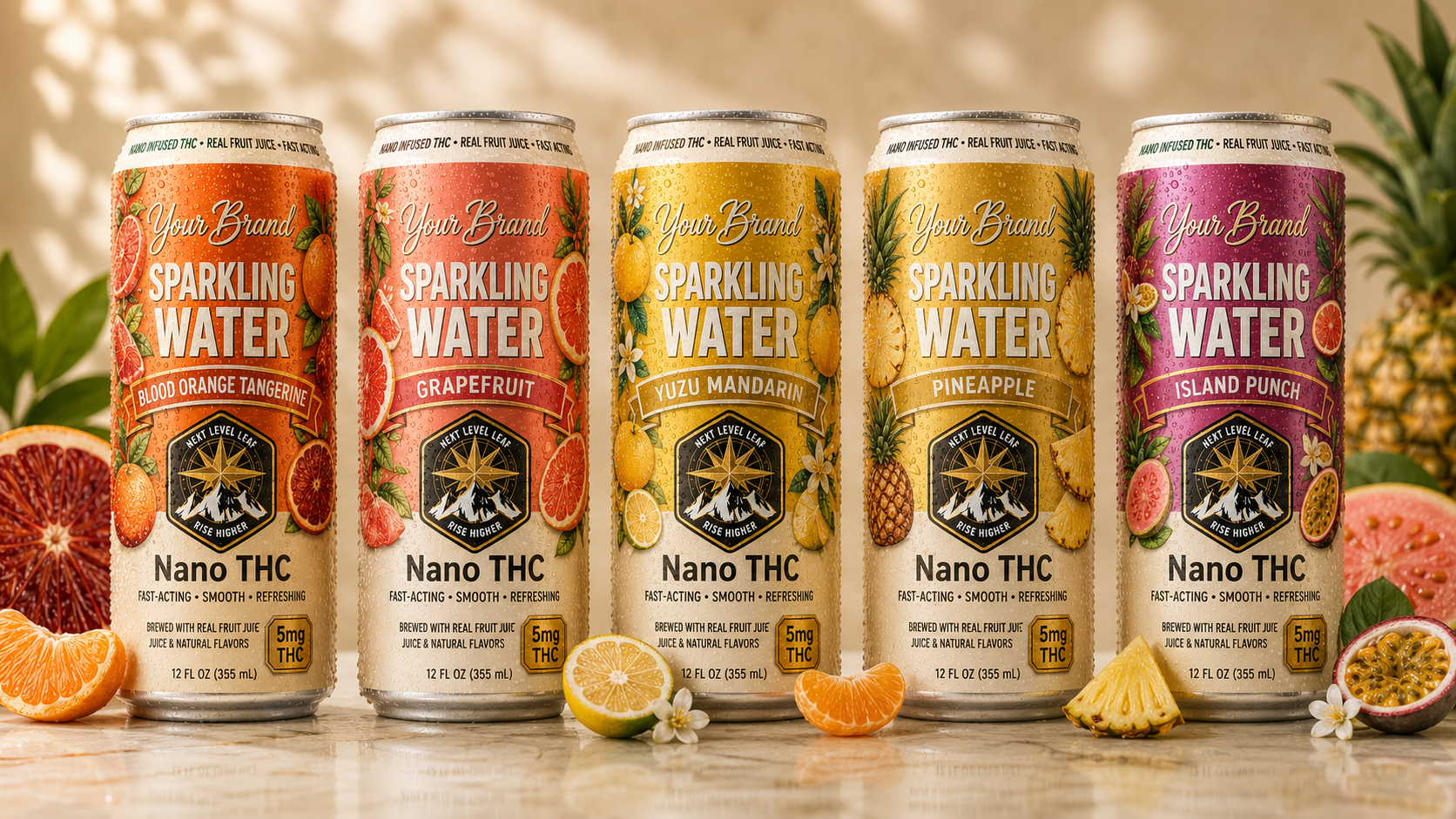
What makes a THC beverage fruit-forward?
Fruit-forward describes what leads the drinking experience. The customer should notice a recognizable fruit direction first, whether that is blood orange, grapefruit, mango citrus, raspberry lemonade, pineapple, yuzu, or a layered berry blend.
That does not require every beverage to be built from a large amount of juice or puree. Some products use real fruit ingredients for flavor depth, color, body, or label value. Others use natural flavor systems to stay crisp, low in sugar, consistent, and easier to manufacture. Many commercially practical formulas use a combination.
Fruit-forward describes the flavor experience. Real fruit describes an ingredient choice. The label, ingredient statement, and marketing claims should accurately reflect what is actually in the finished beverage.
If the ingredient decision is still open, compare real juice vs natural flavor in THC drinks. It explains how juice, puree, flavor, and blended systems can affect taste, calories, stability, cost, and production.
Why brands choose fruit-forward positioning
Fruit gives the customer an immediate way to understand the beverage. A clear flavor name can communicate refreshment, sweetness, occasion, and product style before the customer studies the dose or ingredient panel. That makes fruit-forward positioning useful for new brands, beverage extensions, retailer programs, hospitality concepts, and distributors evaluating an approachable THC category.
Easy to understand
Citrus, berry, tropical, and lemonade profiles give buyers and customers a familiar starting point.
Built for refreshment
Fruit works naturally with outdoor, social, hospitality, meal, and alcohol-alternative occasions.
Flexible across formats
The same brand idea can extend across spritzers, sparkling water, lemonade, tea, or still drinks.
Useful flavor structure
Acidity, sweetness, aroma, and fruit character can help the finished drink work with cannabinoid inputs.
Fruit alone does not create a strong product. The flavor has to fit the dose, sweetness, package, price point, sales channel, and reason the customer will choose the drink. A premium grapefruit spritzer and a bold tropical punch can both be fruit-forward, but they serve different customers and belong in different retail stories.
Four practical fruit-forward product paths
Choosing the beverage style before finalizing the flavor name makes formulation and quoting more productive. These are four common directions a brand can use as a starting point.
Fruit spritzer
A crisp, adult-feeling drink with clear fruit aroma, moderate sweetness, and a social or alcohol-alternative position.
Lemonade or cooler
A still or sparkling format with more flavor intensity, familiar refreshment, and room for citrus, berry, or tropical combinations.
Low-sugar refresher
A lighter fruit profile built around careful sweetness, acidity, aroma, and mouthfeel instead of a heavy juice experience.
Juice-inspired drink
A still or lightly sparkling beverage that may use juice, puree, color, or additional body for a richer fruit story.
| Product path | Customer experience | Likely fruit approach | Key planning issue |
|---|---|---|---|
| Fruit spritzer | Light, crisp, sparkling, social | Natural flavor, juice accent, or blended system | Carbonation, sweetness, aroma, and adult positioning |
| Lemonade or cooler | Familiar, flavorful, refreshing | Juice, flavor, puree, or combination | Acid balance, sugar, color, and dose coverage |
| Low-sugar refresher | Clean, modern, lighter | Flavor-led or carefully blended | Mouthfeel and flavor completeness at lower sweetness |
| Juice-inspired drink | Fuller, richer, more fruit-led | Juice, puree, concentrate, and flavor support | Stability, sediment, calories, processing, and cost |
The six decisions that shape the finished beverage
A flavor idea becomes quote-ready when the major product decisions are clear enough to evaluate together. These six choices affect one another, so they should not be made in isolation.
Fruit system
Decide whether the formula should use natural flavor, juice, puree, concentrate, or a blended approach.
Still or sparkling
Carbonation changes aroma, acidity, mouthfeel, sweetness perception, package experience, and the drinking occasion.
Sweetness and acidity
A low-sugar drink still needs enough balance to taste complete. Lemonade and juice-inspired products may support more sweetness and body.
Clarity and texture
Choose whether the beverage should be clear, naturally cloudy, colored, lightly hazy, smooth, or fuller in body.
Dose and cannabinoid input
The target dose can influence bitterness, aftertaste, aroma, mouthfeel, flavor intensity, and how the product is positioned.
Package and channel
Can size, label design, target states, retail channel, storage, and first-run quantity all shape the practical production path.
Once these decisions are aligned, fruit-forward THC drink flavor development can focus on the actual sensory and production work instead of trying to solve an undefined product.
How the format changes the customer and retail story
Fruit-forward beverages can enter the market through several category entry points. The strongest one depends on what the customer is trying to replace or add to an occasion.
- Alcohol alternative: A citrus spritzer, grapefruit refresher, or tropical sparkling drink can feel at home in social and hospitality settings.
- Flavor exploration: Mango citrus, yuzu mandarin, blood orange, and layered berry profiles can give a brand a more distinctive product story.
- Better-for-you positioning: A low-sugar fruit-forward format may appeal to buyers who want something lighter than soda or a full juice drink.
- Familiar refreshment: Lemonade, pineapple, raspberry, strawberry, and tropical fruit can reduce the education required at shelf or on a menu.
- Premium experience: Real juice, puree, adult flavor names, restrained sweetness, and thoughtful packaging can support a more elevated product direction.
A retailer needs to know where the product belongs. A distributor needs to know which accounts may buy it. A customer needs to know what it will taste like and how much THC it contains. Fruit-forward positioning works when all three answers are clear.
How fruit choice affects production and shelf-life planning
Juice and puree can add flavor depth, body, color, sugars, acids, fruit solids, and ingredient variability. Those features may strengthen the product, but they can also affect pH, separation, sediment, oxygen sensitivity, processing, packaging compatibility, and how the beverage changes during storage.
Natural flavor systems can be simpler in some products, but they are not a shortcut around finished-beverage evaluation. The complete formula still has to work with the cannabinoid input, sweetener, acid system, color, carbonation, package, and intended shelf life.
A shelf-stable product should be planned as a complete beverage system, not assumed from the ingredient list. Review the dedicated guide to shelf-stable real-fruit THC drinks when ambient storage, wholesale distribution, or broader retail placement is part of the launch model.
House profile or custom development?
Brands that prioritize speed and a lower-risk starting point may begin with an established beverage profile, then choose the dose, branding, package, and final production scope. A more custom fruit-forward concept may require formulation work to develop the fruit system, sweetness, acidity, color, body, cannabinoid balance, and shelf-life plan.
A small prototype can be useful when a brand needs finished cans for internal evaluation, buyer conversations, market testing, photography, or an early launch decision. Depending on the project, a 360-can prototype path may be available. A common initial production scope is approximately 1,200 cans per SKU, with the exact MOQ depending on the beverage, ingredients, package, and manufacturing requirements.
The best first run is not automatically the biggest flavor lineup. One clear SKU can be easier to produce, explain, sell, and improve than several flavors launched before the brand has learned what its channel wants.
What retail-ready looks like
A retail-ready fruit-forward THC drink needs more than an attractive can. The product should communicate flavor, dose, serving size, brand position, and intended customer clearly. It also needs a production and documentation path that fits the markets where it will be sold.
- A flavor name customers can understand without explanation
- A clearly presented THC or cannabinoid amount per serving and container
- Packaging that fits the adult audience and target retail channel
- An accurate ingredient statement and claims that match the formula
- Finished-product testing, COAs, batch documentation, and label review as required
- A state-by-state sales plan developed before inventory is committed
- A first-run quantity the brand can support with a realistic sales plan
If speed is the priority, review white-label real fruit THC drinks. If the product needs a more owned brand, channel, or formulation strategy, compare the private-label real fruit THC beverage path.
What to prepare before requesting a quote
You do not need a finished formula, but these details make the first production conversation much more useful:
- Target customer and drinking occasion
- Primary fruit direction and number of SKUs
- Still, sparkling, spritzer, lemonade, or juice-inspired format
- Real juice, puree, natural flavor, or open to recommendation
- Sweetness, calorie, clarity, and color preferences
- Target THC or cannabinoid dose per can
- Can size and packaging status
- Target states and sales channels
- Expected first-run quantity and launch timing
- Preference for an established profile or custom R&D
When those details are clear, Next Level Leaf can help evaluate the product direction, formulation path, packaging, testing, MOQ, timing, and manufacturing fit. Request a fruit-forward THC beverage quote when you are ready to turn the idea into a production conversation.