

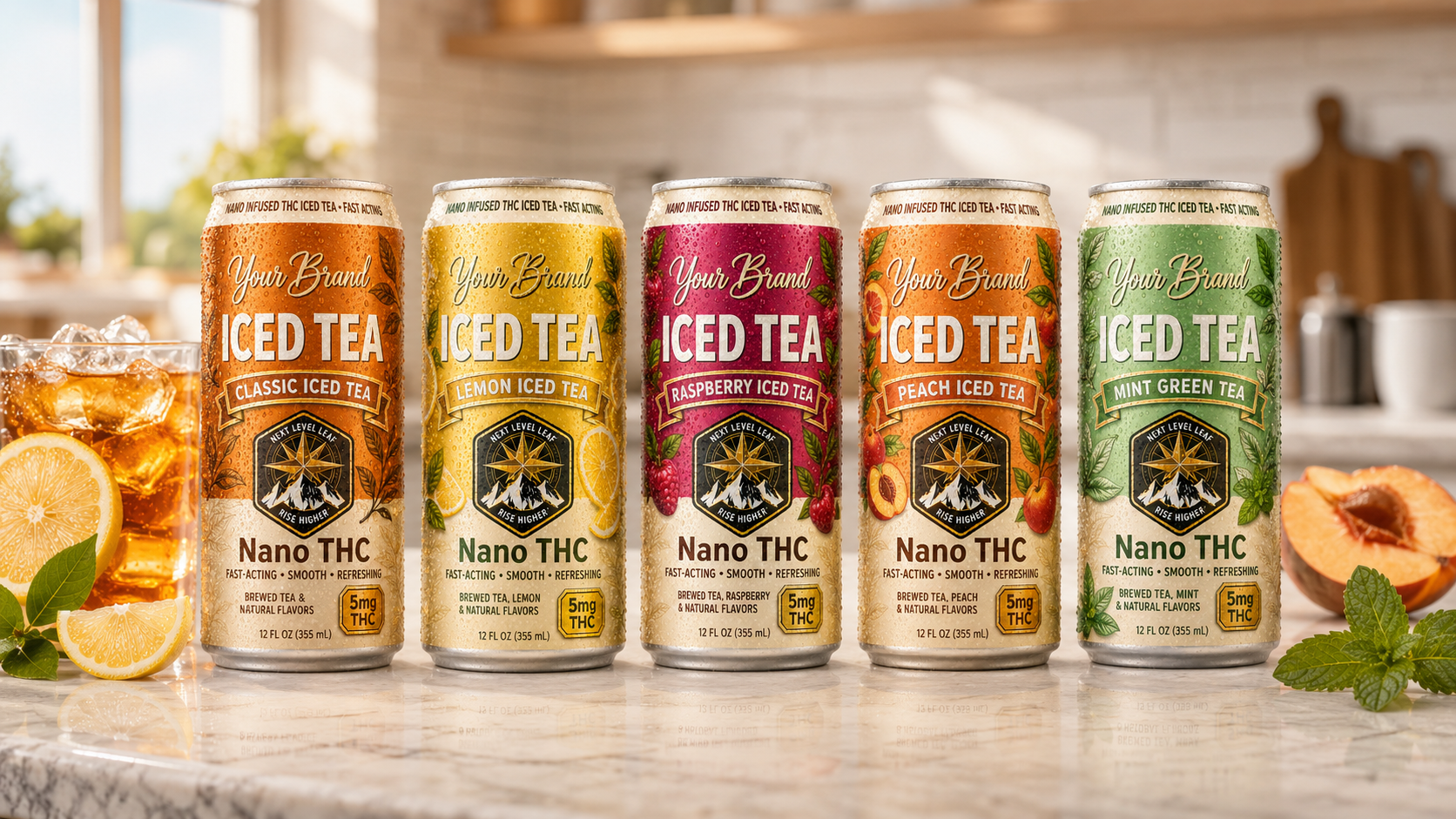
Start by separating homemade cannabis tea from RTD THC tea
Most consumer explanations of THC tea focus on homemade cannabis tea. That usually means steeping cannabis, using decarboxylated flower, adding butter or coconut oil, using tinctures, or adding infused honey to hot tea.
That is not the same as manufacturing a ready-to-drink THC tea for a beverage brand.
A commercial THC tea product needs repeatable formulation, consistent flavor, defined serving size, cannabinoid accuracy, packaging, finished-product testing, and batch documentation.
Homemade cannabis tea is a recipe. Commercial THC tea is a finished beverage product.
Two ways people think about THC tea
Homemade cannabis tea
Usually built around flower, tinctures, infused honey, tea bags, or fat-based extraction.
- Prepared by the consumer
- More variable final experience
- Less useful for beverage retail
Ready-to-drink THC tea
Built as a finished beverage with defined flavor, dose, packaging, testing, and COAs.
- Brand controls the product
- Retail and sampling friendly
- Better fit for white-label launches
How commercial THC tea is made
The details depend on the production partner, formula, inputs, packaging, and target states, but the commercial planning process usually follows a clear path.
Choose the tea base
Classic black tea, green tea, herbal tea, tea lemonade, sweet tea, sparkling tea, or another tea direction.
Define the flavor
Lemon, peach, raspberry, mint green tea, strawberry lemonade, hibiscus, or another flavor strategy.
Set the dose
Choose a THC or cannabinoid amount that fits the customer, market, retail channel, and intended use occasion.
Build the beverage system
Balance tea strength, sweetness, acidity, mouthfeel, flavor masking, and cannabinoid input.
Produce and package
Move from approved formula to cans or bottles, case configuration, labels or sleeves, and production planning.
Test and document
Support the finished product with cannabinoid testing, COAs, batch records, and professional documentation.
Why THC does not behave like regular tea flavor
THC is not like lemon flavor, peach flavor, or tea extract. Cannabinoids require the right input strategy so they can be incorporated into a finished drink consistently.
That is why homemade cannabis tea often talks about fat. THC is fat-soluble, so home recipes may use butter, coconut oil, milk, or other fats to help extract cannabinoids.
Commercial ready-to-drink THC tea usually takes a different approach. It generally uses beverage-compatible cannabinoid inputs or emulsions designed to disperse into a drink more consistently and support repeatable dosing.
For a brand, the important question is not “how do I steep cannabis into tea?” It is “what input and formulation path creates a consistent finished beverage?”
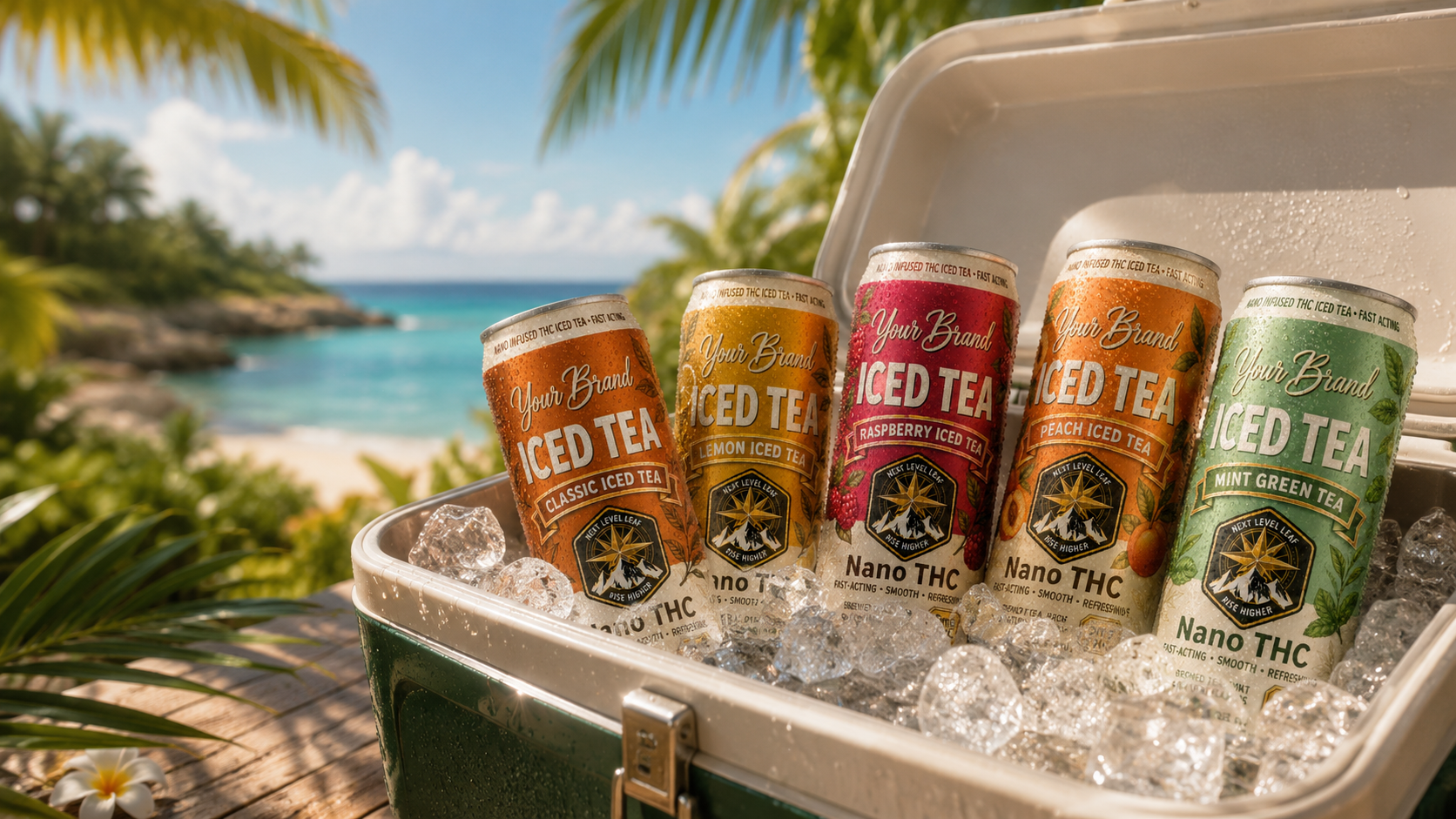
Flavor is part of manufacturing
Flavor is not just marketing. It affects whether the beverage is enjoyable, whether the cannabinoid input is balanced, and whether customers come back for another can.
Tea can bring tannins, bitterness, aroma, and acidity. Cannabinoid inputs can add additional flavor challenges. The final formula needs to taste finished, not like tea with an ingredient added at the end.
Citrus, peach, berry, tea lemonade, mint, and hibiscus-style profiles can all help create stronger finished beverages depending on the brand direction.
Testing and COAs come after the product is real
A serious THC tea product should be supported by finished-product testing and COAs. This helps document cannabinoid content and gives retailers, buyers, and internal teams more confidence in the product.
Testing is not just a compliance checkbox. It is part of building a professional beverage brand.
What affects THC tea production planning?
- Tea base and flavor direction
- Target THC or cannabinoid dose
- Still or sparkling format
- Can or bottle preference
- Sweetness level and caffeine preference
- Flavor masking needs
- Packaging artwork and label status
- Testing, COAs, and documentation
- Target states and sales channels
- Expected launch volume and timeline
The simplest recommendation
If you are building a THC tea brand, start with the commercial product first: tea format, flavor, dose, packaging, and sales channel.
Do not model a ready-to-drink beverage around a homemade cannabis tea recipe. The manufacturing path is different.
If you are ready to scope a THC tea production path, complete the White Label Information Request.