

Tennessee Hemp-Derived THC Beverage Compliance
Tennessee is a regulated hemp-derived cannabinoid market with a major 2026 shift into the Tennessee Alcoholic Beverage Commission framework, making it one of the most important states for beverage founders to track closely.
For THC beverage brands, Tennessee can be a serious opportunity, but it requires more than a compliant formula. Operators need to understand licensing, serving limits, beverage package rules, testing, labeling, age-gating, taxes, and the transition from the prior Department of Agriculture system to ABC oversight.
Tennessee allows regulated hemp-derived cannabinoid products, including beverages, but the state has moved into a much more formal compliance environment. The prior Tennessee Department of Agriculture rules became effective in late 2024, and 2026 statutory changes move core regulation to the Tennessee Alcoholic Beverage Commission with revised serving limits, licensing, display, taxation, and product rules.
We are not attorneys, and this page is not legal advice. This is a founder-focused compliance overview to help beverage brands ask better questions, separate current rules from transition risk, and build more intelligently.
Tennessee beverage compliance snapshot
Regulated / transitioning
Tennessee has a formal hemp-derived cannabinoid framework and is shifting core oversight to the Tennessee Alcoholic Beverage Commission.
ABC transition
The Department of Agriculture administered the prior HDC program; 2026 changes move key authority to the Tennessee Alcoholic Beverage Commission.
15mg framework
The 2026 structure generally lowers the serving limit from the prior 25mg framework to 15mg per serving.
Package rules apply
Many beverage containers may be limited to two servings, with special rules or exceptions for resealable 750ml containers and kegs.
Adult market
Hemp-derived cannabinoid products are handled as adult-oriented products with carding and retail controls.
Build precisely
Use conservative dose architecture, finished-product COAs, compliant labeling, and channel-specific launch planning.
Current state of the Tennessee market
Tennessee has been one of the most active hemp-derived cannabinoid markets in the Southeast. The state did not simply ignore hemp intoxicants. It built a regulatory framework, then moved toward an even more formal alcohol-control-style structure for 2026.
For beverage founders, that can be a positive signal. A regulated market can create room for serious operators who can meet documentation, licensing, testing, labeling, and adult retail expectations. The opportunity is strongest for brands that build around the rules instead of trying to work around them.
Current law / current operator reality
Tennessee’s hemp-derived cannabinoid program originally moved through the Tennessee Department of Agriculture. TDA notes that hemp-derived cannabinoid law became effective July 1, 2024, and permanent TDA rules became effective December 26, 2024.
The next major shift is the 2026 transfer of core hemp-derived cannabinoid product regulation into the Tennessee Alcoholic Beverage Commission framework. In practical terms, beverage operators should assume that Tennessee is moving toward more controlled licensing, retail oversight, carding, taxes, and alcohol-like compliance expectations.
For beverages, the key issue is serving and container architecture. Under the 2026 direction, hemp-derived cannabinoid products generally move to a 15mg maximum per serving, with beverage-specific package limits such as no more than two servings per container for many beverage formats. Certain larger resealable formats and kegs may have special treatment.
Founder takeaway: Tennessee is not a casual gray market. It is a rules-first market. Build SKUs around the current serving framework, expected ABC licensing realities, adult retail controls, testing, labeling, and tax exposure from the beginning.
What changed in 2026
The 2026 Tennessee changes matter because they reshape the business environment, not just the label. The regulatory center of gravity moves away from a primarily agriculture-administered hemp program and toward the Tennessee Alcoholic Beverage Commission.
That means beverage brands should think about Tennessee more like a controlled adult beverage market. Questions about who can supply, distribute, sell, display, ship, tax, or verify age may become just as important as formulation.
- Core authority shifts toward ABC oversight.
- Serving limits become more conservative than the prior 25mg framework.
- Beverage-specific serving and package rules become central to SKU design.
- Retail display, age verification, and licensing expectations become more important.
- Tax and wholesale/distribution details must be evaluated before launch.
Labeling considerations
Tennessee beverage labels should be built to withstand a formal regulatory review. At minimum, founders should plan for clear cannabinoid content, serving size, package quantity, lot or batch traceability, ingredients, allergens, warnings where required, and accurate claims.
Because Tennessee’s 2026 framework is more alcohol-control oriented, labels should also be designed for adult consumers and avoid any presentation that could be read as child-appealing, misleading, therapeutic, or inconsistent with allowed product categories.
- Show cannabinoid amount per serving and per container.
- Make serving count obvious if the package contains more than one serving.
- Use QR-code COA access for batch-specific documentation.
- Avoid health or disease claims.
- Make the product clearly adult-oriented.
- Confirm whether the final label satisfies ABC requirements before production.
Packaging considerations
Tennessee’s beverage package rules should be considered before selecting can size, dose, and container type. A 12-ounce can, a larger resealable bottle, and a keg are not the same regulatory design problem.
For beverage founders, this means SKU strategy should begin with the package. Decide whether the product is a single-serving can, a two-serving can, a resealable larger bottle, a hospitality-oriented keg, or another format. Then build the dose, label, and sales channel around that decision.
Packaging should remain adult, non-copycat, and compliance-aware. This is especially important for soda, mocktail, and fruit-forward products that could otherwise drift into youth-oriented presentation.
Testing / COA expectations
Tennessee’s hemp-derived cannabinoid framework includes testing and product documentation expectations. For beverage brands, the strongest practical standard is finished-product testing tied to batch-specific COAs.
This matters because a beverage is a finished matrix. Input COAs are useful, but finished-product COAs are what show how the final can performs after formulation, infusion, carbonation, packaging, and production.
- Use full-panel finished-product COAs where possible.
- Verify cannabinoid potency at the final package level.
- Maintain batch, lot, supplier, and production records.
- Use QR-code COA access to support retailers and consumers.
- Confirm testing laboratory requirements under current Tennessee rules.
Sales / distribution realities
The 2026 ABC framework makes sales-channel strategy especially important. Founders should not assume that any retailer, wholesaler, or direct-to-consumer channel can handle hemp-derived THC beverages the same way.
Questions to answer before launch include: Who holds the Tennessee license? Can the supplier sell directly to the retailer? Are wholesale or distribution restrictions triggered? Is the product taxed at wholesale? Does the retailer need special display controls? Are beverages treated differently from non-beverage products? Does the container qualify for any beverage-specific exception?
These questions should be answered before producing inventory for Tennessee.
Founder strategy for Tennessee
Tennessee can still be a compelling market for hemp-derived THC beverages, but it demands a more operationally mature approach than many states. It is a market for brands that can manage compliance, not just create attractive cans.
- Build around 15mg-or-less serving architecture unless counsel confirms a different applicable rule.
- Use beverage formats that clearly comply with serving and package limits.
- Confirm ABC licensing and retail channel requirements.
- Use finished-product COAs and strong QR-code access.
- Avoid synthetic, prohibited, or legally disputed cannabinoids.
- Keep packaging adult-oriented and not child-appealing.
- Document batch, lot, supplier, and production records.
- Plan for tax, distribution, and retail-display realities.
Best beverage formats for Tennessee
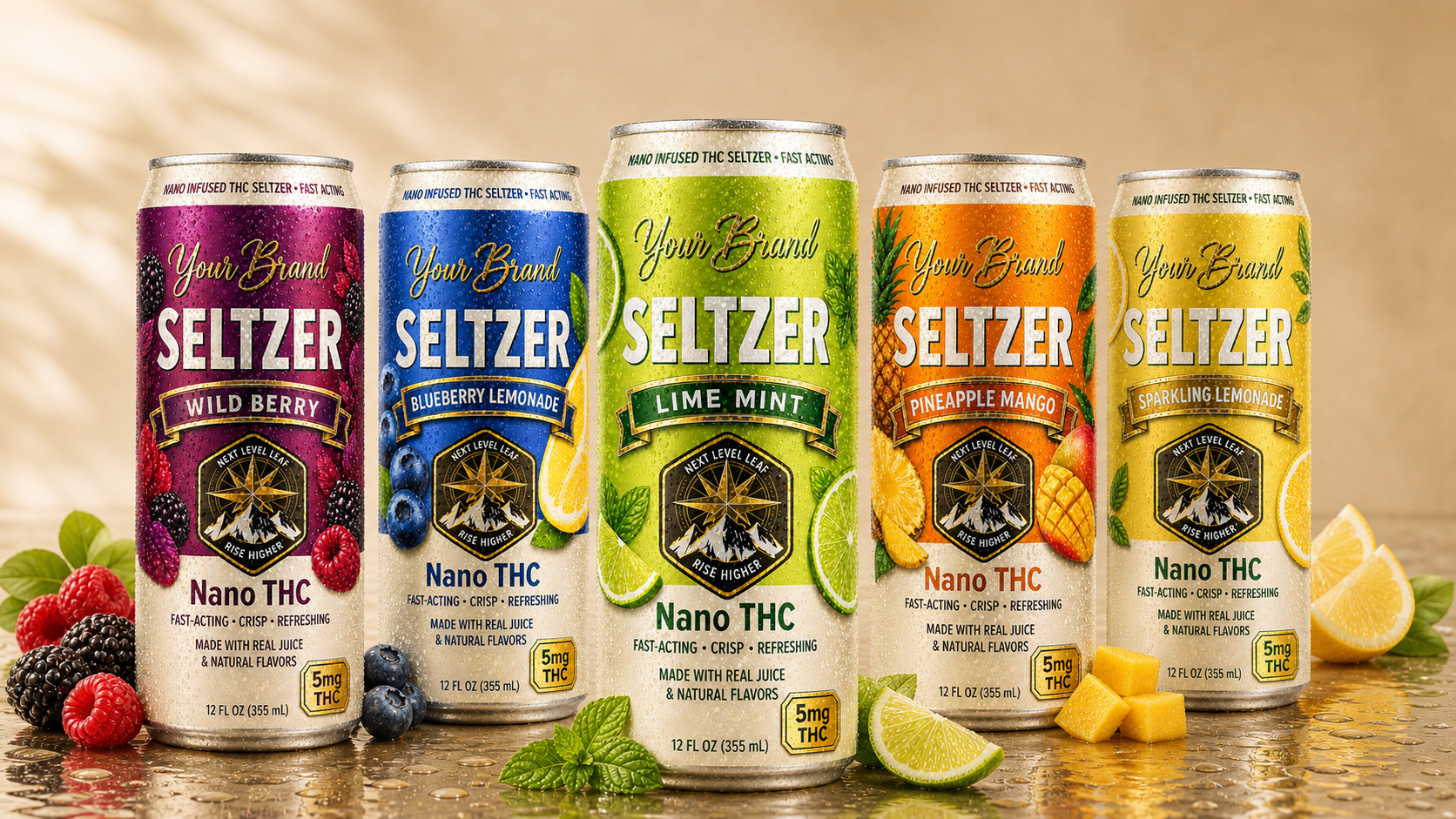
Tennessee’s framework can fit low-dose and moderate-dose beverage strategies well if the product is designed inside the serving and container rules. Seltzers and mocktails may be especially strong because they can be adult, non-alcoholic, social, and compliant when built carefully.
Infused Seltzers
Clean, adult, refreshing, and well suited for controlled serving strategies.
Explore seltzers →Infused Mocktails
Cocktail-inspired, non-alcoholic products with premium social positioning.
Explore mocktails →Low-Dose THC Drinks
Understand 2.5mg, 5mg, 10mg, and sessionable beverage positioning.
Explore low-dose →Broader strategy and internal links
If you are comparing Tennessee with other markets, start with the State Resources hub. If you want to understand how we think about compliance as part of beverage production, visit the Compliance page. If you are ready to scope a compliant beverage for Tennessee or the Southeast, explore white-label THC beverage manufacturing.
State Resources
Compare Tennessee with other hemp beverage markets and regional compliance patterns.
Explore states →Compliance Approach
See how testing, COAs, documentation, and label discipline fit into beverage manufacturing.
Explore compliance →Beverage Manufacturing
Move from state research to product format, dose, flavor, packaging, and production planning.
Explore manufacturing →Frequently asked questions
Ready to evaluate Tennessee as part of your Southeast beverage plan?
Share your product idea and we’ll help you think through beverage format, dose, flavor, testing, COAs, packaging, manufacturing, and a compliance-aware launch strategy for Tennessee and surrounding markets.