

Pennsylvania THC Beverage Opportunity & Compliance
Pennsylvania is a large, evolving market for adult cannabinoid and alcohol-alternative beverages. The state has not yet created one comprehensive hemp-derived THC beverage framework, but lawmakers are actively considering a regulated beverage category and the market remains commercially important for brands watching the Northeast.
The opportunity is real, but the rules are still developing. A serious brand should understand what Pennsylvania currently says about hemp, food products, THC sales channels, and pending legislation before deciding on the formula, dose, retailer, and timing of a launch.
Direct answer: Pennsylvania should be viewed as an emerging THC beverage opportunity with developing rules not as a clearly open market and not as a blanket prohibition state.
There is not yet a dedicated statewide hemp-derived THC beverage system that gives brands one set of dose, licensing, and distribution rules. At the same time, Pennsylvania lawmakers are actively considering such a system through HB 2309, and the state remains a meaningful consumer market for beverage brands evaluating the next phase of regulated cannabinoid drinks.
The practical approach is to separate what is possible commercially from what has been clearly authorized today. Evaluate the exact cannabinoid formula, retailer type, distribution channel, current agency guidance, and important 2026 rule changes before committing Pennsylvania-specific inventory.
This page is general business and compliance information, not legal advice. It is designed to help prospective beverage businesses understand Pennsylvania’s evolving market and the questions that should be confirmed with qualified counsel before launch.
Pennsylvania THC beverage opportunity at a glance
Emerging opportunity
Pennsylvania has a meaningful consumer market and active policy movement around regulated hemp-derived cannabinoid beverages, but the operating rules are still developing.
Low-dose adult beverages
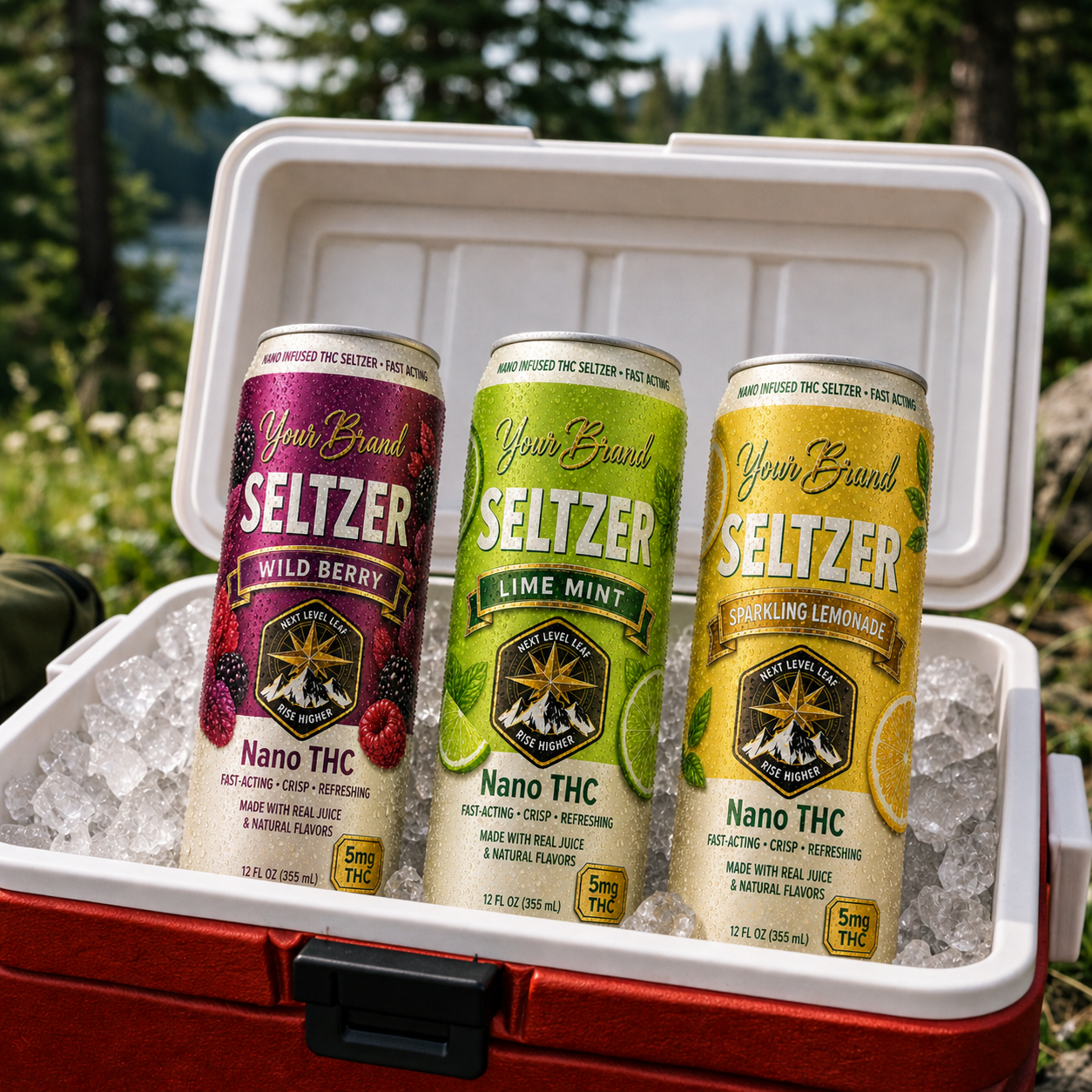
If Pennsylvania adopts a regulated beverage system similar to HB 2309, 5 mg and 10 mg formats could fit naturally within a mainstream adult social-beverage category.
Confirm product + channel
Today, brands should confirm the exact formula, retailer type, and distribution model rather than assuming one statewide rule applies to every hemp beverage.
HB 2309
The pending bill would create a dedicated beverage category with proposed licensing, testing, age, distribution, and 10 mg / 20 mg potency limits.
PLCB restriction
Current PLCB guidance says malt-beverage distributors and importing distributors may not sell THC-containing products under those licenses.
November 12, 2026
The scheduled federal hemp-definition change is another major planning date for Pennsylvania and every other hemp-derived cannabinoid beverage market.
Why Pennsylvania remains an emerging beverage opportunity
Pennsylvania combines a large population, major metropolitan markets, an established adult beverage culture, and proximity to New York, New Jersey, Maryland, Ohio, and other important Northeast markets. That makes the state commercially relevant even while its cannabinoid beverage rules are still taking shape.
HB 2309 is an especially important signal because it does not treat hemp-derived cannabinoid beverages as a category to simply eliminate. The proposal would create a regulated 21+ beverage market with manufacturing, distribution, retail, testing, labeling, and tax rules. If enacted in a commercially workable form, that could create a clearer path for professionally produced low-dose beverages.
Opportunity takeaway: Pennsylvania is worth monitoring and planning for. The goal is not to assume today’s uncertainty equals permission or prohibition, but to build a product and market plan that can adapt as the state moves toward clearer rules.
What Pennsylvania’s current rules do, and do not, settle
Pennsylvania permits hemp growing and processing through its Department of Agriculture, and the Department says there is no state-level permit specifically for wholesaling, retailing, or brokering hemp and hemp products generally. That creates room for hemp commerce, but it does not by itself answer every finished-beverage question.
A finished cannabinoid beverage can also raise food-law, ingredient, retailer, distribution, Liquor Code, and federal questions. Because Pennsylvania has not yet enacted one dedicated cannabinoid beverage framework, a brand should evaluate those pieces together rather than treating the federal hemp definition as the only rule that matters.
What Pennsylvania says about CBD in beverages
The Pennsylvania Department of Revenue’s current CBD and Hemp Products guidance states that, under current federal and state law, it is unlawful to sell for human consumption a food or beverage containing CBD as an additive.
For beverage development, that means a CBD-forward or CBD-plus-THC formula raises an additional Pennsylvania question that should be resolved before launch. The statement is specifically about CBD and should not be expanded into a blanket conclusion about every possible hemp-derived THC beverage formula.
Can Pennsylvania beer distributors sell THC beverages?
Under Pennsylvania Liquor Control Board Advisory Notice No. 9, 16th Revision, dated April 29, 2026, malt-beverage distributors and importing distributors are not permitted to sell products containing any amount of THC under those current licenses.
That is an important channel limitation, but it is not the same as a statewide declaration that every Pennsylvania business is prohibited from selling every hemp-derived THC beverage. It means brands should not assume the existing beer-distributor system is automatically available for THC beverage distribution under current law.
Marketplace activity and regulatory clarity are not the same thing
Hemp-derived cannabinoid products may be visible in Pennsylvania commerce even though the state has not yet created a comprehensive THC beverage system. That marketplace activity is relevant when evaluating consumer interest and category development, but it does not establish that every product or sales model has been affirmatively approved by the state.
For a prospective brand, the useful conclusion is that Pennsylvania is an evolving market, not that existing rules can be ignored. The product, retailer, and distribution model should be evaluated on their own facts while the state continues to work toward clearer policy.
Retail and wholesale licensing: what is clear today
The Department of Agriculture says there is no state-level permit or license specifically for wholesaling, retailing, or brokering hemp and hemp products generally. It also warns that product-specific requirements may still apply. For example, a producer of hemp food products may need food-establishment registration.
That distinction is important: no special hemp retail license does not mean every cannabinoid beverage is automatically permitted for sale.
Where Pennsylvania appears to be heading: HB 2309
House Bill 2309 was introduced March 20, 2026 and remains pending in the House Health Committee. Public hearings in June 2026 show that Pennsylvania is actively considering how hemp-derived cannabinoid beverages should fit into the state’s regulated adult beverage market.
For prospective beverage brands, the proposal is important because it provides a concrete picture of the type of regulated category lawmakers are considering:
- sales limited to adults 21 and older;
- separate licensing for beverage manufacturing and other commercial roles;
- a regulated distributor / importing-distributor structure;
- testing, certificate-of-analysis, labeling, tracking, and advertising requirements;
- THC derived solely and exclusively from hemp;
- a maximum of 10 mg hemp-derived THC per serving and 20 mg per final container;
- restrictions on synthetic and specified alternative cannabinoids; and
- a proposed 12% tax on qualifying retail purchases.
Important: these are proposed rules, not today's operating rules. Do not use the 10 mg / 20 mg limits, proposed licenses, or proposed distribution structure as permission to launch before legislation is enacted and effective.
November 12, 2026: another major planning date
Federal law is currently scheduled to change the definition of hemp on November 12, 2026. Among the scheduled changes, final hemp-derived cannabinoid products for human use containing more than 0.4 mg combined total of specified THC and THC-like cannabinoids per consumer container would fall outside the amended federal hemp definition.
That federal change could influence the practical shape of state hemp-beverage markets, including Pennsylvania. Congress may still modify the federal framework, so brands should monitor the Next Level Leaf Section 781 Tracker and primary federal sources rather than assume the November rule will remain unchanged.
How to approach a Pennsylvania beverage launch responsibly
- Confirm for your productExact cannabinoid formulaIdentify whether the beverage contains THC only, CBD plus THC, other cannabinoids, converted cannabinoids, or ingredients that raise separate food-law questions.
- Confirm for your productFood-manufacturing requirementsDetermine whether the manufacturing facility and finished beverage require Pennsylvania food-establishment registration or other food-safety permissions.
- Confirm for your productRetailer typeDo not assume a smoke shop, specialty retailer, restaurant, beer distributor, convenience store, or other business is governed by the same rules.
- Confirm for your productDistribution channelPLCB distributor and importing-distributor licensees currently face a specific prohibition on THC-containing products under Advisory Notice No. 9.
- Recommended practiceFinished-product testing and batch documentationUse reliable finished-product potency and contaminant testing, batch-specific certificates of analysis, and lot traceability even where Pennsylvania has not adopted a dedicated THC beverage testing code.
- Recommended practiceAdult-oriented packagingAvoid child-appealing presentation, misleading claims, or packaging that could be confused with a conventional children's product.
- Confirm for your productFederal November 2026 impactAssess whether the beverage would continue to fit the federal hemp definition if Section 781 takes effect as currently scheduled.
Testing, certificates of analysis, and labels
A professional beverage project should be built to withstand a more regulated market, even while Pennsylvania’s dedicated THC beverage rules are still developing. That means separating current legal requirements from manufacturing practices that make a product easier to evaluate, document, and adapt.
Recommended practice: use finished-product potency testing, contaminant testing appropriate to the formula, batch-specific certificates of analysis, lot tracking, clear cannabinoid disclosure, conventional food-label information where applicable, and adult-oriented packaging.
Confirm for your product: exact ingredient legality, Nutrition Facts or Supplement Facts treatment, warnings, manufacturer/distributor identification, QR-code or COA disclosure, serving information, claims, food-establishment requirements, and the rules that apply to the intended retailer and distribution channel.
What about Pennsylvania's Medical Marijuana Program?
Pennsylvania’s Medical Marijuana Program is a separate licensed cannabis system with its own grower/processor, product-approval, and dispensary rules. It demonstrates that Pennsylvania already regulates cannabinoid products through a formal medical system, but a medical-marijuana product should not be treated as the same legal category as a hemp-derived consumer beverage sold outside that program.
How Next Level Leaf can help with a Pennsylvania project
If Pennsylvania is part of your launch or expansion plan, Next Level Leaf can help you turn the market idea into a production-ready beverage concept: product type, flavor, THC target, cannabinoid profile, formulation status, packaging, testing plan, initial quantity, and manufacturing requirements.
The goal is to build professionally and preserve flexibility. As Pennsylvania’s rules become clearer, a well-documented beverage and scalable production plan can be adapted more easily than a product built around assumptions that may change.
Official Pennsylvania and federal sources
PA Hemp Program FAQs
Pennsylvania Department of Agriculture guidance on hemp processing, wholesaling, retailing, food products, and cannabinoid questions.
Open official source →CBD and Hemp Products
Pennsylvania Department of Revenue guidance, including its current statement regarding CBD used as an additive in food and beverages.
Open official source →PLCB Advisory Notices
Official Pennsylvania Liquor Control Board guidance, including Advisory Notice No. 9 for malt-beverage distributors and importing distributors.
Open official source →HB 2309 Status
Official Pennsylvania General Assembly status page for the proposed hemp-derived cannabinoid beverage legislation.
Check bill status →HB 2309 Bill Text
Current published bill text containing the proposed licensing, potency, testing, distribution, age, tax, and product requirements.
Read proposed text →Federal November 2026 Context
Federal Register material confirming the currently scheduled November 12, 2026 hemp-definition change under Public Law 119-37.
Open federal source →Related Next Level Leaf resources
State Resources
Compare Pennsylvania with states that have clearer THC beverage rules and licensing systems.
Explore states →Compliance Approach
See how testing, documentation, labeling, and production planning fit into a professional beverage project.
Explore compliance →Section 781 Tracker
Follow the federal hemp-definition changes scheduled for November 2026 and any later congressional action.
View the tracker →Frequently asked questions
Exploring the Pennsylvania THC beverage opportunity?
Share the beverage you want to build. We can help define the format, flavor, cannabinoid target, packaging, testing plan, production quantity, and manufacturing requirements so you can evaluate Pennsylvania with a professional, flexible product plan as the market continues to evolve.
Follow Next Level Leaf in Google
If you use Google's Preferred Sources feature, you can choose Next Level Leaf as a preferred source for future beverage manufacturing, market, and compliance updates.