

Alabama THC Beverage Laws
Alabama has a defined, regulated pathway for hemp-derived THC beverages. A single-serving beverage may contain up to 10 mg of total THC and may not exceed 12 fluid ounces.
For brands looking at a Southern THC beverage launch, Alabama is a real current opportunity. The state has clear product limits, licensed retail channels, testing and labeling standards, and rules that fit professionally manufactured single-serve cans.
Can a business launch a private-label THC beverage for Alabama? Yes. Alabama allows regulated consumable hemp beverages when the finished product meets the state's THC, serving-size, testing, packaging, labeling, and retail requirements.
Not legal advice: This page is an educational overview of Alabama's consumable hemp beverage framework. Laws, rules, agency interpretations, and federal requirements can change. Confirm the current requirements that apply to your product and sales plan before launch.
What are the current Alabama THC beverage rules?
Alabama's consumable hemp framework became operative on January 1, 2026 and is administered by the Alabama Alcoholic Beverage Control Board. The law regulates consumable hemp products distributed into or within Alabama and sold to consumers in the state.
For beverages, the core product rule is straightforward: one beverage container may contain only one serving, the serving may contain no more than 10 mg of total THC, and the serving size may not exceed 12 fluid ounces.
That gives beverage brands a clear product target instead of forcing them to build around an undefined serving structure.
Why Alabama is a current THC beverage opportunity
Alabama did not remove consumable hemp beverages from the market. It created a regulated retail system around them. The state recognizes specialty consumable-hemp retailers and allows qualifying retail food stores to sell consumable hemp beverages when they hold the appropriate ABC license.
For a beverage brand, that creates a defined path: build the drink within the product rules, test it properly, prepare the label and documentation, and sell through retailers operating within Alabama's licensing framework.
Business takeaway: Alabama is not an open, unregulated market, but the rules are clear enough to build around. That makes it a practical market for brands that want a professionally manufactured, retailer-ready THC beverage.
Can an Alabama business launch a private-label THC beverage?
Yes. A brand can evaluate a white-label or private-label hemp-derived THC beverage for Alabama when the finished product fits the state's serving, testing, packaging, labeling, and retail-channel requirements.
The product can be built around an existing beverage platform or developed as a more customized concept depending on the flavor, cannabinoid blend, packaging, and project scope.
What can you private label for Alabama?
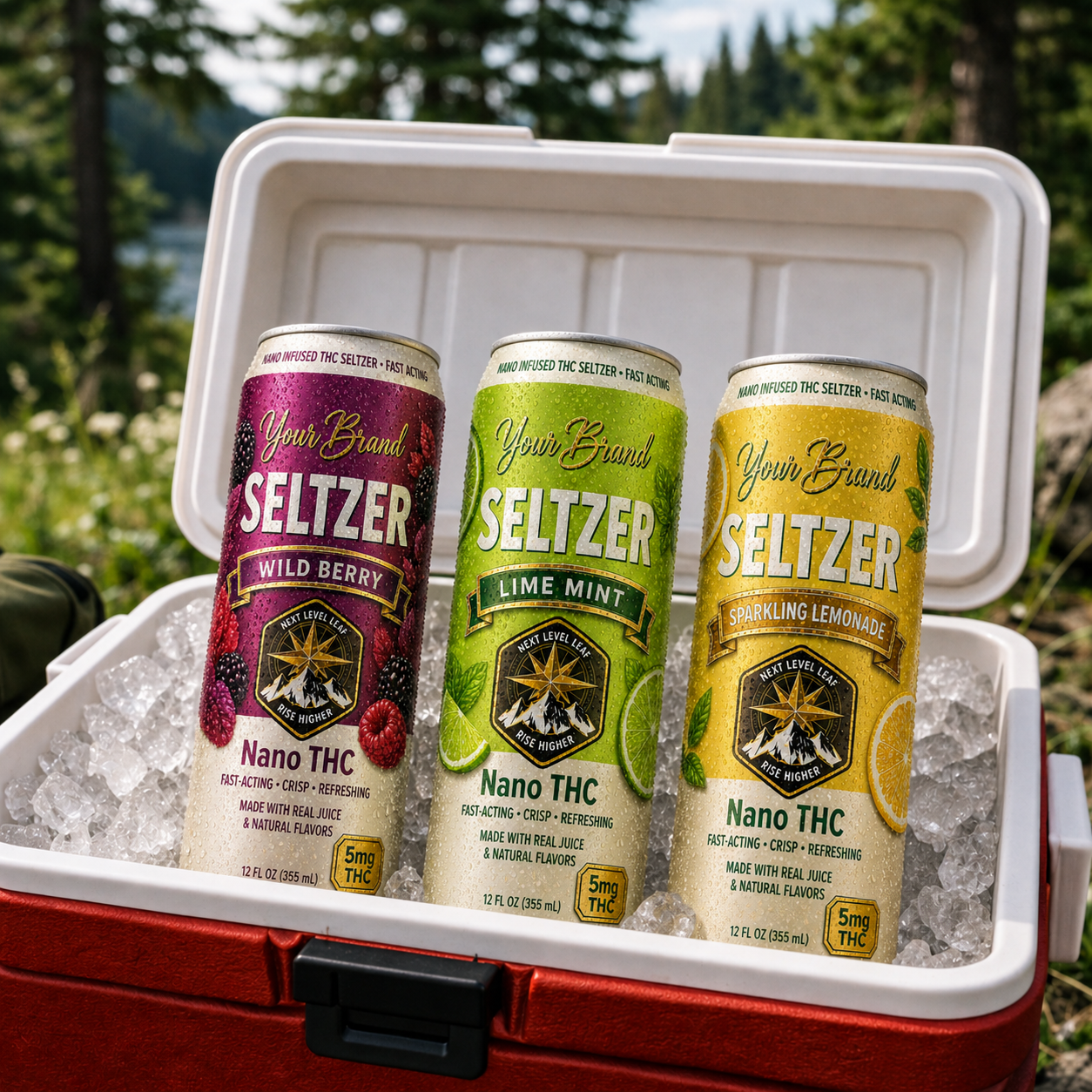
Depending on the project, options can include THC seltzers, sodas, lemonades, juice-style drinks, sparkling cocktail-inspired drinks, still beverages, and other adult beverage concepts designed around Alabama's single-serving structure.
What THC dose should an Alabama beverage use?
Alabama sets a legal ceiling of 10 mg total THC per single-serving beverage. A brand can choose a lower amount depending on the drinking occasion, customer, retailer strategy, and product positioning.
2.5 mg
A lighter, session-oriented concept for brands that want a lower-dose social beverage.
5 mg
An approachable single-can format for mainstream THC beverage positioning.
10 mg
A full-strength single-serving concept that remains within Alabama's current beverage limit.
Which beverage formats fit Alabama best?
The 12-ounce single-serving structure works naturally with familiar beverage formats. The best choice should match the brand, the intended drinking occasion, and the retailer channel.
- THC seltzers: light, sparkling, and easy to position as an adult social beverage.
- THC sodas: flavor-forward products that can support classic profiles while keeping the branding adult-oriented.
- Lemonades and juice-style drinks: strong flavor platforms that can work well in a single-serving can.
- Cocktail-inspired sparkling drinks: nonalcoholic concepts designed around adult social occasions.
- Still beverages: useful for brands that want a noncarbonated format.
How does Alabama retail work for THC beverages?
Alabama places consumable hemp retail under the ABC Board. The current rules recognize three retail license types, including specialty consumable-hemp retailers and retail food stores.
A licensed retail food store may sell consumable hemp beverages. Those beverages must be placed behind glass or similar clear material in a dedicated section and accompanied by the required 21+ signage. The law also limits sales to adults 21 and older.
For brands, this means the retail conversation should be built around licensed accounts that understand the category and can maintain the required product records and COAs.
Direct-to-consumer shipping is not the Alabama model. Alabama prohibits a producer or retailer from shipping consumable hemp products directly to an Alabama resident. Plan the market around licensed in-state retail channels.
What testing does Alabama require?
A consumable hemp product distributed or sold in Alabama must have a corresponding certificate of analysis issued by an independent testing laboratory that tested the batch from which the product was produced.
The statute requires the independent laboratory to meet ISO/IEC 17025:2017 accreditation requirements and be independent from the producer and other regulated hemp businesses.
Required testing protocols include cannabinoid content and potency, heavy metals, residual chemical contamination, microbials, mycotoxins, and specified agricultural residues. The COA must identify the product and lot or batch and include the cannabinoid profile and other required testing information.
- Finished-product batch COA: tie the testing to the batch that will actually be sold.
- Potency: confirm total THC and other reported cannabinoids in the finished beverage.
- Batch traceability: keep the production batch connected to the COA and finished cans.
- QR access: Alabama requires a scannable barcode or QR code linking the product label to the COA.
What does Alabama require on the beverage label?
Alabama's statute requires each consumable hemp product container to include key information such as the ingredient list, QR or barcode access to the COA, manufacture and expiration dates, the batch number, total milligrams of THC in the container, and the serving size.
The ABC Board also restricts child-directed branding and packaging that imitates products primarily marketed to minors. For a beverage brand, the best approach is straightforward: adult presentation, clear THC communication, clean ingredient information, and easy access to testing documentation.
Are standard beverage cans acceptable?
Yes, Alabama's current ABC definition of child-resistant packaging expressly recognizes standard aluminum beverage cans with pop-tops that meet the referenced federal standards, provided the cans have not been modified to make them easier to open.
That makes standard beverage-can packaging workable for a typical private-label THC drink without turning the closure into a special packaging project.
Can the manufacturer get the label reviewed before launch?
Yes. Alabama's current ABC rule provides an optional label-approval process. Before a consumable hemp product is sold, shipped, or distributed into Alabama, the manufacturer listed on the package may submit the label to the ABC Board for approval with a $50 label approval fee.
For a commercial launch, that can be a useful risk-management step before printing a larger quantity of Alabama-specific packaging.
What should a brand decide before requesting an Alabama quote?
A useful quote starts with a defined product. Before requesting production pricing, decide:
- Beverage type: seltzer, soda, lemonade, juice-style drink, still beverage, or another format.
- THC amount per can: up to Alabama's current 10 mg total THC maximum.
- Cannabinoid blend: identify any additional cannabinoids you want in the formula.
- Flavor or flavors: production-ready profiles or a custom concept that may require R&D.
- Quantity per flavor: commercial production generally begins around 1,200 cans per SKU for projects we support.
- Packaging: can size, label status, artwork, multipack, and retailer requirements.
- Sales plan: the licensed Alabama retail channel the brand expects to use.
- Shipping destination: freight affects the delivered economics of the project.
How can Next Level Leaf help with an Alabama THC beverage?
Next Level Leaf helps brands move from an initial beverage idea to a production-ready white-label or private-label product. We can help with beverage format, flavor, THC amount per can, cannabinoid blend, packaging, testing coordination, production planning, and the information needed to prepare a quote.
If you already know what you want to make, the fastest next step is to send us the beverage type, THC amount per can, quantity per flavor, packaging status, and shipping destination.
Request a quote for an Alabama THC beverage project.
Primary Alabama sources
- Alabama HB 445 / Act 2025-385 - consumable hemp product framework, testing, serving limits, packaging, labeling, retail requirements, and direct-shipment prohibition.
- Alabama ABC Rule 20-X-31-.01 - definitions, including treatment of qualifying standard aluminum pop-top beverage cans as child resistant.
- Alabama ABC Rule 20-X-32-.04 - beverage serving and container limits.
- Alabama ABC Rule 20-X-33-.03 - retail operation requirements, including retail food store beverage sales.
- Alabama ABC Rule 20-X-34-.01 - marketing, branding, and child-appeal restrictions.
- Alabama ABC Rule 20-X-34-.03 - optional $50 manufacturer label-approval process.
Federal rules are tracked separately. Federal hemp requirements can affect whether a product remains eligible for the hemp pathway. Follow the Next Level Leaf Section 781 Tracker for current federal developments.
Related Next Level Leaf resources
THC Seltzers
Explore flavors, dose planning, packaging, and private-label seltzer options.
Explore seltzers →Low-Dose THC Drinks
Explore 2.5 mg, 5 mg, and other lower-dose beverage concepts.
Explore low-dose →THC Beverage Manufacturing
Review formats, cannabinoids, packaging, production planning, and MOQ.
Explore manufacturing →Frequently asked questions about Alabama THC beverages
Want to launch your own THC beverage in Alabama?
Alabama has a defined single-serving beverage framework and licensed retail pathway. Tell us what you want to make, the THC amount per can, flavors, quantity per flavor, packaging status, and shipping destination, and we can help turn the concept into a production-ready white-label or private-label beverage.