Build the private-label product around the channel
Private label is strongest when the product is tied to a business that already has a customer relationship. A retailer can build a store-brand cooler item. A distributor can test a house brand. A hospitality operator can create a guest-facing beverage. An existing beverage company can add a non-carbonated THC format without abandoning its broader brand identity.
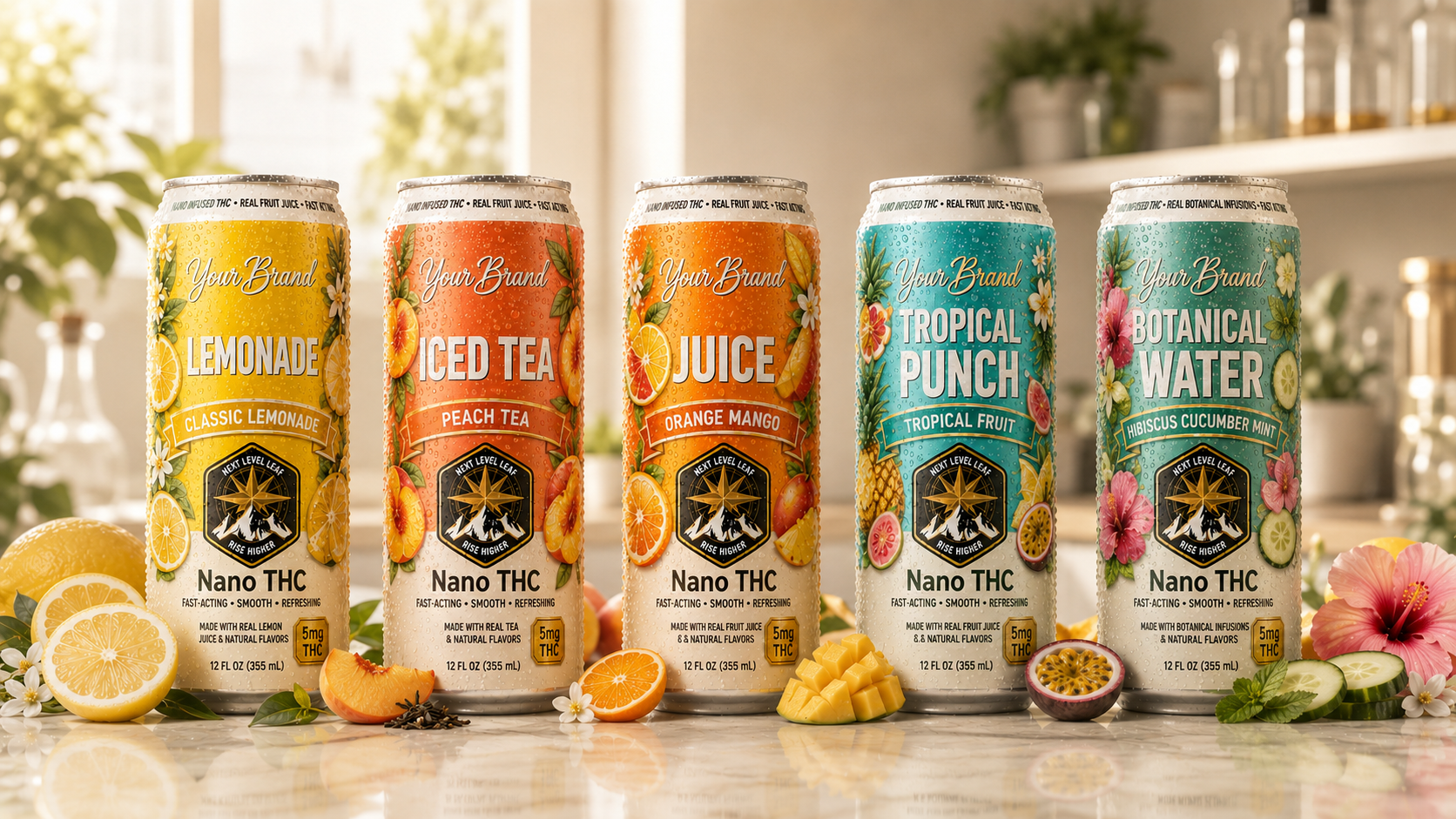
For still THC drinks, the private-label plan should start with the sales environment. A grocery-style retail product, liquor-store alternative, café beverage, wellness cooler item, and distributor house brand may all need different flavor, dose, and packaging choices.
Practical starting point: Define the format, target dose, flavor direction, packaging status, target states, launch channel, and first-run quantity before comparing production paths.
Decisions that shape the finished drink
- Customer occasion: decide whether the drink is for social sipping, refreshment, retail cooler placement, hospitality, wellness-adjacent use, or alcohol-alternative moments.
- Dose and serving logic: make the THC amount easy to understand and appropriate for the channel.
- Flavor and base: align sweetness, acidity, tea or fruit systems, and cannabinoid flavor management.
- Packaging and documentation: prepare label direction, QR/COA access, testing expectations, and adult-oriented presentation.
- Production path: compare white label, private label, co-packing, and custom formulation based on complexity and timeline.