

Looking for non-carbonated THC drinks for sale?
That search can mean two different things. A consumer may be looking for a finished retail brand. A retailer, distributor, or entrepreneur may be looking for a product they can sell under their own brand. Next Level Leaf focuses on the second path: helping businesses move from a still-beverage concept to a production-ready, white-label, private-label, or custom-manufactured product.
If the goal is to launch a brand rather than simply buy an existing consumer product, start by deciding whether an available production-ready profile fits the concept or whether the beverage needs custom R&D.
What non-carbonated THC beverages are available now?
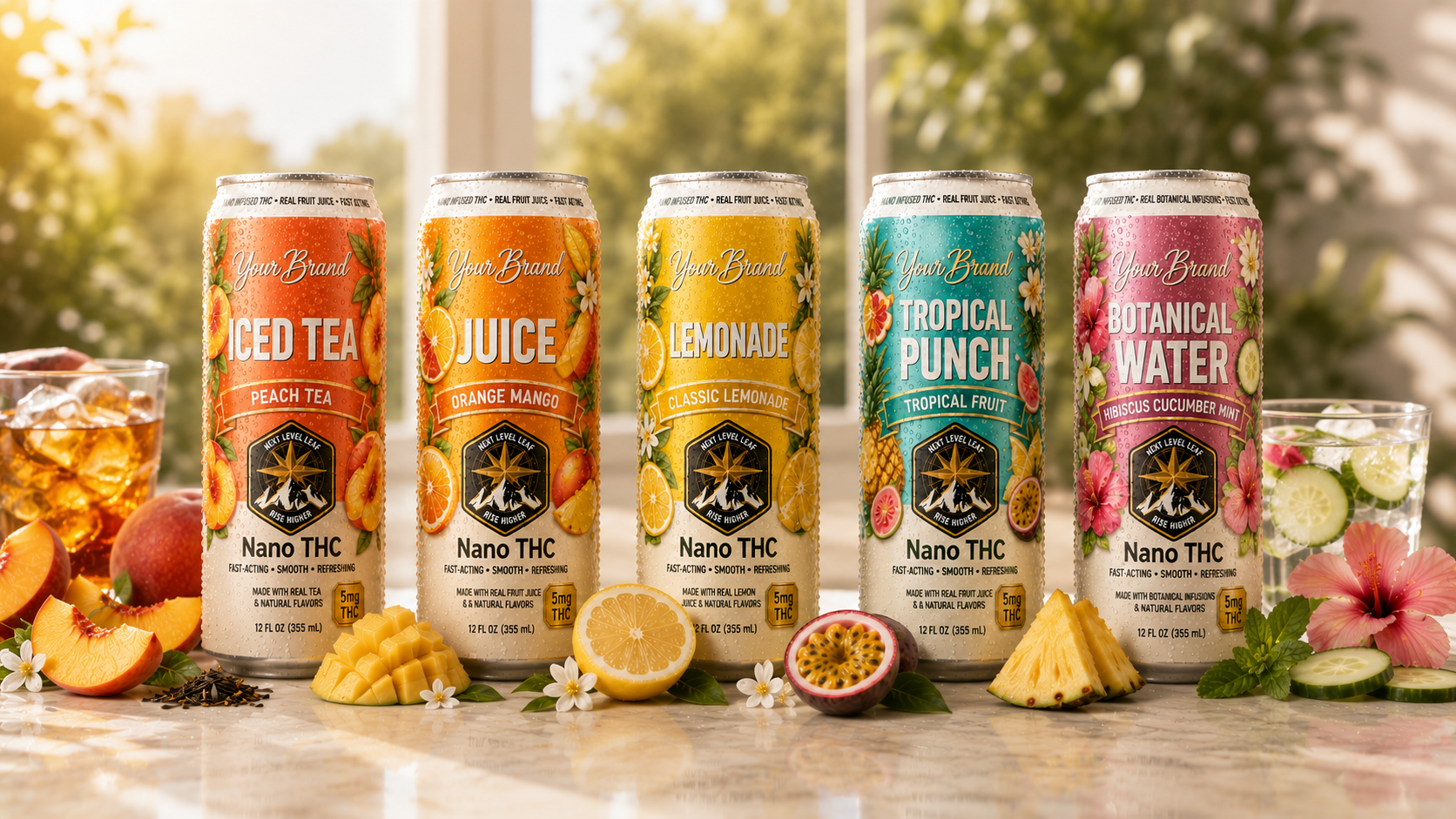
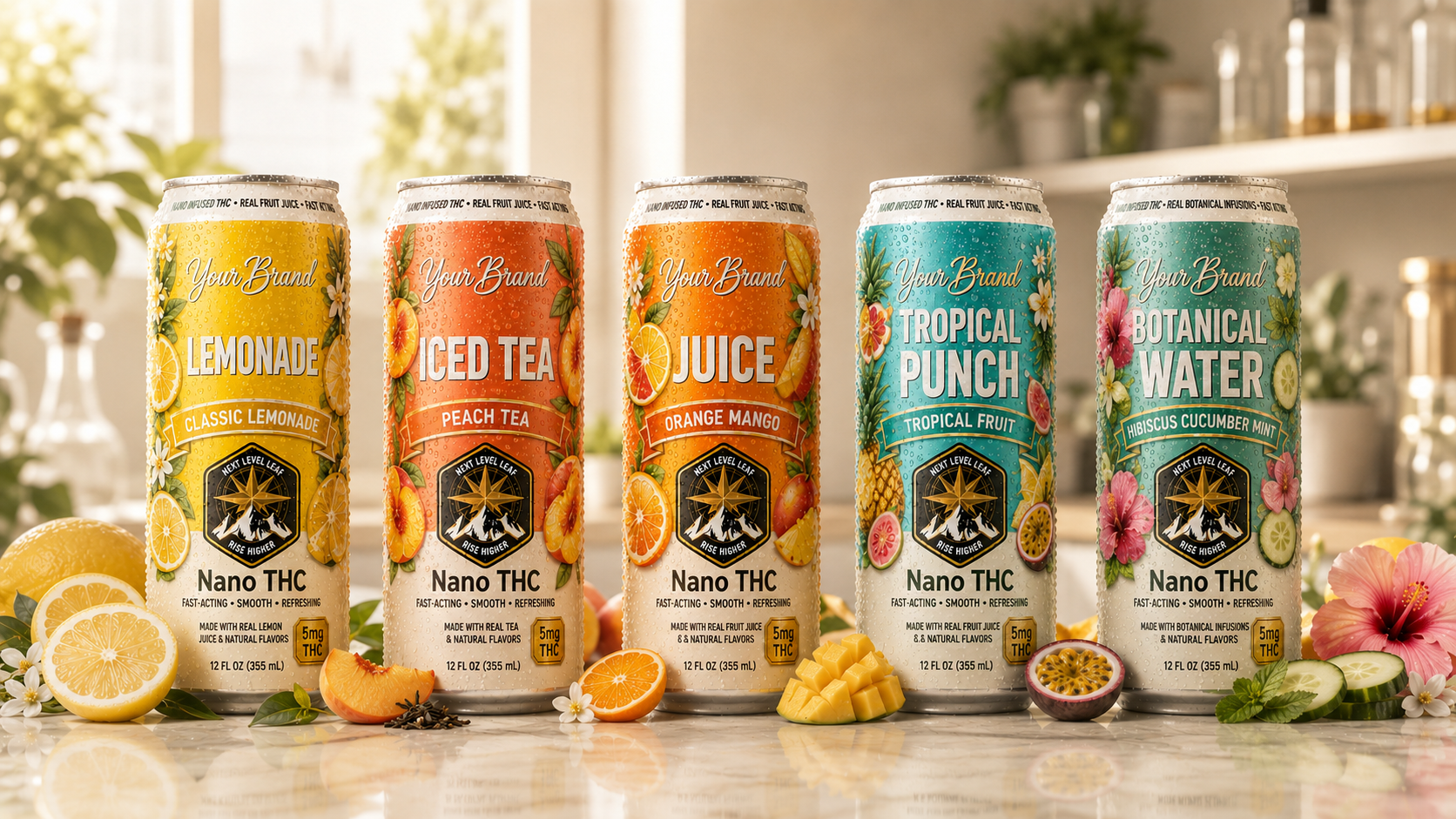
Current production-ready still options available for project evaluation include the following. Availability, dose, packaging, and final project fit should be confirmed during quoting because specifications can vary by run and target market.
Fruit-forward house profiles
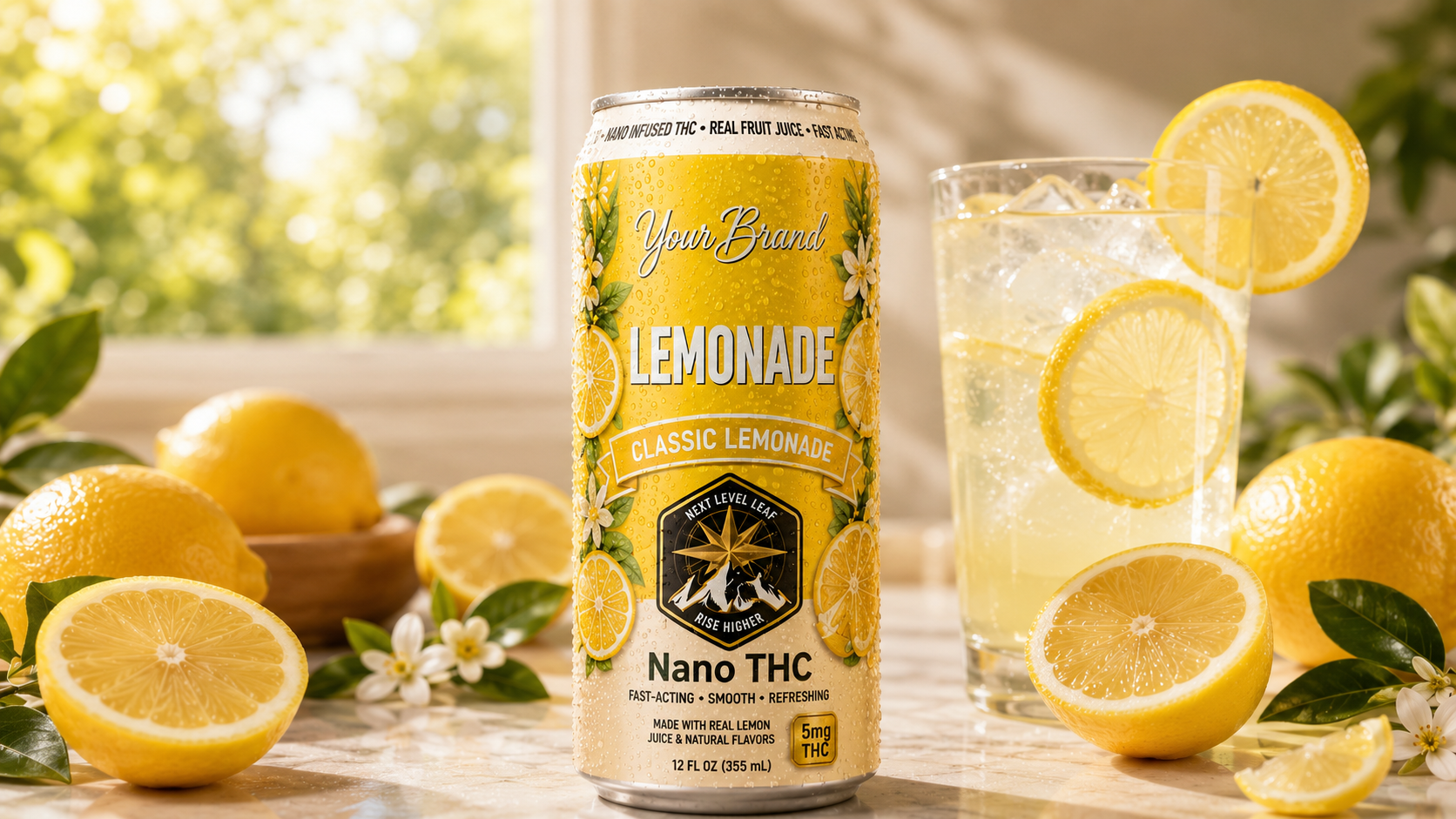
Blue Raspberry, Lemonade, Pink Lemonade, Fruit Punch, and Piña Colada are current production-ready still profiles that can provide a faster path than starting from a blank formula.
Lemonade Iced Tea / Arnold Palmer
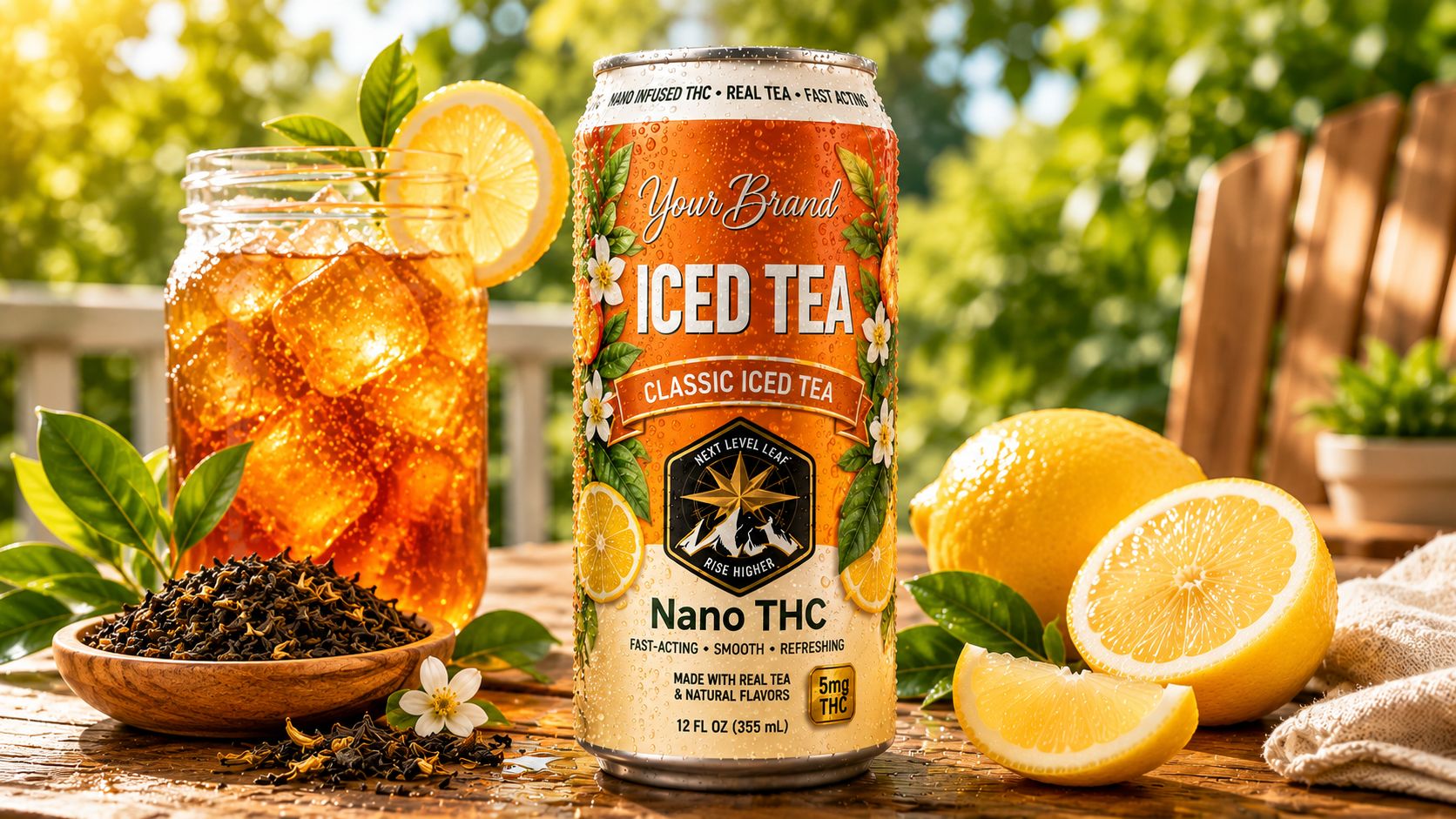
A production-ready non-carbonated tea-and-lemonade profile gives brands another familiar option outside seltzer and juice-style drinks.
Black, Vanilla Mocha & Salted Caramel
Production-ready nitro cold brew profiles currently include Black, Vanilla Mocha, and Salted Caramel for brands exploring a coffee-based THC beverage.
Commercial starting point: Initial commercial production typically begins at approximately 1,200 cans per SKU, or about 50 cases. A selective prototype pathway of approximately 360 cans per SKU, or 15 cases, may be available for qualified projects.
What can be created through custom R&D?
Production-ready options are only one part of the still-beverage opportunity. Custom R&D can be used when the concept needs a proprietary flavor, ingredient system, sweetness profile, functional stack, cannabinoid blend, or drinking experience that is not already available as a house profile.
Custom teas and tea-lemonade concepts
Examples include classic or flavored iced tea, sweet tea, Arnold Palmer-style beverages, custom lemonades, and lower-sugar still refreshment concepts.
Custom fruit-forward beverages
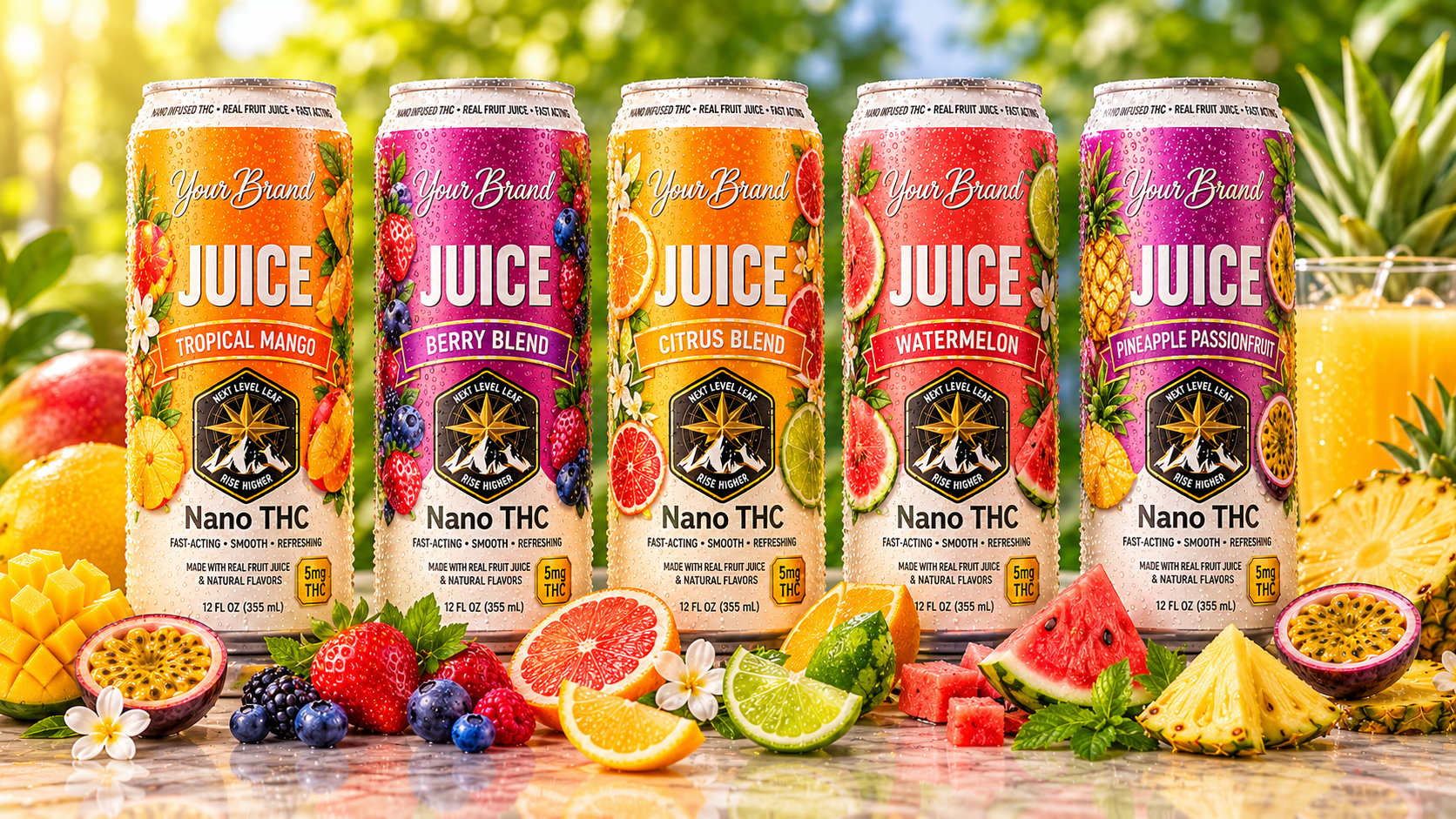
R&D can develop proprietary fruit drinks, juice-style beverages, tropical blends, real-fruit concepts, and other still formats where flavor, body, sweetness, or texture needs to be built around the brand.
Functional, mushroom and cannabinoid concepts
Custom projects can evaluate cannabinoids, electrolytes, vitamins and minerals, amino acids, caffeine, adaptogens, mushrooms, botanicals, and other functional ingredients when the formula and target market support them.
Custom R&D is separately scoped because ingredient compatibility, stability, flavor masking, processing, packaging, and target-state requirements can change the development work. If the concept is specifically built around juice, puree, or a stronger real-fruit identity, use the Still Real Fruit THC Drinks page for that narrower formulation path.
Why would a brand choose a non-carbonated THC drink?
Carbonated THC seltzers have helped customers understand the category, but bubbles are not the right fit for every product or every buyer. A still format can feel smoother, more familiar, and easier to connect to established beverage occasions such as iced tea, lemonade, cold brew, fruit drinks, or functional refreshment.
That familiarity can make the product easier to explain. A customer already understands what peach tea, strawberry lemonade, fruit punch, or nitro cold brew should feel like. The brand’s job is to make the THC dose, flavor, package, and reason to choose the product equally clear.
The commercial opportunity is not “a drink without carbonation.” It is a recognizable beverage format with a measured THC dose, a clear adult customer, and a reason to earn space in the cooler.
Which non-carbonated THC drink format fits the concept?
“Still drink” describes a physical characteristic, not a complete product category. The table below shows how the major formats create different customer expectations and formulation priorities.
| Format | Customer and occasion | Key formula decisions | Common starting path |
|---|---|---|---|
| Lemonade | Familiar refreshment, social sipping, warm-weather occasions | Acidity, sweetness, citrus character, dose masking, calorie target | Production-ready base or custom flavor development |
| Tea or tea-lemonade | Daily ritual, afternoon refreshment, familiar adult beverage | Tea base, sweetness, astringency, caffeine, citrus and fruit balance | Existing tea path, adapted base, or custom R&D |
| Juice-style or real fruit | Fuller flavor, fruit identity, premium or natural positioning | Juice or puree level, color, body, sugar, separation, shelf life | Custom R&D is often needed for a distinctive fruit system |
| Still flavored water | Lighter refreshment, lower-sugar positioning, easy sipping | Flavor body, acidity, sweetener choice, mouthfeel, clean finish | Simple base or custom low-sugar development |
| Functional drink | Ingredient-led concept such as focus, relaxation, hydration, or routine | Ingredient compatibility, flavor, claims discipline, stability, target use | Adapted formula or custom R&D, depending on the ingredient stack |
| Coffee or cold brew | Morning routine, coffee culture, grab-and-go premium beverage | Coffee base, roast, sweetness, dairy-free creamer, nitro, can format | Production-ready coffee option or custom coffee project |
| Non-alcoholic spirit-style drink | Adult social ritual and alcohol-alternative occasions | Flavor intensity, bitterness, serving size, package, dose and channel | Usually custom R&D or a carefully matched existing base |
These are starting points, not rigid rules. An Arnold Palmer-style drink combines tea and lemonade. A functional lemonade may combine refreshment with an ingredient-led story. A real-fruit drink may be designed as a low-sugar product rather than a traditional juice. The best format is the one customers can understand and the production system can make consistently.
How do still THC drinks differ from sparkling drinks?
Carbonation adds brightness, lift, and a crisp finish. In a still drink, the formula has to create structure through other tools: acidity, sweetness, tea, fruit, bitterness, body, or a carefully controlled finish. This is why a still beverage should be developed intentionally rather than treated as a sparkling formula with the carbonation removed.
Smooth and familiar
Often a strong fit for tea, lemonade, juice-style, coffee, and functional beverage occasions.
Crisp and bubbly
Often a strong fit for seltzer, soda, spritzer, and carbonated mocktail occasions.
Start with the occasion
Choose the drinking experience that fits the customer and channel, then build the formula around it.
For a focused comparison, review Still vs. Sparkling THC Drinks.
What production path should a brand consider?
The formula does not have to begin from the same place for every project. The right path depends on how differentiated the product needs to be, how quickly the brand wants to move, and whether it already owns a production-ready formula. For Next Level Leaf projects, the primary commercial planning quantity is approximately 1,200 cans per SKU. Selective 360-can prototype runs may be available when a smaller validation step is appropriate.
Production-ready or white label
Start with an available or near-ready beverage base when the flavor, dose, format, and package fit the brand’s goals. This can reduce development complexity and shorten the path to production.
Private label or modified base
Begin with a defined production foundation and evaluate approved changes to flavor, cannabinoid blend, sweetness, or other product details. Feasibility depends on the base and the requested changes.
Custom R&D or co-packing
Use custom development when the product needs a unique flavor system, ingredient stack, mouthfeel, or performance target, or bring an existing formula for production-fit review.
A faster production path is valuable only when the finished drink still fits the brand. A custom path is valuable only when the differentiation justifies the additional development, time, and cost.
Explore white-label still THC drinks or review the broader THC beverage manufacturing path.
What decisions shape manufacturing, cost, and timeline?
A quote becomes more useful when the product is defined beyond “non-carbonated.” These decisions determine whether an existing path fits or whether the project needs custom work.
- Beverage base: water, lemonade, tea, juice-style, real fruit, coffee, or functional base.
- Flavor system: natural flavor, juice, puree, tea, coffee, sweetener, acid, and masking requirements.
- Target dose: the cannabinoid amount, serving logic, and any CBD or minor-cannabinoid blend.
- Target states: state rules can change the allowable dose, ingredients, package, label, registration, and sales channel.
- Package: can or bottle preference, size, closure, label type, multipack, and secondary packaging.
- SKU count: each flavor or formula can affect development, testing, packaging, MOQ, and inventory.
- First-run quantity: the production volume should fit the launch plan, reorder timing, and available budget.
- Timeline: production-ready products, custom R&D, packaging procurement, testing, and freight do not move on the same schedule.
How should dose and target states be planned?
There is no universal “future-proof” THC dose for every state. A dose that fits one market may need a different formula, package, serving structure, registration path, or distribution plan elsewhere. Target states should be identified before the formula, label, and inventory commitment are finalized.
The State Hemp Beverage Compliance Resources can help brands identify issues to research, while the Compliance page explains the broader planning framework. These resources are educational and are not legal advice; brands should confirm current requirements with qualified counsel and the appropriate agency before launch.
What should packaging communicate?
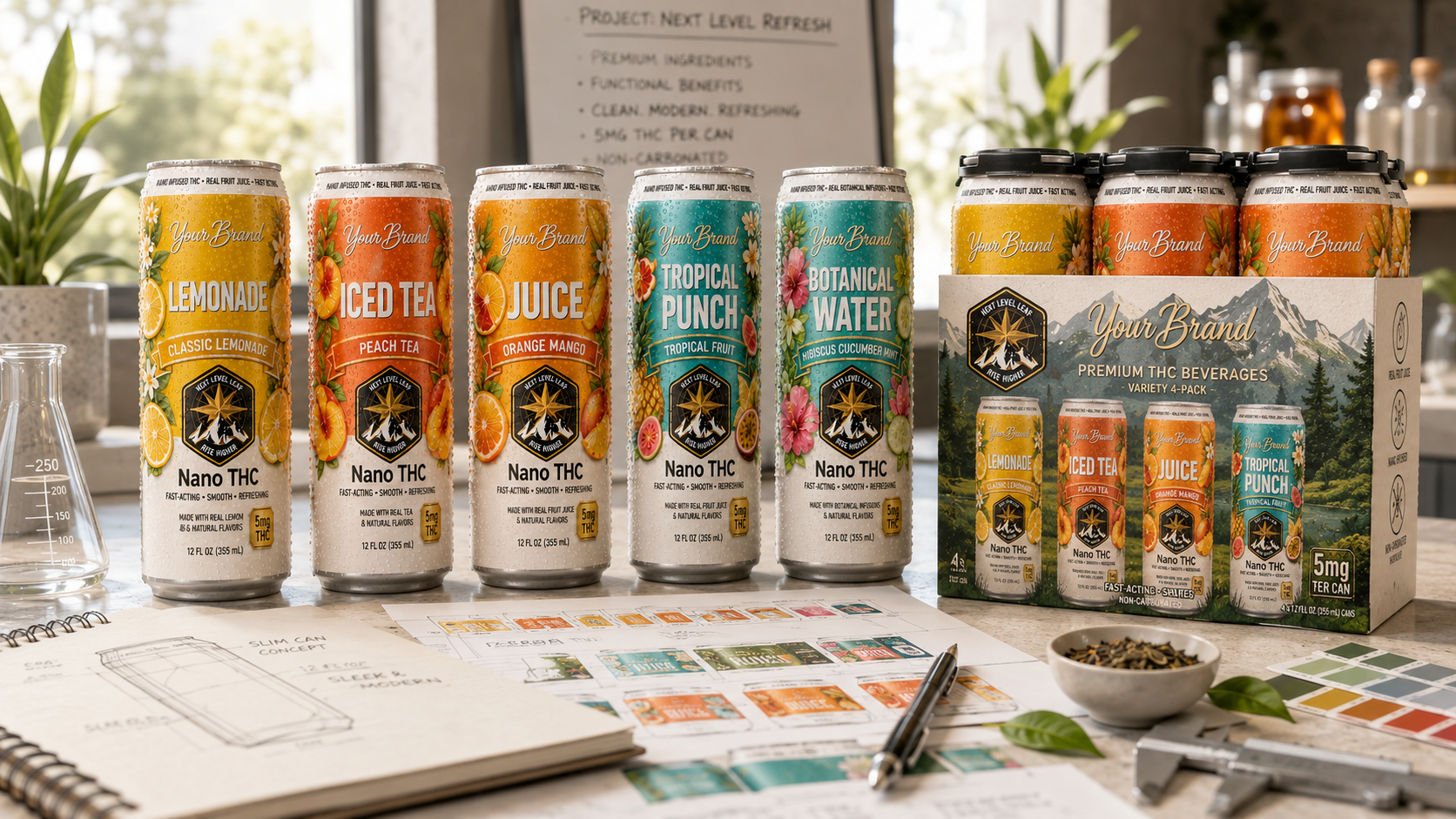
The package should tell customers what the drink is, that it is non-carbonated, how much THC it contains, and how it fits into an adult beverage occasion. Fruit-forward does not mean youth-oriented. The brand name, visuals, flavor language, claims, warnings, cannabinoid disclosure, QR or COA access, and required state elements need to work together.
The physical package also affects production and shelf life. Container size, can or bottle format, closure, label application, oxygen and light exposure, storage expectations, and secondary packaging should be discussed early. For a deeper review, see Still THC Drink Packaging.
What do stability, shelf life, testing, and COAs require?
Still beverages need a finished-product quality plan. The formula, pH and acidity strategy, ingredient system, cannabinoid emulsion, package, production process, storage conditions, and target shelf life all influence what should be evaluated.
Testing and COA requirements are not identical in every state or channel. The project should establish which finished-product tests, potency documentation, contaminant panels, batch records, label checks, and retailer documents are required for the markets being served. Real fruit, tea, coffee, and functional ingredients can also introduce their own stability and sensory questions.
Review Still THC Drink Shelf Life and Still THC Drink Manufacturing for the next level of production planning.
Why would a retailer or distributor consider a still THC drink?
A still beverage can connect the THC category to formats customers already buy: tea, lemonade, juice-style drinks, cold brew, and functional beverages. That can give a retailer a different product story than another seltzer, especially when the flavor, dose, package, price, and customer occasion are easy to explain.
Retail readiness still depends on more than the format. Buyers may ask about state legality, registrations, testing, COAs, shelf life, storage, case configuration, margins, reorder support, and how the brand will create demand. The strongest first SKU is often the one that balances differentiation with a simple sales story.
What should be ready before requesting a quote?
You do not need every detail finalized, but the following information makes it easier to identify the right production path and provide a useful response:
- Product format: lemonade, tea, tea-lemonade, juice-style, flavored water, functional drink, coffee, or another still beverage.
- Flavor direction and the number of planned SKUs.
- Target THC dose and any CBD or minor-cannabinoid blend.
- Target states, sales channels, and intended adult customer.
- Can or bottle preference, size, and packaging status.
- Sweetness, calorie, caffeine, fruit, tea, coffee, or functional-ingredient requirements.
- Expected first-run quantity, launch timing, and available budget range.
- Whether the priority is speed, customization, or producing an existing formula.
Where should a brand go next?
This page is the broad Next Level Leaf resource for non-carbonated THC drinks. Use the Still THC Drinks hub to explore related manufacturing, packaging, shelf-life, and format decisions. If real juice, puree, or a fruit system is central to the concept, continue to Still Real Fruit THC Drinks for that narrower formulation topic. When the concept is specific enough to discuss format, dose, package, target states, and first-run goals, request a quote.