Best THC Seltzer Flavors
The best THC seltzer flavors are easy to understand, refreshing, and strong enough to work with the realities of cannabinoid taste.
Use this guide to compare citrus, berry, tropical, lemonade, mint, and fruit-forward THC seltzer directions before scoping a white-label or private-label beverage project.
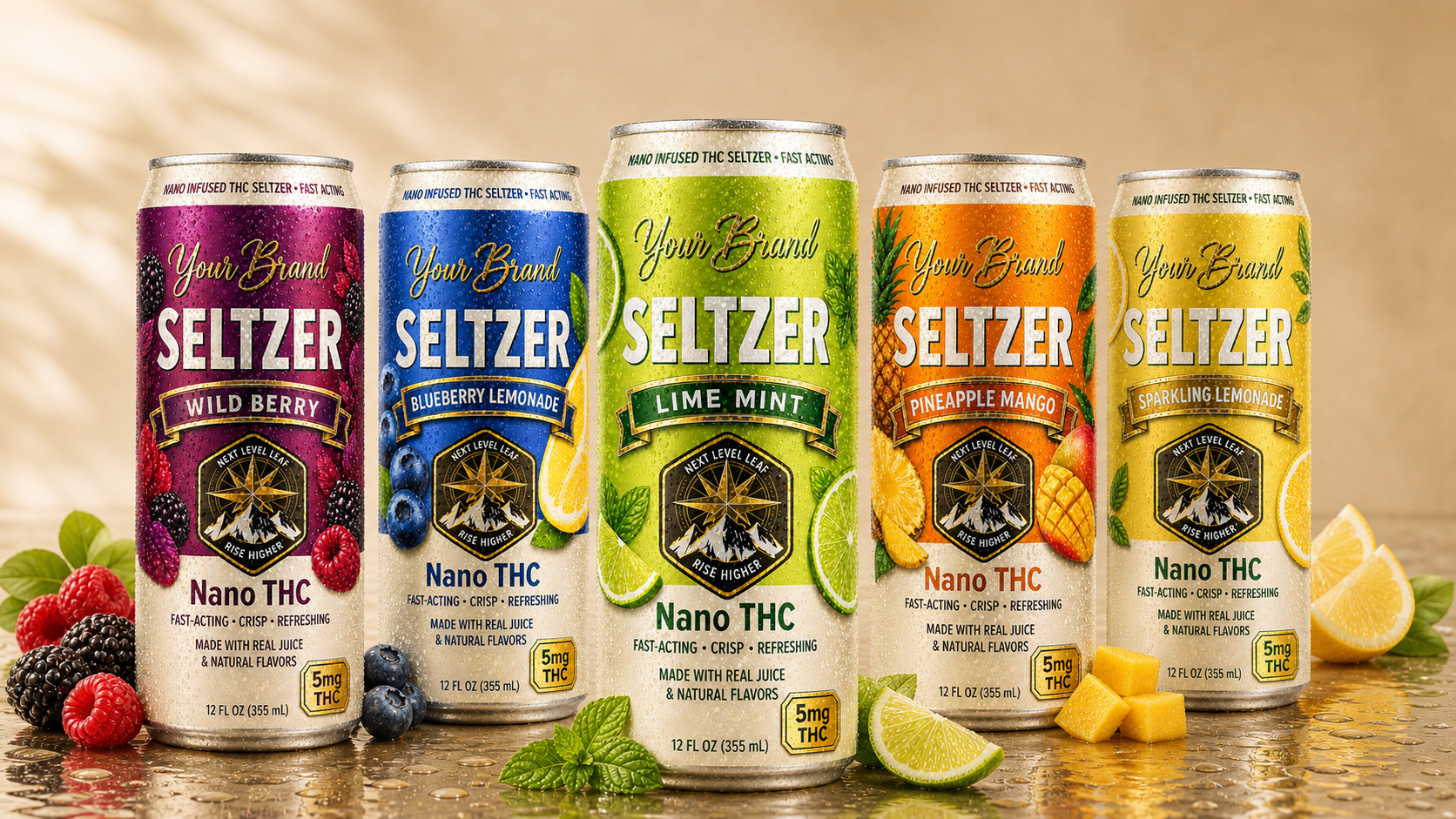
The best THC seltzer flavors usually combine familiar refreshment with enough flavor structure to support a clean THC beverage experience. Citrus, berry, tropical fruit, lemonade, lime mint, pineapple mango, and wild berry concepts often work well because they are easy for customers to recognize and can help a light sparkling drink feel more complete.
Familiar wins
Retailers and customers usually understand citrus, berry, lemonade, and tropical flavors quickly.
Light but not empty
A seltzer should feel crisp while still carrying enough flavor to support the THC system.
Simple product story
The flavor should make the use occasion obvious: social, refreshing, low-dose, and easy to drink.
What makes a strong THC seltzer flavor?
A strong THC seltzer flavor has to do more than sound good on a label. It needs to work in a sparkling water-style format, support the cannabinoid ingredient system, feel refreshing, and make sense for the audience the brand is trying to reach.
Light beverages leave less room to hide bitterness, so flavor selection matters. Citrus, berry, tropical fruit, mint, and lemonade-style profiles often give the drink enough brightness and structure without making it feel heavy or syrupy.
Best flavor directions for THC seltzer
- Lime mint for a clean, crisp, adult-refreshment profile.
- Pineapple mango for a tropical, approachable, fruit-forward direction.
- Wild berry for a familiar retail flavor that can feel colorful without being childish.
- Blueberry lemonade or raspberry lemonade for a brighter sweet-tart style.
- Sparkling lemonade for a simple, highly familiar entry point.
- Cherry lime or citrus spritz directions for brands leaning toward alcohol-alternative positioning.
How flavor connects to the business model
A liquor store may want a flavor that feels like an adult alternative to hard seltzer. A retailer may want a clean, broadly appealing cooler item. A brewery may want something that feels close to its existing beverage audience without competing directly with beer.
The best flavor choice is not only a formulation decision. It is also a merchandising, branding, and sales-channel decision.
What to decide before requesting a quote
Before scoping a THC seltzer, define the flavor direction, target dose, number of SKUs, can size, first-run goals, and whether the product should feel more like sparkling water, hard seltzer alternative, lemonade, mocktail, or real-fruit spritzer.
Frequently asked questions
Related resources
Use these pages to compare seltzer strategy, production decisions, business fit, and quote planning.
Ready to scope a THC seltzer project?
Share the beverage type, target dose, flavor direction, packaging status, first-run goals, target states, and timeline. We can help you think through the next practical step.