

New Hampshire THC Beverage Laws
New Hampshire THC beverage laws currently allow hemp-derived THC drinks that remain within the state's applicable THC limit. If you are a retailer, distributor, hemp business, beverage company, or brand considering your own private-label THC beverage, this guide explains what to know before production.
This page covers the current THC limit, the January 1, 2027 changes, private-label planning, testing and labeling considerations, and the information to prepare before requesting a production quote.
Updated September 24, 2026 • Published and maintained by Next Level Leaf
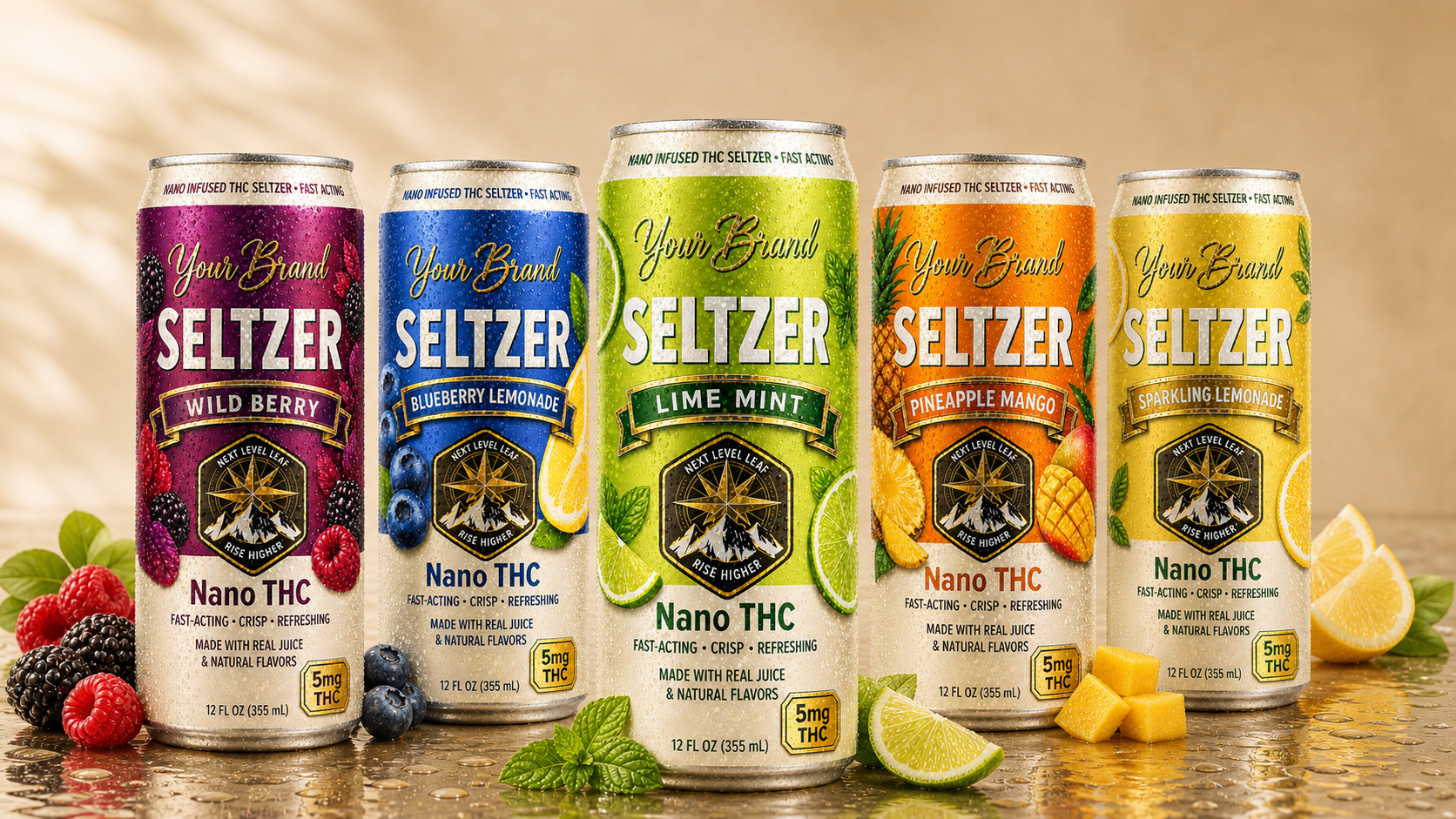
Are THC drinks legal in New Hampshire? Hemp-derived products are currently allowed when they remain within New Hampshire's 0.3% Delta-9 THC dry-weight limit. The state does not currently set a separate milligram-per-can limit for hemp-derived THC beverages.
Are THC drinks legal in New Hampshire?
New Hampshire law currently prohibits hemp-derived products containing more than 0.3% Delta-9 THC on a dry-weight basis. For a business planning a THC beverage, that means the finished product needs to remain within the applicable state limit and satisfy the other requirements that apply to the beverage, label, testing, and sales plan.
The state does not currently have a separate enacted milligram-per-serving or milligram-per-container limit for hemp-derived THC beverages. A stated dose such as 5 mg or 10 mg per can does not by itself establish compliance because the law is written as a concentration standard.
New Hampshire RSA Chapter 439-A
What changes on January 1, 2027?
Two enacted changes matter for businesses planning 2027 inventory.
New Hampshire moves to a total-THC standard. Beginning January 1, 2027, the state's definition of hemp includes total tetrahydrocannabinols, including THCA, and keeps the maximum concentration at 0.3% on a dry-weight basis.
THC-containing hemp products become 21+. Beginning January 1, 2027, New Hampshire prohibits selling or giving a hemp-derived product containing THC to a person under 21.
If you are planning a product that will remain on shelves into 2027, it makes sense to review the formula, testing, and retail plan against the new standard before committing a large inventory run.
Can a New Hampshire business launch a private-label THC beverage?
Yes, a New Hampshire business can consider a white-label or private-label hemp-derived THC beverage when the finished product and sales plan meet the applicable state requirements. The practical starting point is deciding what you want to sell and then making sure the formula, dose, package, testing, and label fit the market.
This can include retailers developing a house brand, distributors adding an owned beverage line, hemp businesses expanding into drinks, existing cannabis or wellness brands adding a beverage SKU, or entrepreneurs launching a new beverage brand.
What can you private label?
Depending on the product and project, options can include infused seltzers, sodas, lemonades, juice-style drinks, still beverages, coffee, and other beverage formats. The right starting point depends on flavor, THC amount per can, package size, target customer, and where the product will be sold.
For projects we support, commercial production generally begins at approximately 1,200 cans per SKU. Selective smaller prototype runs may be available for qualified projects.
How much THC should a New Hampshire beverage contain?
The best dose is a product and business decision, not simply the highest amount that may fit a legal calculation. Brands commonly consider factors such as target customer, drinking occasion, flavor, package size, serving expectations, retailer preference, price point, and whether the same SKU may eventually be sold in other states.
Because New Hampshire currently uses a percentage-based hemp standard rather than a separate beverage milligram cap, the finished product's THC calculation should be confirmed before production. This is especially important for beverages because the law uses a dry-weight standard and does not provide a beverage-specific milligram conversion formula.
What should a New Hampshire brand decide before requesting a quote?
A useful quote starts with a clearly defined product. Before requesting production pricing, it helps to know:
- Beverage type: seltzer, soda, lemonade, juice-style drink, coffee, still beverage, or another format.
- THC amount per can: the intended dose and whether other cannabinoids are part of the formula.
- Flavor or flavors: production-ready flavor options or a custom concept that may require R&D.
- Quantity per flavor: commercial production generally begins around 1,200 cans per SKU for projects we support.
- Packaging: can size, label status, artwork, multipack, and any retailer packaging requirements.
- Where it will be sold: New Hampshire only or a broader multi-state launch.
- Shipping destination: freight affects the delivered economics of the project.
What testing and documentation should a beverage brand plan for?
Testing should be planned before launch rather than added after the product is already produced. A brand should be able to connect the finished beverage to the appropriate batch records and cannabinoid testing and provide retailers with clear product documentation when requested.
For New Hampshire, one of the important questions is how the laboratory will calculate the state's current dry-weight THC standard for the finished liquid beverage. If the product will be sold after January 1, 2027, the testing plan should also account for the state's move to total THC, including THCA.
What should the label communicate?
A strong THC beverage label should make it easy for the customer and retailer to understand what the product is, how much THC it contains, how many servings are in the container, what ingredients and allergens are present, and how to find supporting product information such as a COA when applicable.
Branding should also remain clearly adult-oriented. Avoid designs, characters, product names, or presentation that could create unnecessary regulatory or retailer concerns.
Should you build a New Hampshire-only SKU or a multi-state SKU?
That depends on where you intend to sell. A New Hampshire-only beverage can be planned around New Hampshire's current rules, while a multi-state product may need a lower dose, different package, different label, or separate SKU to work across several states.
If New Hampshire is the first market but expansion is part of the plan, identify those future states early. It is much easier to make those decisions before labels are printed and commercial inventory is produced.
How can Next Level Leaf help with a New Hampshire THC beverage?
Next Level Leaf helps businesses move from an initial beverage idea to a production-ready white-label or private-label product. We can help with beverage type, flavor, THC amount per can, cannabinoid blend, packaging, testing coordination, production planning, and the information needed to prepare a quote.
For projects we support, commercial runs generally begin at approximately 1,200 cans per SKU. If you already know what you want to make, the fastest next step is to send us the beverage type, THC amount per can, quantity per flavor, packaging status, and shipping destination.
Request a quote for a New Hampshire THC beverage project.
Primary New Hampshire sources
- New Hampshire RSA Chapter 439-A - current hemp definition and THC limit, plus the January 1, 2027 amendments.
- 2026 Chapter 275 - enacted 2027 total-THC and age changes.
- 2026 SB 485 status - proposed hemp licensing legislation currently in interim study and not current law.
Before launch: New Hampshire's dry-weight THC standard creates a product-specific testing question for finished liquids. Confirm the formula, testing method, label, and planned sales setup with qualified counsel and the appropriate state agency before committing commercial inventory.
Related Next Level Leaf resources
THC Seltzers
Explore seltzer flavors, dose planning, packaging, and white-label options.
Explore seltzers →THC Beverage Options
Review beverage types, cannabinoids, packaging, production planning, and MOQ.
Explore beverages →Pricing & MOQ
Understand the main decisions that affect beverage pricing and commercial production.
Explore pricing →Frequently asked questions about New Hampshire THC beverages
Want to launch your own THC beverage in New Hampshire?
Tell us what you want to make, including the beverage type, THC amount per can, flavors, quantity per flavor, packaging status, and shipping destination. We can help turn the idea into a production-ready white-label or private-label beverage.