


What Is Functional Coffee?
Functional coffee is coffee enhanced with ingredients that support a more specific effect, use occasion, or experience. For brands and founders, it represents a more differentiated way to build a premium beverage brand than launching a generic drink concept.
This page explains what functional coffee actually is, how it differs from regular coffee, what kinds of ingredients are commonly used, and why coffee-plus-functional ingredients have become an attractive category for modern beverage brands.
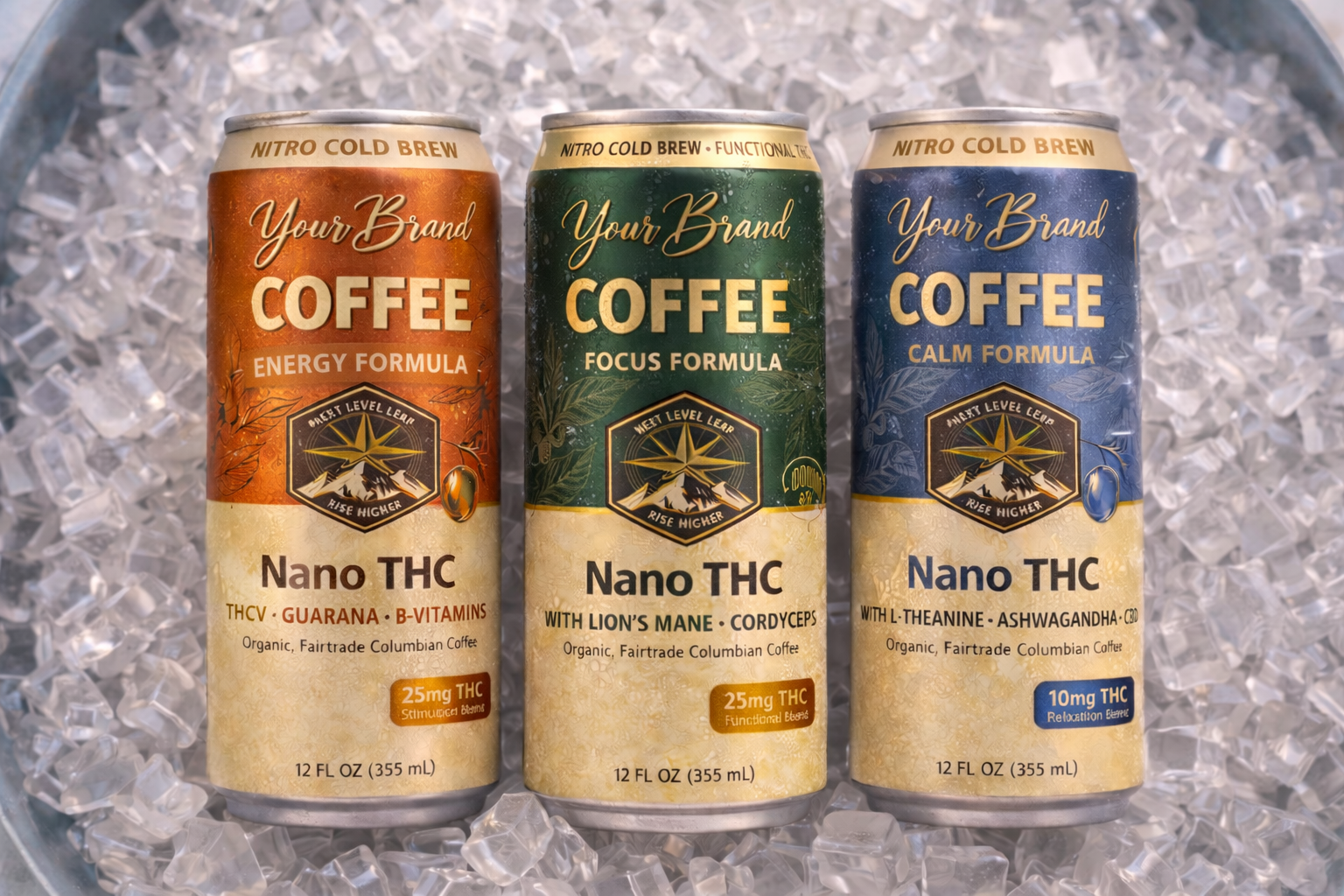
Functional coffee is coffee formulated with additional ingredients that help define a more specific product purpose, such as focus, energy, calm, or broader function-forward positioning that can be tied to a particular time of day, when a specific formulation may be supportive. It is not just coffee with “extras” added in. It is a category shift that gives founders a stronger way to differentiate a premium coffee product so that you aren't like every other beverage on the market.
In this guide
How functional coffee differs from regular coffee
Traditional coffee is usually purchased for flavor, habit, caffeine, and familiarity. Functional coffee introduces another layer: a clearer reason for the product to exist beyond simply being coffee.
That reason might be positioned around:
- Focus and productivity
- Energy and performance
- Balance and smoother stimulation
- Premium lifestyle identity
- A broader coffee-plus-function product concept
That shift matters because it changes how the product is formulated, how it is branded, and how the customer understands it. Instead of asking only, “What flavor is this?” the category starts to answer, “What kind of experience is this product designed to support?”
Functional coffee turns coffee from a familiar beverage into a more tailored, experience-focused purchase. This shifts the customer from "I want more energy" to "I want more energy and...". This is an additive effect that stacks the potential benefits. It's more than the typical experience, and when done right, it's better.
What goes into functional coffee
Functional coffee can include several different ingredient directions depending on the kind effect you wnt, and ype of brand being built.
Common ingredient categories
- Mushrooms such as lion’s mane or cordyceps
- Adaptogens such as ashwagandha or rhodiola
- Botanicals and amino acids such as L-theanine
- Performance-oriented support ingredients
- Cannabinoids like THC, but expecially the minors like THCv and CBG. This is the leading edge.
The goal is not to overload the product. The goal is to create a more coherent beverage concept with a clearer use case and stronger market identity.
Why founders care about this category
Founders are drawn to functional coffee because coffee already gives them several advantages before they ever decide on the functional layer.
- Coffee has built-in repeat-use behavior
- Coffee supports premium packaging and strong visual branding
- Coffee is more differentiated than broader beverage categories like seltzers
- Coffee naturally fits product lines based on distinct use occasions
When function is layered in well, the product becomes easier to position and easier to remember. That is a major advantage in a crowded beverage landscape.
Why it works as a launch strategy
For many founders, functional coffee is not the final destination. It is the smartest entry point.
A functional coffee line can help a founder:
- Launch with a more focused product concept
- Build a clearer brand identity
- Enter the market with a stronger differentiator
- Create logical room for future expansion
That future expansion can include directions like mushroom coffee, adaptogenic coffee, or more product-specific lanes such as focus coffee, energy coffee, and calm coffee.
If you are thinking like a founder, the next question is usually not just what functional coffee is. It is how to launch a functional coffee brand in a practical way.
Frequently asked questions
Related reading
Thinking about building a functional coffee brand?
If you are evaluating positioning, formulation direction, or how to bring a coffee-plus-function concept to market, the next step is to share what you want to build.