


Nootropic Coffee vs Regular Coffee
Regular coffee already has a strong daily ritual. In the US, approximately 68% of American adults drink over 517 million cups of coffee per day. Nootropic coffee builds on that daily habit by supporting a more specific and directed experience, often focused on concentration, mental clarity, or smoother cognitive performance that coffee alone doesn't accomplish.
For brands, the difference is not just ingredient-based. It is strategic. Nootropic coffee creates a more differentiated product, especially when infused with THC or other cannabinoids. Functional coffee formulations have a built-in story, a more defined audience fit, and a stronger lane inside the broader coffee category.
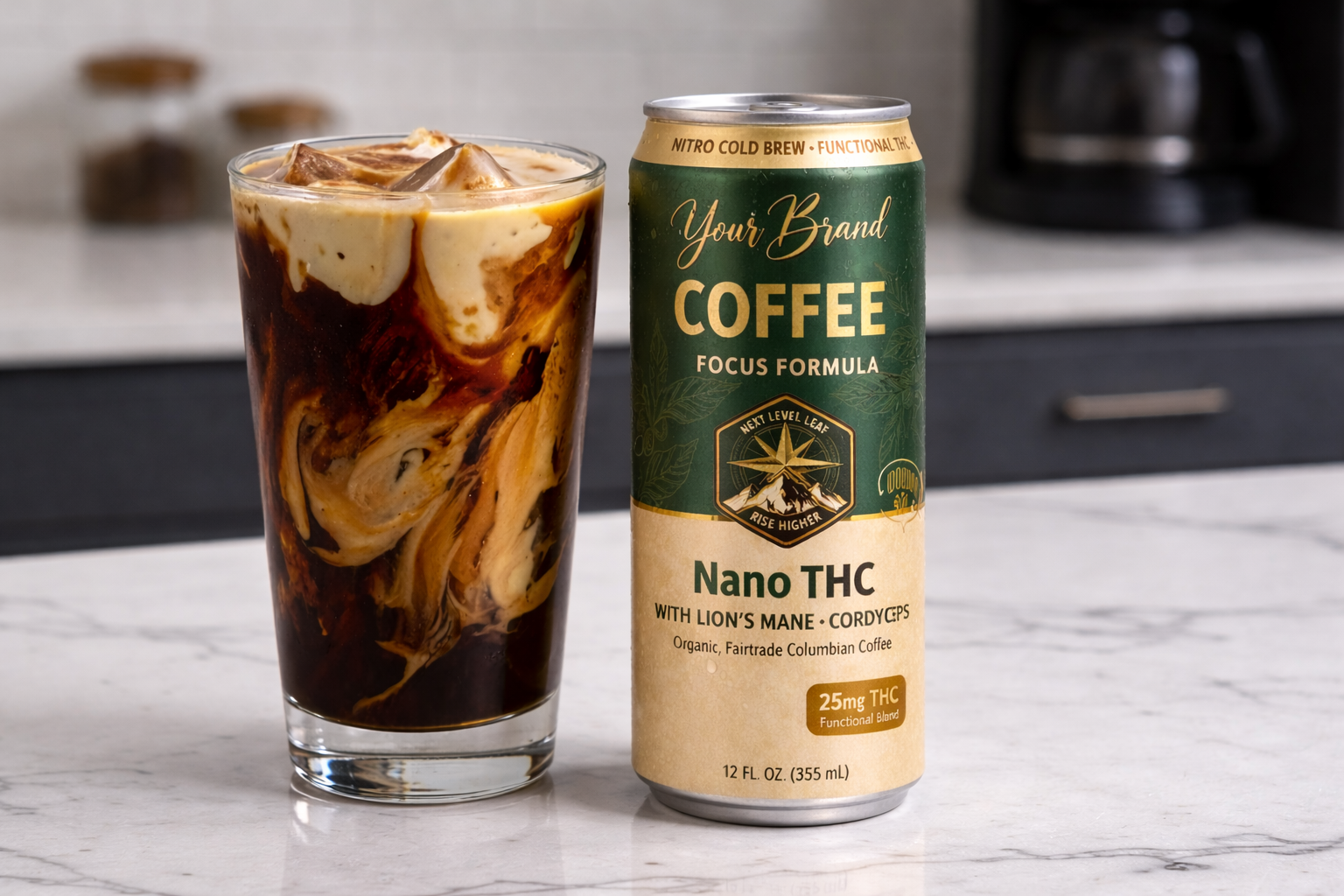
Nootropic coffee differs from regular coffee because it is positioned around a more specific cognitive or performance-related outcome rather than just caffeine and taste. That added functional layer can make the product more differentiated, more targeted, and easier to position for a specific audience.
Regular coffee is still premium and highly desirable, especially when it is nitrogen dosed and infused with cannabinoids, but nootropic coffee gives brands a stronger strategic wedge when they want to build a functional product story around focus, clarity, or smoother productivity.
In this guide
Regular Coffee
Strong ritual, broad familiarity, and category stability. It works best when the brand is built around taste, quality, experience, or premium coffee positioning. Our coffee is cold-brewed, organic, Fairtrade, and excellent when nitrogen-infused or still. We make infused, non-infused, and functional coffee.
- easy to understand
- strong daily-use behavior
- broad market familiarity
- less function-specific positioning
Nootropic Coffee
A more targeted functional coffee concept that adds a stronger focus, clarity, or productivity angle on top of the coffee ritual. Stacking nootropics, cannabinoids, adaptogens, mushrooms, and other speciality ingredients.
- stronger functional differentiation
- clearer audience targeting
- more specific product story
- better wedge for focus-oriented brands
What is the real difference is between nootropic coffee and regular coffee
The difference is not just whether extra ingredients are present. The bigger difference is what the product is promising and how that promise changes the brand strategy.
Regular coffee is category-first
Regular coffee usually wins on familiarity, ritual, taste, origin story, roast identity, or general premium cues. It is often about the coffee experience itself.
Nootropic coffee is function-first within coffee
Nootropic coffee still needs to feel like coffee, but it adds a more specific purpose-driven layer. It is often built around concepts like focus, productivity, smoother mental energy, or reduced crash-style stimulation.
The positioning becomes more targeted
That added function can make the product easier to position for a certain type of buyer. It narrows the story in a way that can actually strengthen the brand when done well.
Regular coffee sells coffee. Nootropic coffee offers a more specific coffee experience with a clearer reason to exist.
Why nootropic coffee can be such a strong product concept
In a crowded market, products often need a stronger wedge. Nootropic coffee can provide that wedge because it builds on an existing habit while giving the brand a more specific promise and experienc expect.
It can create better differentiation
A product framed around focus or clarity is easier to distinguish from another broad “premium coffee” message if the audience fit is right.
It can support more intentional brand language
Functional framing often gives the brand a clearer structure for messaging, packaging, and product explanation.
It can create a stronger audience match
If the product is meant for people who care about productivity, mental performance, or more deliberate daily ritual like preworkout, the nootropic framing can make the concept easier to believe in.
When regular coffee can still be the better strategy
Nootropic coffee is not automatically better. Regular coffee can still be the stronger path when the brand is meant to lead with coffee culture, taste, premium simplicity, or broader market accessibility.
When the coffee identity is already enough
Sometimes, a strong coffee format, strong flavor direction, and strong visual identity are enough. The brand may not need functional layering if the core concept is already clear and compelling.
When the founder wants broader simplicity
Regular coffee may feel more universally approachable, which can matter depending on your target audience.
When functional language could add friction
If the product story becomes too complex or too clinical, the brand may actually become harder to position rather than easier. Know your target market, and launch the beverage they want to buy.
How founders should think about this decision
The smartest approach is to ask what the product needs to be in order to be in the market. Does it need broader coffee familiarity, or a sharper functional wedge as a unique selling proposition? Our observation is that the market for a well-done functional coffee is wide open. If you are considering adding cannabinoids like THC, CBD, CBG, THCv, or others, you are on the leading edge and early to market, but this will not last long. TO be clear, there is opportunity everywhere, but early movers will capture market share.
If the brand is trying to own focus, productivity, or smoother cognitive support as one of its marketing lanes, then nootropic coffee can be a very strong answer. If the brand is trying to stay broader and more coffee-first, regular coffee may be cleaner, though adding cannabinoids immediately sets you apart from the competition.
Common mistakes founders make
Assuming nootropic automatically means better
Functional layering only helps when it actually strengthens the positioning. More complexity is not automatically more strategic.
Making the product stop feeling like coffee
The strongest nootropic coffee concepts still feel like real coffee products. If the coffee identity disappears, the concept can lose clarity.
Using functional language without a clear audience
Marketing that uses nootropic language works best when it targets a specific customer and a specific use case.
Trying to promise too many cognitive outcomes at once
Focus usually beats vagueness. The more specific and believable the beverage's promised outcome, the stronger the brand tends to feel. It makes it easy for the customer to understand the specific reason they should try your brand and formula.
What to evaluate next
Once the positioning is clearer, the next decisions usually become:
- What ingredient architecture supports the concept?
- What does the launch cost look like?
- What subcategory should lead the first run?
Those are the right next pages because they turn a strategic concept into something closer to a real launch plan.
Frequently asked questions
Related reading
Ready to build a focused functional coffee concept?
If you want to talk through nootropic positioning, audience fit, and the best way to structure a functional coffee launch, the next step is to share what you want to build.